Blog

Denial and reactive dogs

My dog’s not aggressive!  (Though he is clearly reactive.)

Denial is pandemic when one first realizes that aggression might be an issue with one’s dog.  And what is aggression, anyway?  The definitions are pulled and twisted and analyzed by the experts.  To me, as a past reactive-dog trainer, aggression is any behavior that is meant to threaten or intimidate another creature.  It is also any defensive behavior that injures another dog intentionally.  Well-socialized dogs will posture and correct as part of a canine interaction.  They are controlled and bite-inhibited. They are not acting out of fear or intimidation.
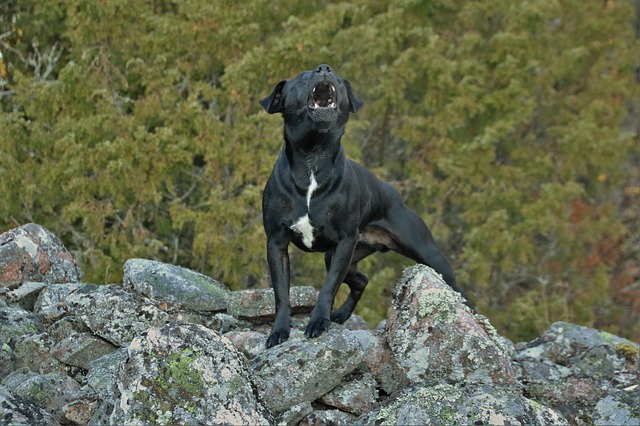
barking dog 2

 When a dog acts in an aggressive manner out of fear (95% of aggression is due to fear), it is an uncontrolled response, thought processes are restricted, and they make bad decisions. It is up to the guardian to learn the dog’s limitations and not push him, to keep him feeling safe, and the world around him safe–and, with time, love, confidence building, and work to desensitize him to his triggers, he will improve.A

But time and time again I see just the opposite–blatant denial in the human partner of the team.  I have been there too.  The desperate hope that THIS time, my dog will be calm, listen to me, stay by my side, and leave the person, dog, deer, squirrel, bird alone.  The stress kept me awake at night, and finally I decided to act. To take control.

Based on experience and hundreds of hours of study, I will say that dogs will not change without work.  Not quickly, not spontaneously. Letting a reactive dog who has confrontations off leash, will not make the dog safe to others. Allowing a scared dog who expresses his fear through reactivity or aggression, or a dog who has a strong prey drive to the point of bite/kill to run free, will risk a lost dog, an injured opponent, or a dead deer, squirrel, rabbit, or smaller dog.
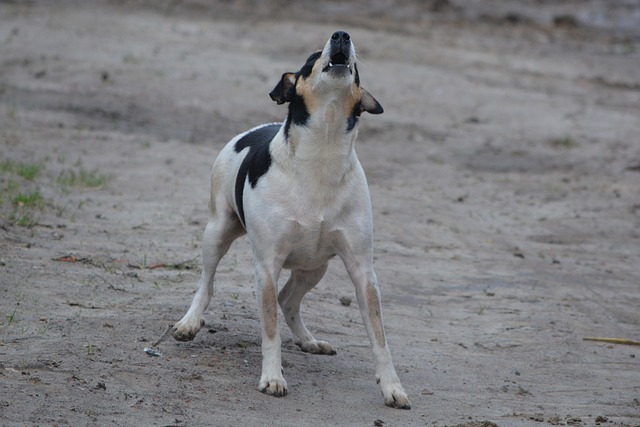
barking dog for blog

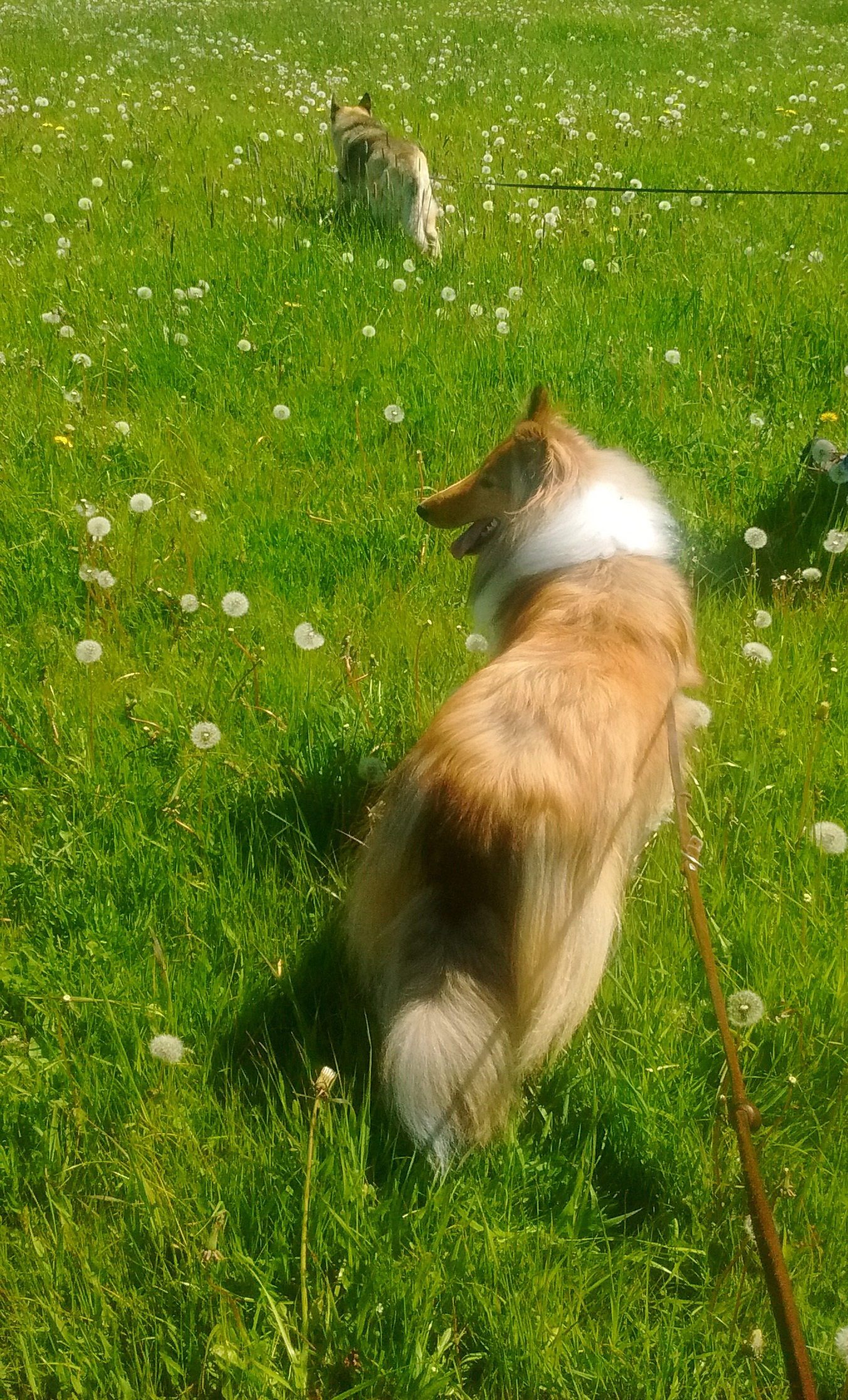
In the past few days I have seen a German shepherd with a known bite history running off leash with his human. I dealt with a loose dog who lunged, barked circled and snapped at my collie while she looked on in confusion while the owner muttered platitudes under his breath.  In another incident, my husband intervened as a terrier, who lives down the street, charged our collie–a terrier who had almost lost his life doing the same to a Rottweiler a few years ago when the rottie retaliated.

Denial is a potent coping device, but it doesn’t save us.  It just allows the situation to progress, to worsen in front of us while we sit back and hope.

Training Tips: If you have a reactive dog:

  1. You are not alone.
  2. Read about it: Books that might help you: The Midnight Dog Walkers by Annie Phenix, The Cautious Canine by Patricia McConnell.
  3. Find a trainer who specializes in aggression work.
  4. Medications may help. Talk to your vet.
  5. Finding Vera by Kerry Claire (me) is not instructional, but is filled with canine perspective and behavior and shows how one family coped with a reactive German shepherd in a novel format. It is both educational and supportive to those making their way through the maze of reactivity.
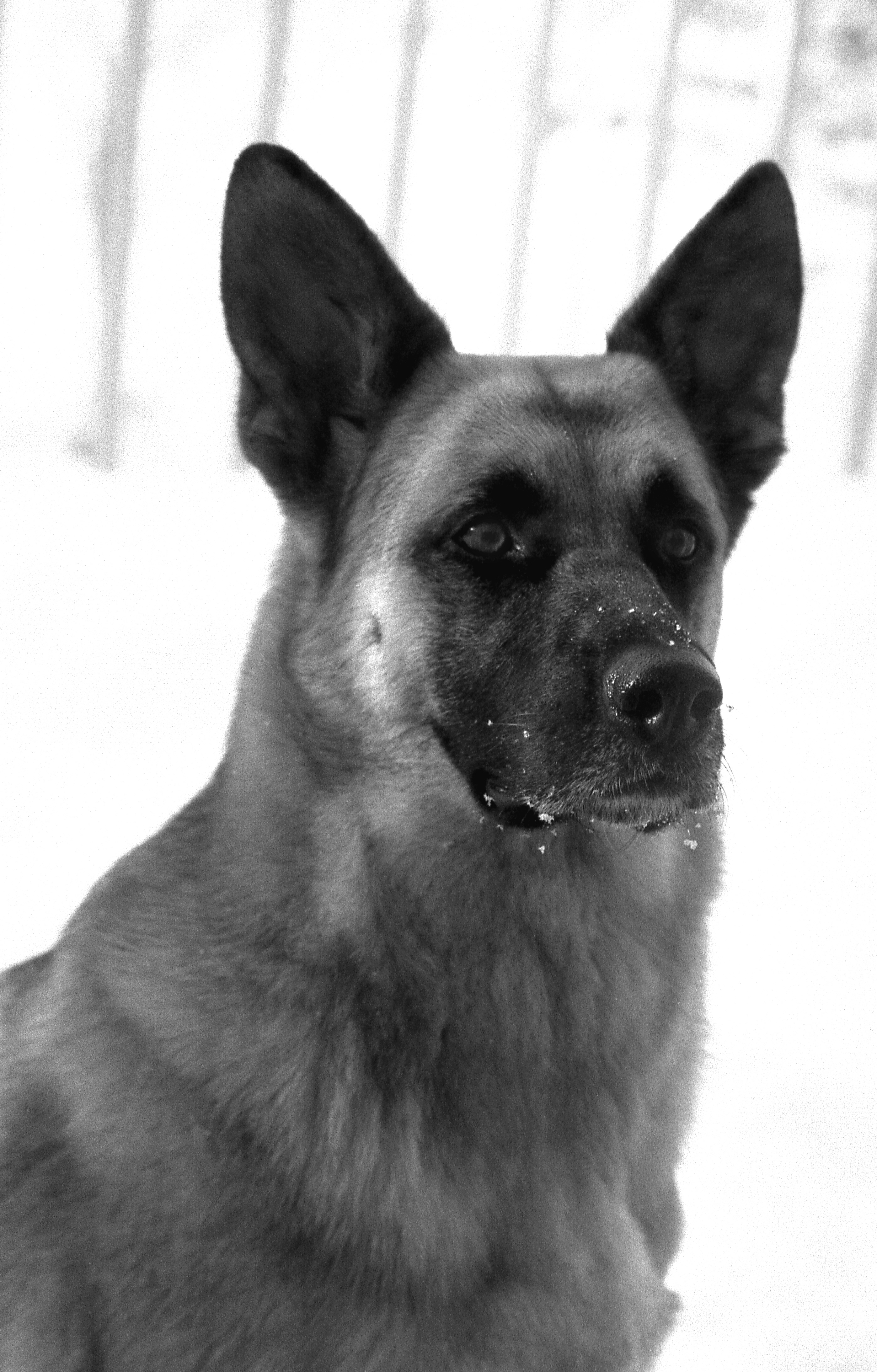
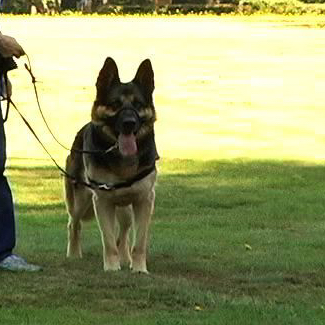
Protecting Vera: A reactive German shepherd

Protecting Vera

In the very beginning, Vera pulled.  She pulled on the leash so hard that she could drag a person into the ditch, and did so with volunteers at the shelter.  She pulled because she needed to be first, because she was scared, or because she wanted to run.  She pulled because she wanted to see another dog or because she needed to keep him away.  Her legs were sturdy and powerful, well-muscled, her body whip-like and athletic. And she was single-minded. And strong. Incredibly strong. 

Vera was polite and smart by nature…

Because she was so polite and smart, she soon learned to walk on a loose leash—even on a flat collar—without tension. Unless there was a squirrel or a cat or a deer or a dog.  Then her reactions were dramatic, her bark frantic and cannon-loud, her body tense as steel, her eyes wild. 

With such distractions and Vera in a flat collar, we, as her handlers, were doomed. I was dragged; Joel was tripped by the whip and spin of her body. And if we had Tessie or Lola, they would join in with dedicated excitement.

I was overpowered, her attention swallowed by her victim, such that even cheese and steak couldn’t distract her. She would choke, and with her trachea damaged from the chain that bound her in her first year and a half of life, we moved to the gentle leader where we could at least turn her head away from the distraction and maintain some control.  

Two points of contact
Kane working on two points of contact with Vera

After working with a reactive dog trainer, we changed to two points of contactwonder walker harness coupled with the head collar to take pressure off her muzzle and transfer it to the harness. Each end of the leash was clipped to one piece of equipment. For a long time, V shied away from the harness. The one she’d worn at the shelter had been too small, and rubbed behind her front legs, causing a raw, painful sore. Not realizing it was there, we had continued to walk her with it. It took years for her to get past this.

She was easier to handle with two points of contact. Sometimes we walked her on the narrow, winding roads of Sudden Valley.  At 100 feet from a dog she would tense, alert, her eyes riveted, tail high over her back. We would treat her with cheese, hot dogs, do “look at that”, and walk her away. But still, she would look back, scared, tense, and ready to take on the world. 

Two dogs bark at us from a deck high above.  A crash, and in slow motion, the barrier shifts, gives way, smashes onto the steps below.  The dogs leap the rubble, the drum of their paws thunderous on the wooden steps, their barks insane. I am quick, but V is quicker.  She lunges, barks, her voice frantic, teeth exposed. I turn and run, my throat closed in panic. But V is like an anchor and in seconds the dogs are upon us. 

“V, behind!” I shout. It is more of a scream. There is nowhere to go, nowhere to hide.  The road rises steeply above us, drops off below us, the hillside a 45 degree slope.

But V is intent on facing them off. She stands her ground in front of me. And attacks. 

They fall back, their faces shocked, and in that moment, I swing my body between them. I face Vera. She is too strong to hold behind me. I pivot between Vera and the dogs, blocking their access to each other. If they connect, there will be blood and punctures, possibly slashes and tears. I can’t bear for Vera to be hurt. I can’t bear for her to injure another dog. I pivot between them and shout for help while the dogs bark and snarl and lunge around me. I am wearing shorts and my legs bleed and throb from Vera’s claws. The moments stretch, and I feel I have been there for eternity. 

There is a honk, people shouting. The loose dogs falter, whirl, and they are gone, loping up the road away from us. The people in the car shout curses up at the house on the hill above me. And we leave. 

Vera is unruffled. She struts beside me, calm, her mouth open, back straight, her eyes soft.  There are no wrinkles on her head, and her ears are neutral. I have protected her. But I am fried. My body trembles like I’ve survived a battle. Every muscle aches, and I am chilled to the core in spite of the warm day. 

Back home, we sit in the garden on the bench next to her digger-dog hole. She hops up beside me, allows my arm to circle her shoulders, allows my hand to caress her face, to rub her chest.  She is not a demonstrative dog, and sitting there beside her, peaceful and safe, I am honored. I sink into her courage, am lost in her grace. 

Training Tips

  • Loving and living with a reactive dog takes on a whole new meaning if you are only used to lovely, sweet, good natured dogs.
  • Your goal is always to keep your dog safe.  For me it was at any cost and for years, blocking Vera from loose dogs with my body was my last-ditch diversion. Ironically, I  was never bitten by V or by any of the loose dogs who tried to approach her.  But I was lucky.
  • Watch for open garages, invisible fences that dogs can blow through, insecure fences and barriers.
  • Turn away from approaching dog walkers, always keeping in mind an escape route.
  • Carry high value treats.  Dogs cannot respond to you when stressed in the same way they would  when they are relaxed. But sometimes they will follow the odor of food.
  • As V aged, we learned that a small air horn, blasted at an approaching dog, even from 50-100 feet away, would keep approaching dogs at bay. They never seemed frightened, just confused and not interested in approaching–much better than having a human rage at them to stay away thus triggering a fear of humans.
  • You do need to desensitize your dog to the sound of the horn–best done by having someone help you. When you blast the horn, move your dog behind you.
    • To desensitize: Give a short blast a distance from your dog (up to 100 feet depending on your dog’s sensitivity) with the sound focused in the opposite direction from your dog. Play with or feed your dog after the blast.  Repeat twice more.  If your dog is afraid after the first blast, stop play with your dog. A few days later increase your dog’s distance by at least 50 feet  from the horn and increase the reinforcement after the blast. Play with your dog.

The Loss of a dog

V-dog dec 08 jpg
Beautiful V

Losing Vera

I need to take a break from puppies for a few weeks to talk about our beautiful German shepherd, Vera. We lost Vera a few weeks ago, and those of you who have read my novel, Finding Vera, will understand the depth of our loss. She was three weeks from her fourteenth birthday and had only one day of real discomfort. That was a blessing.

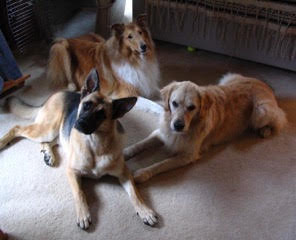
Vera was an exceptional dog. She was poised, polite, and intelligent.  She had the body of an athlete and a soul as delicate as crystal. She could be sweet, gentle, even affectionate on her own terms, but she had a fuse that could send her into a fierce and protective explosion if she were challenged. She protected herself mostly, but sometimes she protected us.

3 girls
Vera, Tess, and Lola (clockwise)

I wrote about Vera for four years, imagined every moment of every day from her point of view, strained my brain to see the world through her eyes and the eyes of her sisters, Tess and Lola. We watched her grow from a rowdy, confused youngster into a strong and confident matriarch, helped her navigate and fashion her world until she was the queen of what she knew.

And then, finally, we were with her when she left, wherever she went–hopefully to join her sisters, Tess and Lola in some sunlit field by a river.

v-and-annie-at-hovander.jpg
Vera and her new sister, Annie

Losing a pet is losing a family member. There is no doubt about that. The grief is deep and real. We grieve in a way that is unique to us. We grieve for days, weeks, years. I still grieve for Sascha from twenty years ago and will grieve for Vera for the rest of my life. They are closer than parents, distant siblings, lost lovers. They share each day, our beds, our hearts and minds and souls.  They know us better than just about anyone and so when they go, they take part of us with them.

Baby Jaws, the biting puppy


The unfortunate thing is that although most puppies are sold at eight weeks of age, it’s one of the worst times to introduce puppies to new things.  We know now that at eight weeks, puppies are going through a fear period: they may suddenly be scared of things that have never bothered them before, and it’s possible that these experiences may imprint them for life. In other words, they may hold onto that fear of the scary man or child or loud noise—forever. So going for their first car ride, meeting new dogs, new people, or being introduced to a new environment, to say nothing of being removed from their pack of siblings for the first time in their lives to spend their first night alone in a new setting, can be very traumatic. Seven or nine weeks of age is a better time to take puppies home—when they are more confident and not as easily influenced by fear. 

My eyes felt bleary when I finally found the appropriate “What to do when your puppy bites” chapter in response to my scratched, bleeding arms.

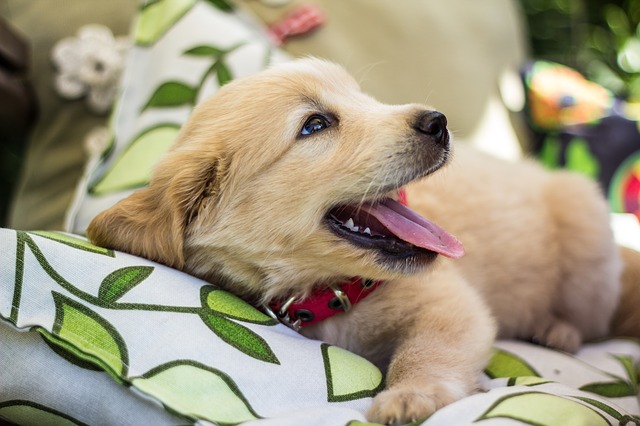
golden ret pup

“The book says to grab her muzzle, look directly into her eyes, and say ‘no bite’ in a stern tone,” I read aloud. “If she bites again, do it harder. Ow!” I dropped the book on the table and reached down to swipe Sascha away from where she was attached to my jeans. “Sascha, stop it!” I dropped to my knees and grabbed her small, snarling muzzle in my hand, but she whipped away from me and made another playful lunge. She was all baby growls and needle teeth and when she made contact with my skin, it hurt. “Shit! No bite!” My voice was very stern and very loud this time, and when I made a grab for her, Sascha danced away and flattened herself on the floor four feet from me, not sure whether to be scared or to join in the devilish game. She chose the latter, sprinted back to me, grabbed my slipper in her teeth, and tugged as hard as she could. This time I nailed her muzzle with a firm hand and shouted “No bite!” while glaring into her eyes. She cowered, ears flattened to her skull. With her tiny tail curled up on her belly, she crawled under the couch and all we could see were her big, brown eyes peeking out. 

“Well done!” Joel’s voice was thick with sarcasm.

Tears burned my eyes, and an ache in my chest threatened to derail me. “I did what it said!”

“You didn’t have to do it that hard!” 

I tried to pull Sascha out from under the couch, but she stayed just out of reach. Would she ever recover?  I was sure she wouldn’t. 

Moments later, Sascha fell asleep—a ball of golden fur all alone under the couch—but when she awoke, she seemed to have forgotten.  She bounced into the kitchen, gobbled down the kibble I offered her, peed again on the carpet before we could entice her outside, then grabbed a shoe from the mat by the front door and charged around the house, full of glee. The extent of her joy was contagious, and we laughed, mirth rising from our bellies until tears ran down our cheeks. Finally, we managed to herd her outside to our fenced yard, she did her business, then settled down to chew on a stick. We heaved a sigh of relief and dubbed her “Baby Jaws”. 

Somehow, we managed to survive the rest of the day.  We barricaded off the kitchen, found some tennis balls, and Joel drove to the grocery store and returned with a couple of stuffed toys, a rubber hamburger with a squeaker (which she demolished instantly), and a Nyla bone that she set to work on with those killer teeth. We played tug with an old sock (unwittingly reinforcing her delight in these readily accessible toys), and tossed the ball for her, the tennis ball enormous in her little jaws. We discovered that she was a natural retriever.

Annie and Kong
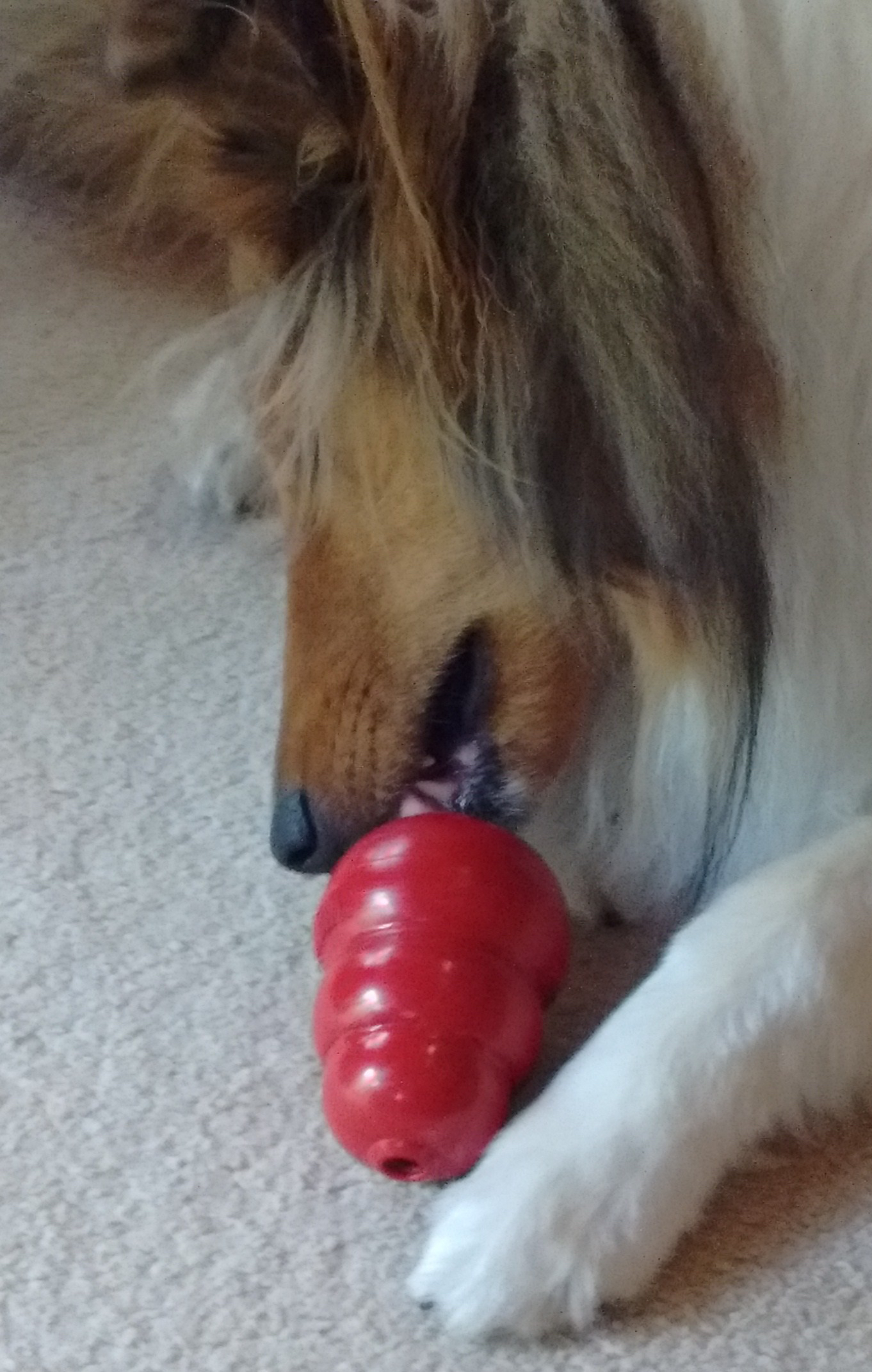
Annie and her Kong

* * *

Tips: 

What would we have done to prepare for that day now, in 2018?  

  • We would have waited until Sascha was nine weeks old before bringing her home; we would have taken time to get to know her and visited her at least three times during the week that we waited, leaving something that smelled like us (an old T-shirt, for instance) for her to chew on, sleep with, and eat her meals on. By the time she came home, she would have known our faces, our scent, our touch. 
  • We would have worked on crate training her during those visits so that she had a familiar, safe place to be–both in the car on the way home, and to retreat to once she was in her new house. In the years to come, unfortunately she never did have a crate, but would wedge herself into the space beneath the lowest laundry shelf in our bedroom for comfort.
  • We would have had a familiar-smelling blanket from her litter mates and mother in her crate, and a variety of chews, balls, tug toys and stuffed toys to offer her when she got mouthy.
  • And thanks to Ian Dunbar, we would have had long and short-term confinement areas set up for her to explore—puppy-safe, reassuringly confining, and mentally enriching—with water, toys, a few stuffed Kongs, a potty area, and a bed snugged into a crate.

short term confinement
Annie in her short-term confinement area.  Surrounding her crate is an ExPen, giving her an area of 8 feet by 5 feet for her long-term confinement space.  She has water and toys available. At six months old, she is house trained, so she doesn’t have a potty area. A canvas drop cloth protects the carpet.


  • Kong recipes: Kong recipes can be simple or complicated.  I have found over the years that simple works best for me–I still make several Kongs a day for my year-old-puppy, Annie, and fourteen-year-old matriarch, Vera. There are many reasons to give dogs Kongs. Read more about it on WebMD
  • To start, I have available dry kibble, soaked kibble, and at least one high-value food to layer with the soaked kibble—peanut butter, banana, (if your dog likes banana—Sascha did!), small chunks or grated apple, canned tuna, canned dog food, or Fresh Pet (available in the refrigerated section of pet supplies in some grocery stores), but you can use whatever your dog likes. Remember to limit foods high in fat to thin layers in the Kong.  Never stuff a Kong solely with peanut butter or cheese, for instance–it can give older pets pancreatitis, or younger dogs diarrhea and vomiting.
  • I start by putting a few dry kibbles in the bottom of the Kong to make it easier to clean when your dog is finished with it, then I start layering the ingredients. As I fill the Kong, I pack it in with a dowel (or with my finger), so that it’s solid.  I finish with one of the high-value ingredients, and top it with a treat.
  • For dogs who are adept at emptying Kongs, you can freeze them, and it will take the dogs  longer to empty them. However, if your dog has never seen Kongs before, especially if they are rescues and stressed, pack it loosely and show them how to empty it. Roll it, drop it from a few inches off the ground, and praise them when they clean up the treats that fall from it.  Once they are adept at it, try freezing it for them.


Sascha’s first day: our new puppy

Reading short stories about other people’s crazy experiences with puppies or dogs can be entertaining.  I hope you enjoy my stories about our first golden retriever and collie puppies. I’ll include tips for dealing with a new puppy in your home without losing your mind (and your new pair of shoes) now that I am a seasoned, professional dog trainer.

*********************

Sascha’s first ride home

We weren’t able to view any collie puppies until the following day, but by the time we were half-way home with Sascha, our new golden retriever puppy, we were relieved that we’d had to change our plans.  We had stopped at least twice at rest stops to clean up her mess and to take her out for potty breaks. To save the upholstery, I had decided to sit in the back seat with her. This didn’t prove to be easy. Although her fur was as soft as eiderdown, and she looked as cuddly as a teddy bear, this puppy did not like to be held. And, on top of that, she was all teeth and nails.  By the time we got home, my hands and arms were scratched and bleeding.  And it was only early afternoon. 

golden-retriever-puppy- in coffee can
SO much puppy energy!

Puppy accident

“Oh my God, she’s peeing on the carpet!” Joel shouted. And a second later, “She has your sock!” Joel’s voice had reached a desperate pitch. A fluff-ball bounded past me with Joel in hot pursuit–and he wasn’t laughing. 

I grabbed a towel, my arms still soapy, and ran after him. Sascha was lost in her game, baby growls erupting from her throat.  She flopped down, intent on tearing my sock to shreds, then moments later fell asleep.  My head spun from jet lag, I craved sleep, and I couldn’t imagine another eight hours awake with this puppy.  “What do we do now?” I asked Joel.  “She has so much energy!” I looked over to where he had collapsed on the couch, rubbing his eyes. “Aren’t you going to clean the carpet?” I asked. “And what are you going to do about her biting? She’s YOUR puppy!”

“You clean the carpet. I’ll grab that puppy book,” he said. He left the room and returned with our book on puppies. 

golden puppy yawning

We followed the advice of “that puppy book” diligently. It had been written a few years earlier, in 1982, and used correction and fear-based tactics.  At that time, all training was correction based, a military approach that had been used to train war dogs. Unfortunately, in 1986, Dr. Ian Dunbar, the father of pet-dog training, was just launching his career, and had not yet published his books Before You Get Your Puppy and After You Get Your Puppy which have saved the sanity of millions of new puppy owners around the world. But the book we bought was all we had, and although some of the techniques made us cringe, we tried them because we felt we ought to, and because we were desperate, and because we wanted a well-behaved dog. 

Tips:

  • Be rested when you bring home your puppy.  They require a lot of patience and work, especially when they aren’t yet house trained.
  • Transport your puppy home in a crate with a washable, soft bed in it with chewable toys available. If possible, have a second person with you to help transport the puppy in the car.
  • Don’t be alarmed if your puppy is car sick. Puppies will often outgrow this as their inner ear matures. Ask that your new puppy not be fed before the trip home
  • Leaving their litter mates and mother is traumatic for puppies, especially if they are 8-10 weeks old which is considered a fear period. They are very sensitive to their environment and new stimuli during these fear periods. So protect your puppy from potentially scary experiences for a day or two–rough handling; too many people accosting him; loud, scary noises such as TV, vacuum cleaner, and traffic; then GRADUALLY expose him to new things in a non-threatening way.
  • If your puppy won’t eat at first, it is most likely because of stress. Pick his food up after 20 minutes and try again an hour or two later. Always leave a big bowl of fresh water available to him.
  • Don’t be alarmed if your puppy bites and scratches. Puppies need to bite to learn how to control their jaws as adults. This extremely important skill is called bite inhibition.
  • Prepare for your puppy at home with long and short term confinement areas, and lots of puppy-proof toys that will stand needle-sharp teeth tearing into them (Kongs–a rubber toy that can be stuffed with treats, nylabones, ruffwear toys, etc).  They need to chew. The confinement areas will make your puppy feel more secure and will help you to teach him the kinds of behaviors you want him to learn, free of corrections. More about this on my next blog.


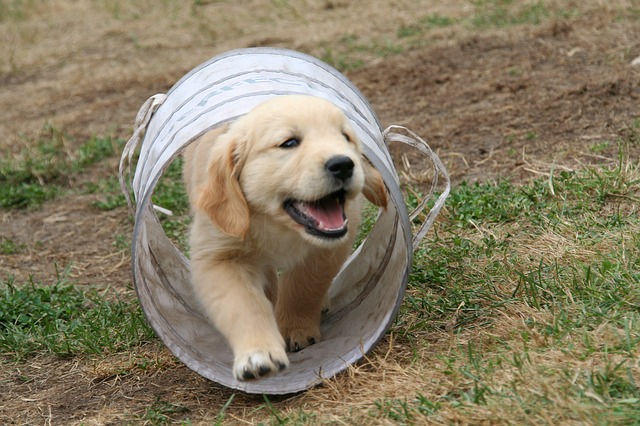
A new golden retriever puppy!

Reading short stories about other people’s crazy experiences with puppies or dogs can be entertaining.  I hope you enjoy my stories about our first golden retriever and collie puppies. I’ll include tips for dealing with a new puppy in your home without losing your mind (and your new pair of shoes) now that I am a seasoned, professional dog trainer.

************************

Waking up

It was six o’clock in the morning, and I awoke in a blitz of excitement.  Today was the day.  I rolled over and shook Joel’s shoulder.  He groaned.

“Wake up. We’re getting our puppies today!”

“Later.” he rolled over and covered his head with a pillow. “I’m tired.” We had returned from England the night before, arriving back in Seattle exhausted—fenced yard in place, dog beds nestled in the kitchen—ready for our new puppies. Our first and second puppies as adults.

“No, Joel.  The morning paper is here.  I heard the delivery boy.  We need to get up and check it out. Now!”  My voice was urgent, bordering on frustration. For weeks we’d talked about this day.  For years I’d imagined it—all the way through high school and nursing school. Ever since the death of my sheltie when she was twelve and I was twelve. I had grown from toddlerhood to pre-adolescence, while my beloved canine sister had grown from an elegant, beautiful adolescent to an arthritic and fragile old lady. My parents had euthanized her while I was at school–I never quite forgave them for that. 

So today…today was monumental. I staggered out of bed, pulled on my robe, and made a beeline for the front door.  The Seattle Times was on the doorstep. I rushed back to the bedroom, scanning for the classified section en route. There were only a couple of listings for golden retrievers.  And one listing for collies.

We were in our thirties and had decided at some point not to have kids. But I wanted dogs so much I could taste it, and two dogs would keep each other company while we were at work.  We had figured that out with the help of friends. Joel wanted a golden retriever.  He liked floppy-eared dogs and had always admired goldens. I didn’t care for floppy-eared dogs.  I wanted a big dog with standing-up ears—a big sheltie really—which morphed into a collie.  

We were set.  We knew what we wanted, we had a fenced yard, we had bags of dog food in the garage, two dog beds, dog bowls, and names for the puppies.  And Joel, with his OCD tendencies, had practiced for the chaos we had been warned that puppies would create by leaving his jacket hung casually on the back of the dining room chairs for a couple of weeks before we left for England. We had even read a couple of books on dogs from the library.  In 1986 there was no internet. 

How do you choose a puppy?

“Golden Retriever puppies for sale. Eight weeks old.” Eight of them. Four hours after studying the want ads, we were driving through a suburban neighborhood of Seattle toward our first destination.  We were shown into a garage by a young woman and her two kids, and when they opened the enclosure that held the puppies, we were suddenly swamped by eight fluffy, squiggling bodies.  They jumped up, careened around us, yipped, peed, pooped, grabbed our clothes.  

golden-retriever-puppies
Eight week old golden retriever puppies

“Which one do you want?” I asked Joel.  But how to decide? I had no idea. We had read about it a few weeks before, but in my confused, jet-lagged state, I couldn’t remember. And there were so many of them. “This will be your puppy so you decide,” I said.

One puppy ran up to him and nipped his fingers, but apparently not hard enough to hurt because he grabbed it, held it close, and said, “This one! She just chose me!” She squirmed in his grasp, her snub nose, sweet black eyes and small floppy ears completely entrancing.  

We paid for her, put her in the box in the back of the car we had thoughtfully lined with a towel, and set off for home. She promptly vomited, climbed out of the box, and cavorted around the back seat. We had a carsick puppy, but Sascha was on her way home.  

golden puppyIn retrospect, we had stumbled into a fabulous puppy in spite of our naivety. It never occurred to us to ask about her parents, or to spend some time with her mother to look for traits like fear, anxiety and aggression—even though she was present somewhere in the house. We didn’t spend time alone with the puppy we had chosen, nor test her reaction to us. We didn’t evaluate how she’d react to being held and gently retrained, or how she’d respond to an object being tossed for her. We didn’t know if she would follow us when we moved away from her and we didn’t think about her sensitivity to touch, to noise, or to new stimuli.  At that time, we didn’t have access to resources such as Dog Star Daily’s articles on how to choose a puppy , or the many books, e-books, DVDs, and CDs available on Dogwise.com.  We just fell in love with her. 
We did ascertain, however, that she was bold enough to approach and nip Joel, a man—though at the time we didn’t think about the significance. Nor did we consider the bonus that she’d had plenty of socialization with young children, and lots of litter mates to play with—both very important with regard to bite inhibition and her socialization period during the first twelve to sixteen weeks of life. Otherwise, we simply lucked out–Sascha turned out to be a dog among dogs—smart, creative, independent, a magnificent retriever,  and a very good teacher. 

Our education had begun.

Tips:

When choosing a puppy:

  • plan ahead, read about what type of breed will work best for your lifestyle–all breeds have certain characteristics.
  • Find a responsible breeder.
  • If you can, meet both parents.  Many traits, such as fear, anxiety, shyness, and high energy can be passed on genetically. Shy puppies are sweet, but require a lot of work to socialize them to the world around them. Without extensive work, they can end up with aggression issues or be crippled by fear.
  • If you adopt from a rescue or shelter, find out as much as you can about the parents, and spend time with the puppy alone before you adopt him. Find out how long he’s been at the shelter. Puppies who are born or kenneled alone have a much more difficult time adjusting to the world at large. Litter mates help, but all puppies require a lot of handling to get used to people–kids, men, and women.
  • Testing how a puppy responds to you is important to get an idea of who he is:
    • Does he move toward you to take a treat?
    • Does he settle when you gently place him on his side or cuddled and stroked?
    • Does he relax quickly and get on with his activities if you clap your hands?
    • Does he play confidently and bite and jump?  If a puppy bites, you can teach him to control his bite before adulthood, if he doesn’t bite, it’s difficult to teach him this awareness.

Why Dogs?


annie lake3
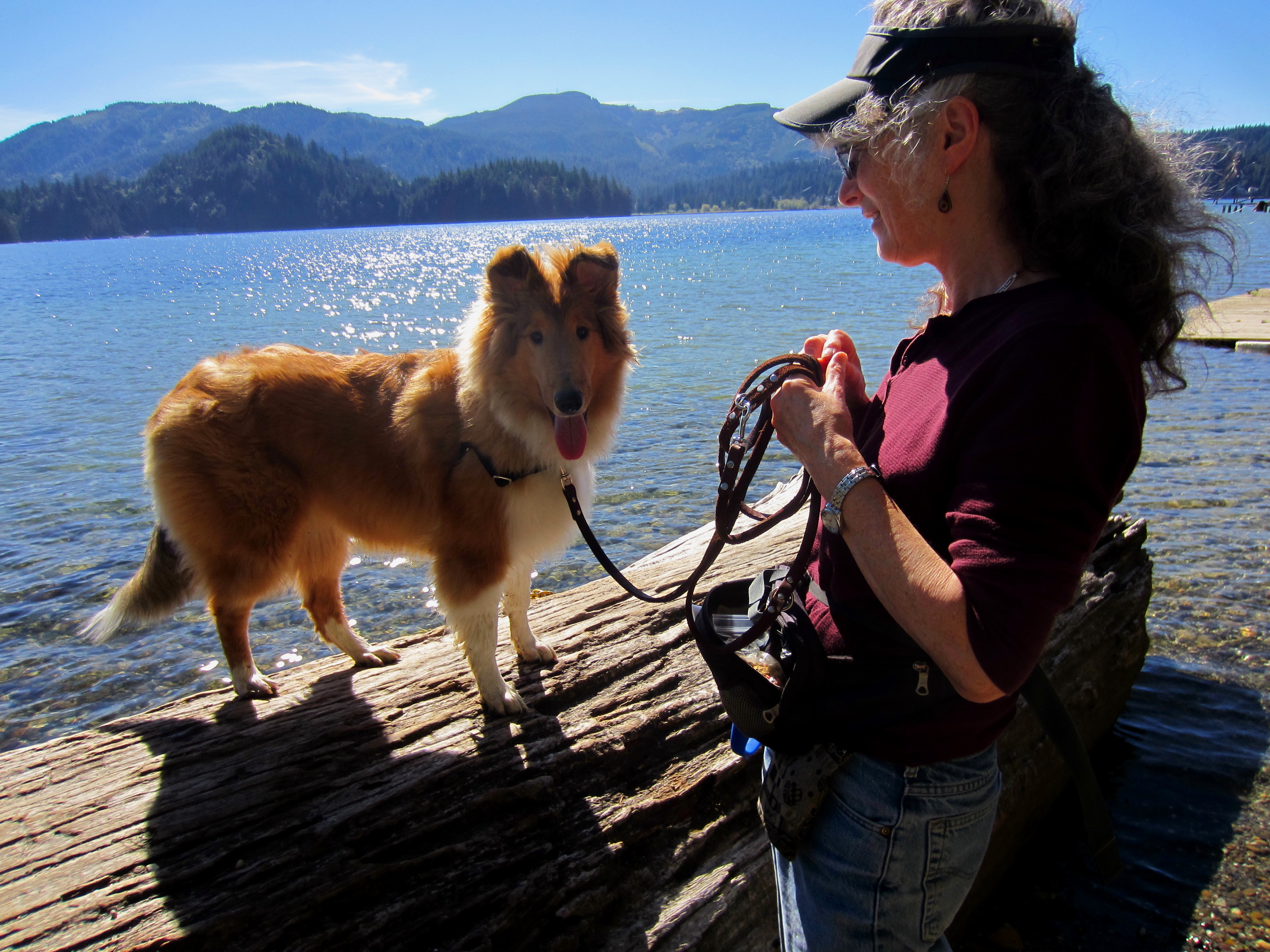
Annie at 5 months and Kerry Claire at Lake Whatcom

Why dogs? 

This question haunted me for years.  Dogs have been part of my life since I can remember. They have molded my days, slept with us, hiked with us, sailed the San Juan Islands with us. They have traveled with us and they have kept us from traveling.  They have filled me with joy and anguish and continue to do so.

For years, sensing that they had bewitched me, I sought out activities that excluded them, reluctant to narrow my world and fall completely under their spell.  But dog training and work with reactive dogs, the study of their behavior, and finally the writing of their stories inserted themselves into my life as surely as breathing. I have now been a dog trainer for thirty years, volunteered at a shelter for fourteen, and written their stories for six.

In this blog, I wish to share some of their stories.  Finding Vera, my first novel, relates the story of Vera, a reactive German shepherd and her two sisters—partially from their point of view. Writing it helped me to better understand the evolution of their behaviors and motivations, their political interactions, and who they were.

But there are other stories to be told, insights gleaned from all the years of working with dogs. I hope my readers enjoy them.

v on hot tub
Vera surveying her meadow