Willy was a delightful little Douglas squirrel who frequented our bird feeders one summer, making himself happy and content in the donut-shaped feeder attached to our deck. He would literally kick back, lean his elbow on the rim, and dig in to the varied seeds and nuts we placed there for him. He came to our deck at ten o’clock each morning like clockwork, and we fell in love with him. Annie, our collie, took notice of him too, and she would sometimes follow him along the deck looking very interested. Willy would tease her, bouncing along just in front of her.
Then one day we noticed that his head was bobbing up and down and tilted slightly to the side, and he was holding one of his front paws against his chest. In spite of these problems, he soldiered on and continued climbing the trees in our garden and foraging for food.
I spoke to the Wildlife Specialist in our area, and she suggested I bring him in for evaluation and treatment, which we did. I was so taken by this brave little fellow that I just had to write a story about him. To find out what happened, you’ll have to read the book!
In this delightful, heartwarming, beautifully illustrated read-aloud story for children five to ten years old, you’ll learn about squirrels, their challenging lives in the forest, and explore the meaning of love as it relates to wild animals. It’s the perfect gift for any child–your children, grandchildren, nieces, nephews, neighbors or the children of friends, especially with Christmas on the horizon.
This book is splendidly illustrated by Motoko Lewis. An extremely talented artist, she specializes in portraits of animals. You can see in the portrait of Annie below how she captures the soul of her subjects in these paintings. Here is a link to her portraits of Vera (the star subject of my novel, Finding Vera.) You can contact Motoko through her website.
Illustration of Annie in Wonky WillyThe real AnnieWilly Annie in Willy’s garden.
I have volunteered at Whatcom Humane Society for almost twenty years, and have always loved walking and training the dogs, but a year ago, Laura Clarke, executive director, brought Dogs Playing for Life to the shelter. That changed everything!
For me, dogs playing with dogs was a joy to watch–until we adopted Vera, our dog-reactive German shepherd. Experiencing her unpredictable lightning-swift attacks on her beloved sisters, and dealing with the physical and emotional fallout after these rare occurrences, kept us on edge for the duration of the dogs’ six years together, and it ruined my enjoyment of dogs playing with dogs–until Dogs Playing for Life came to WHS.
Dogs Playing for Life is a non-profit organization. Their trainers tour North America teaching shelters how to safely have dogs of any breed and any background play together. By understanding play styles, gender preferences, and canine relationships, serious conflict is kept to a minimum. They teach handlers how to use a few low impact “tools” (spray bottle, shaker bottle, and airhorn) when absolutely necessary to help guide the dogs into making good decisions. Handlers are also taught how to break up the rare fight should it occur.
Longterm resident, Pancake, with one of his dear friends.Wrestling with friends is part of Rough and Rowdy and Seek and Destroy play.
The dogs come to WHS from all different backgrounds. Often their histories are sketchy, so every dog is assessed individually before being allowed into the group. Twelve to sixteen dogs cycle through play group each day, and we have anywhere from two to eight dogs (sometimes more) in the play yard together at any one time. They tend to break into groups with friends, or other dogs who have similar play styles.
Photos courtesy of Valerie Reyes.
Below are a few things I’ve observed about dogs and their relationships. I knew many of these things in theory, but seeing them transpire on multiple occasions has given me a new appreciation for dogs, the complexity of their social structure, and their intelligence. Things that once puzzled me about Vera’s relationship with her sisters now make total sense!
Dogs have individual play styles that fall into categories. Dogs Playing for Life has named them Gentle and Dainty, Push and Pull (those who like to run and chase), Rough and Rowdy (dogs who like to mouth and wrestle), and Seek and Destroy (those who like to chase and take each other down.) Vera was a Seek and Destroy player, and Tessie, our collie, was a gentle and dainty girl who also liked a good game of chase. Gentle and dainty dogs never do well with dogs who engage in rough physical contact, even if they like to chase. No wonder Vera and Tessie never figured out how to play together!
Most dogs are selective about who they like to play with. They might enjoy being around dogs, but only want to romp with very specific individuals.
Some dogs can play in any play style and adapt to playing with any dog. These dogs help the handlers in our playgroups integrate new dogs into the group and we call them “helper dogs.”
Some dogs love puppies, others tolerate them, and others are good teachers, giving appropriate corrections for rude behaviors.
Photo courtesy of Valerie Reyes
Most dogs love to play, and even those who are initially worried or cautious (tucked tail, seeking out corners, cringing) often gain confidence through exposure to calm dogs in a safe environment. Some of these shy dogs even become helper dogs (they play confidently and expertly with any dog in the group) and teach less-confident dogs how to enjoy and navigate the group.
Photo courtesy of Valerie Reyes
Barrier and leash reactivity, no matter how severe, doesn’t necessarily have any bearing on a dog’s ability to play safely. Some of our most reactive dogs (e.g Nina, the black lab in the photo) have become helper dogs, and because of their comfort around dogs off leash, we have been able to desensitize them to walking on leash among other leashed dogs.
Dogs quickly form close and lasting bonds and pine for their friends when they can no longer see them. This has happened multiple times at the shelter when one of a pair who met in play group got adopted or was transferred to a foster home or to another facility. Sometimes the dog who stays behind finds another best buddy, sometimes not. Koda and Zeena (pictured in the featured photo at the top of this blogpost), loved each other and were transferred to the same facility at the same time so they could be together until they found their forever homes.
Some dogs get tired, grouchy, or overstimulated and make bad decisions if they play too long. Others just settle down and take a break!
Sometimes dogs play happily with a friend one day, and ignore each other the next–or even get into squabbles. They have good reasons, I’m sure, but it’s not always apparent to us humans.
Photo courtesy of Valerie Reyes
Some dogs are so intense that regardless of size, they overwhelm most dogs and send them running or cowering, or risk getting an overcorrection. However, find a dog with similar intensity, endurance, and play style, and hours of crazy, happy play can ensue.
Hackles up don’t mean much, just that the dog is uncertain. A stiff body, tight, flagging tail, and standing on tiptoes is much more concerning.
Some dogs just don’t like each other, even though they’re the opposite sex and have similar play styles. Sometimes dogs can take an instant, intense dislike to another dog, even though they’ve both had very happy, successful play times with many other dogs.
Some dogs are tense around dogs of the same gender but delight in the company of the opposite sex. Other dogs don’t mind either way .
Some dogs are afraid of humans, but great with dogs. Playgroups can build their confidence with people.
Some dogs are beloved by everyone, male and female, canines and humans!
There are also dogs who want no part of playing with other dogs and it’s important to honor their desire. However, for dogs who enjoy it, the social interaction, the mental challenge of negotiating so many different individuals and personalities, and the physical exercise during play is far beyond anything we humans can offer dogs in any environment. Playtime at WHS has helped our dogs to maintain their physical, emotional, and mental health through the duration of their stay at the shelter.
Photo courtesy of Valerie Reyes
As a handler for the past year, I am still on high alert during these playtimes. Occasionally, tension seems to rule the session and nothing seems to click. The dogs either don’t interact, or squabbles erupt with little warning and the dogs seem awkward and on guard. Sometimes the arousal level is so high that the pack gets overstimulated and on edge in spite of all we do as handlers to make it flow easily. This can happen for a number of reasons: the mix of dogs at the shelter; a day without playgroup; the day is windy; the shelter is extra noisy; one dog is making the group uncomfortable. But sometimes we just don’t know the reason.
Most days, playtime flows beautifully. The dogs we bring into the yard together click, and their antics have us laughing. We watch friendships unfold, observe how one dog entering or leaving the group completely alters the dynamic, or see a fearful dog be gently integrated into the group by polite, socially adept helper dogs.
With thoughtful handling (choosing play partners and groups based on friendships, play styles, and gender), conflicts are minimal. For the most part, dogs just want to have fun!
To learn more about Dog Parks and your dog, check out my blog post Dog Parks Revisited.
This is the time of year to be outside with your dog. The rain and cold ease up, the sun comes out, and babies are born in the wild. With human and dog populations expanding into more rural areas, there are more wildlife encounters than in the past, and these don’t always end well for our dogs or our wildlife.
Although this blog post focuses on avoiding injuries to our dogs, it’s also important to respect and protect our wildlife. They have every right to protect their young and their homes. Ultimately, if we prevented our dogs from threatening wildlife, our dogs’ risk would be greatly reduced. To put it in perspective, as of April 2023, the Whatcom County Wildlife Center of WHS (in Washington State) has seen 300 wildlife injuries and deaths, many attributable to dogs. This spring, as with last, Alysha Evans, manager of the Wildlife Center, is concerned about dogs running free on Whatcom County beaches and attacking and chasing baby seals who have been temporarily left alone while their mothers forage for food. It is also cottontail season, and the Wildlife çenter is seeing many rabbits who have been killed or injured or had their nests destroyed by dogs. It is just as important to keep wildlife safe from our dogs as it is to keep our dogs safe from wildlife.
Birds of Prey: I spoke with Sharon Wolters, director of Sardis Raptor Center in Whatcom County and she shared the following information with me:
Eagles: Apparently it’s not unusual for eagles, hawks, and large owls to carry off small dogs for food. Eagles can lift their weight (eight to eleven pounds) in their talons, but even if their prey is too heavy to lift, they can still kill it. Eagles can grip with 200 pounds of pressure per square inch and have a ratchet system in their feet. This means they can squeeze tighter and tighter with their talons, but can’t release their grip until their bodies relax. Because of this, even large dogs can be badly injured by eagles if they are targeted.
Owls can attack and carry off small dogs any time of day, but they are typically nighttime predators. They can swoop in silently and snatch a small dog with unnerving speed even if the dog is leashed. If the owner is not being attentive, they might not even know what happened to their dog.
The reverse is also true. Both eagles and owls can fall prey to dogs. In her Raptor Center, Sharon has seen eagles, hawks, and owls badly injured or even killed by dogs–a huge tragedy for these magnificent birds.
How to protect your dogs from birds of prey:
Keep small dogs on leash–always. Allowing small dogs to roam off leash even a short distance away on a trail or in a field can put them at risk.
Do not leave small dogs unattended outside, ever. They are at risk of attack not only from raptors, but from raccoons, deer, and coyotes.
Consider a Coyote vest to protect your small dog from coyote and raptor attacks.
Keep small dogs close to you when walking at night.
Don’t allow big dogs to roam free, and even if your yard is fenced check on them regularly and bring them inside at night and when you leave home.
Raccoons: Raccoons are a common inhabitant of our neighborhoods, both rural and urban. Although they don’t usually attack dogs if unprovoked, they will protect themselves if cornered, or if their young are threatened. Raccoon injuries can be severe, leading to eye damage, punctured lungs, abdominal punctures, and urethral damage according to Dr. Eric Barchas of Dogster Magazine. They can also carry bacteria harmful to dogs and humans, including rabies in some states, though in Washington State this is not the case.
To avoid confrontations with raccoons:
Don’t allow your dog outside unsupervised after dark, even in a fenced yard.
Check your yard before allowing your dog off leash at any time of day. Vera, our predatory German shepherd, snatched a raccoon cub at midday when I was only a few feet behind her.
Don’t allow your dog to sniff inside culverts. Raccoons seek shelter there.
Don’t leave food outside at night–human, dog, cat, or bird food are fair game and will encourage raccoons.
Don’t intentionally feed raccoons.
Be sure your dog’s vaccinations are up to date. Raccoons are a prime carrier of rabies in some states.
If your dog gets into a scuffle with a raccoon, get her to the vet ASAP.
Deer: Deer are also common in both urban and rural communities, and at this time of year, the does are likely to have fawns. Since fawns have very little odor, they are left in a safe haven by themselves until they are old enough to run from predators, and the does stand guard at a distance. In areas where deer have lost their fear of humans and dogs, they have been known to attack dogs to protect their fawns. I have been followed on several occasions by does while walking my dogs in the neighborhood in the spring, and two of my clients’ dogs have been attacked by deer–one dog was trampled to death. Deer are large, their hooves are sharp, and they can do a lot of damage.
Keep in mind that many dogs are lost and/or injured each year chasing deer, and there is no good way to get an injured dog to your car without help. Even dogs under 25 pounds can be challenging to move if the dog needs to be carried more than a few hundred feet. Also, young fawns are completely helpless and easy prey, but even adult deer can be brutalized and killed by dogs.
To avoid deer attacks:
Keep your dog on leash in the areas deer frequent, if your dog has a prey drive (most dogs do), or if your dog wanders far from you on trails.
If you see a deer, leash your dog, bring her close to you, and keep her on your side away from the deer.
Ideally, retrace your route and avoid the area. Her fawn could be close by.
If possible, prevent your dog from barking by using treats, blocking your dog from seeing the deer, or by walking away. Barking seems to trigger deer attacks, probably because the sound raises the level of threat.
Do not feed deer.
Become familiar with deer body language. Dropped ears and a tightly tucked tail, lowered head, and a stiff gait seem to be the most common warning signs that a deer is stressed and might aggress if you don’t back off.
Check your yard before letting your dogs outside even if your yard is fenced, to protect both the deer and your dogs. I had a friend who watched a deer jump her fence and trample her small dog–presumably because the deer’s fawn was nearby–so I would not recommend leaving small dogs in the yard unsupervised.
Coyotes: As with deer and raccoons, coyotes share our neighborhoods in increasing numbers as we encroach on their habitat. Although they are fascinating and intelligent animals that live either as solitary creatures or in family groups, coyotes have been known to kill and injure not only small dogs, but medium and large dogs as well. They also carry diseases which can be harmful to our dogs, including rabies in some states, though in Washington State this is not the case. Rachel Bangert, DVM, has treated several small and large dogs with severe injuries from coyotes over the years. Small dogs are more likely to be killed by coyotes.
To avoid coyote attacks:
Coyotes can not only scale fences up to six feet high, they can also dig underneath them, so I don’t recommend leaving small dogs outside unattended unless you have secure fencing. (And in light of the raptor risk, that includes having the area covered.)
Keep dogs leashed if you know there are coyotes in the area. Lola, our twelve year old golden, was lured into the woods by a coyote (a full account of her adventure is described in my novel, Finding Vera) and I was lucky to get her back unharmed.
Pay attention to your dog’s body language when you’re out walking (call your dog back if he alerts) and reward frequent check-ins with a high-value treat.
Leash your dog. Your dog might bark to warn the coyote away. Coyotes and dogs can apparently communicate, so this could be successful. Don’t allow your dog to interact with coyotes pups or adults.
Don’t run away as the coyote might see you as prey.
Make yourself as big as possible.
Make noise–use of an airhorn, shaking a can with rocks in it, shouting etc. can work well to scare off coyotes.
Maintain eye contact.
Back away slowly.
If your dog has a scuffle with a coyote, have her checked at the vet ASAP.
Squirrels: Squirrels seem like odd creatures to include here, but although they are delightful, intelligent, remarkable animals, they are also bold and can deliver quite a bite to a dog’s face if the dog gets too close, especially if the squirrel is cornered. They can also be swiftly killed and eaten by your dog depending on your dog’s prey drive and intent. Vera, our shepherd, could kill a squirrel before we even saw it, whereas Annie, our collie, tiptoes after them with a quizzical look on her face. Although squirrels don’t carry rabies, their bites can be deep and become badly infected.
To avoid squirrel bites:
Don’t allow your dog to chase squirrels, especially if there is a chance they could be cornered.
Be careful if you have bird feeders as they will attract squirrels.
Keep your dog’s vaccinations up to date.
If your dog is bitten by a squirrel, wash the bite well and take your dog to the vet ASAP.
Thoughts on risk vs. lifestyle
As we all know from dealing with Covid for the last three years, maintaining a balance between common sense and safety is important, and everyone has different ideas about what that means. I’ll share with you what I do to keep Annie and wildlife safe from each other, though after doing research for this article I have become more cautious. Annie spends a good two hours a day in the yard unsupervised, and she hikes off leash with us almost daily. We handle the risk of wildlife interactions by assessing the risk of the environment, by keeping Annie close to us on trails, by watching her body language carefully during hikes, and by paying attention to reports of wildlife in the areas we frequent. She also has a good recall 90% of the time, and has been taught to stay on the trail.
I leash her or bring her indoors under the following circumstances:
If she’s alerting on trails–I’m concerned not only about wildlife, but also about dogs or people who might be uncomfortable being greeted by an off-leash dog.
If she’s showing reluctance to continue along a trail. Experience has shown that there is always a good reason for this behavior.
If she’s shown anxiety on our early- morning neighborhood walk, if I’ve seen new coyote scat near our house, or if I’ve seen a deer nearby in spring and early summer, I’ll bring her indoors rather than letting her stay in the yard by herself
We check on her frequently, never leave Annie outside if we are leaving the house, and any time she barks, we check on her, both to stop her from barking, and to be sure there’s no wildlife close by.
WATCH FOR MY NEXT BLOG POST: THE IMPACT OF OUR DOGS ON WILDLIFE
Last month I wrote a post about how wildlife can impact our dogs. This month I’d like to focus on how our dogs can impact wildlife.
Life is always challenging for wildlife. Staying safe from predators, finding safe places to sleep and reproduce, avoiding traffic, and surviving the ever increasing challenges of climate change are always present. Add with the burgeoning number of dogs in the environment, the increasing human population, and our encroachment on the wilderness, one can see that doing our part to help wildlife survive is important.
One of the most difficult seasons of the year for wildlife is springtime, because not only are the young vulnerable, but adults are also more at risk due to their additional responsibilities: finding enough food to raise young, protecting territory from others, and protecting offspring from predators. During this period, they are at particular risk not just of direct attacks, but also of disruption by dogs.
Young animals are not physically as strong and agile as adults, and even once they are mobile and able to forage for themselves, they are inexperienced and more trusting. For instance, baby squirrels might allow dogs and humans to get closer than an adult would, or a baby bird might not perceive a stationary dog as a threat.
Alysha Evans, manager of Whatcom Humane Society Wildlife Rehabilitation Center says that the species she sees most at the WHS Wildlife Center (Northwest Washington State) in the spring are songbirds, rabbits, and fawns. This year she also had multiple calls about baby seals being chased and attacked by dogs on the beach.
Birds: Birds cluster around and under feeders making them prime victims for dogs, cats, and other predators. In fact, The Whatcom Humane Society Wildlife Rehab Center recommends against bird feeders altogether. Not only do they make birds easy targets, but feeders encourage the unnatural behavior of birds gathering together which encourages the spread of infection. Currently, with Bird Flu devastating populations of domestic fowl and now being found in some wild birds in WA state, birds that populate bird feeders are potentially at risk.*
Songbirds are those amazing creatures that fill our forests, pastures, and neighborhoods with song in the spring. They herald new growth, new hope, and without them the world would be a sadder place. They also eat insects such as mosquitoes, flies and spiders. They swarm our back yards and brighten our days. Many species such as the black headed Dark-eyed Junco, the remarkable Song sparrow, the White-crowned sparrow with its arresting cadences, the strikingly handsome Spotted Towhee, and the tiny Pacific wren which literally bursts with song, nest in low brush or even on the forest floor. This makes them easy prey for our dogs to trample, bite, or chase. Also, many fledgling birds must spend time on the ground before they take flight, and the fluttering movement of fledglings is often difficult for dogs to resist. They can be crushed by playful or stampeding paws, and can easily be bitten or killed.
Rabbits: Bunnies are also easy prey for our dogs. Even when dogs are leashed, they can grab a young, inexperienced bunny. Vera, our German shepherd, leapt into a salmonberry bush while on a six-foot leash, grabbed a baby bunny, and ate it before we even registered what had happened. Babies are less aware of their environment and more prone to attack, but adult rabbits can also be chased, caught, and brutalized by dogs. Even if they aren’t caught, a combination of extreme exertion and the stress they experience from being pursued can cause capture myopathy resulting in severe illness, inability to care for young, and death.
Deer: As I mentioned in my last blog Wildlife and Dogs: why they don’t mix, fawns are immobile for their first two weeks of life. They have no scent, so mothers can leave them unattended in a safe place while they forage for food. Although our dogs can’t smell these creatures, the fawn is completely unable to protect itself or escape being mauled if a dog stumbles upon one inadvertently. Once fawns are mobile and able to run, they can accompany their mother which makes them less vulnerable, however, juveniles and mature deer are at high risk for capture myopathy if they are chased by dogs, and even if they don’t die, does can be rendered unable to care for their young because of the severity of the condition.
Squirrels: Squirrels are also at risk for capture myopathy and at high risk for injury and death by dogs. They frequent feeders and decks which makes them easy prey for predatory dogs. Many dogs are unable to resist the bouncing gait of squirrels and are overwhelmed by an urge to chase them. Vera was obsessed with squirrels, and as an older dog, leapt six feet high into a cluster of bushes and grabbed a young squirrel in her jaws. And yes, she was leashed at the time. The squirrel did not survive.
Seals: Like fawns, baby seals are often left alone on beaches in the spring while their mothers search for food. Dogs running loose on the beach are attracted to their scent and the novelty of finding something unusual and alive, and it’s not uncommon for the pups to be chased, harassed, bitten, and even killed by dogs.
What can you do?
Be aware of your dog’s temperament and prey drive. All breeds are predatory to some degree, but some breeds such as terriers, herding dogs, and sight hounds have a stronger prey drive than others. The prey drive sequence consists of six different behaviors: stalk, chase, catch, kill, dissect, and consume. Often dogs are hardwired for one or more parts of this sequence. For instance, our German shepherd had all six parts, from stalk to consume, while our collies only demonstrated stalk and chase. Our golden retrievers, on the other hand, had only the consume part of the sequence.
Work with a trainer to redirect your dog’s prey drive into other constructive, brain-stimulating activities such as scent games, fly ball, treiball, or tracking. Since prey drive is hardwired, it’s almost impossible to suppress.
Be aware of your environment. If there are bunnies, squirrels, raccoons, or birds in your yard, clear your yard by clapping your hands, then double check before releasing your dog to roam off leash.
Keep your dog on leash on beaches in the spring and early summer when seal pups are left by their mothers. If you see a seal pup, give it a wide berth and distract your dog from barking. In fact, there are federal laws that require that we stay 100 yards away from seal pups.
If your dog has a high prey drive for squirrels, birds, and bunnies, keep him on leash in areas where birds might nest and in areas of high bunny and squirrel populations. Don’t put bird feeders in any area your dog (or cat) can access.
In fawning season, leash your dog in all areas where deer populations are high. Leash your dog in wilderness areas when you are on trails, especially if your dog leaves the path and crashes through the bush.
*If you choose to keep bird feeders in spite of expert recommendations, follow the cleaning guidelines recommended by the Cornell Lab of Ornithology.
Everyone has a different opinion on which equipment is most humane and most effective to walk one’s dogs. I will give you my thoughts, based on over thirty years of training and experience.
collars:
Dog collars are tricky. Putting tags on a collar as a way to ID your dog is a good idea–as long as the collar is quick-release. Having lost a young, healthy collie in a flat buckle collar accident years ago when our two young dogs were playing, and on separate occasion seeing a dog catch his paw in another dog’s choke-chain while playing, I strongly oppose these collars. Prong collars are also dangerous, as a second dog can catch a tooth in the convoluted metal, and you can only imagine the chaos that would ensue trying to separate two panicked dogs. Dogs have also been known to catch chain and prong collars on inanimate objects (branches, fences etc.) and have been consequently injured or strangled.
Quick-release flat collars: Even a quick-release flat collar will constrict a dog’s trachea, or can cause injury to the spine if the dog pulls hard or lunges, but they are a good way to ID your dog. If you have a well-behaved dog who doesn’t pull or lunge, this collar is an option.
Martingale collars: Dogs, especially those with narrow heads, such as collies or greyhounds, learn very quickly how to duck out of flat, quick-release collars. When a martingale collar is fitted correctly, it will only tighten to the circumference of the dog’s neck–it won’t constrict the neck when pulled tight. If you have a well-behaved dog with a narrow head who walks well on a leash, a well-fitted martingale collar is an option, though it should always be removed during play or when your dog is unsupervised.
Choke chains: These collars can damage a dog’s trachea permanently. Vera, our rescued German shepherd, had difficulty drinking water throughout the course of her life from such an injury. When pulled tight, in addition to pain and choking, choke chains will also reduce the amount of oxygen flowing to a dog’s brain, thus causing panic and anxiety. They can damage the spinal cord, crush the larynx, and cause many other injuries.
Prong collars: These mimic the bite of another dog. They also induce pain or threaten to induce pain by pinching or puncturing the skin, inducing or increasing anxiety in your dog (your dog will tell you this by lip licking, yawning, pulling back his ears, tucking his tail, and suddenly decreasing his activity level or “shutting down”.)
Shock collars: These collars either induce pain (or even burns), or the fear of pain (stress and anxiety) as do prong collars and choke chains.
Harnesses:
I absolutely recommend walking your dog in a harness rather than a collar because it takes the pressure off your dog’s vulnerable neck. Harnesses must be fitted correctly, so follow any instructions that come with your harness carefully. Harnesses that allow attachment of the leash only on the back of the dog can actually encourage pulling due to the “opposition reflex” wherein the dog leans into the pressure of the harness against his chest. You also have very little control over where your dog is headed. If your dog is a puller, I would strongly recommend a harness with a ring in both front and back to which you can attach a leash with a clip on both ends–AND invest in positive-reward training classes. Here are my favorite harnesses:
Balance harness: This harness has a ring on the front and the back, and can be adjusted to fit the length and girth of your dog. It can be used with two points of contact where the leash attaches to both the front and the back of the harness for young, boisterous dogs (see below).
Ruffwear dual-attachment harness: This harness is padded, comfortable, and has attachment points both on the front of the harness and on the back. It can be used with 2 points of contact if desired (see below). This harness might be intimidating for some dogs to put on as it can be snug going over the dog’s head. Using a delicious treat to guide his head through the opening will encourage him to overcome his hesitation.
Freedom Harness: This harness also has a ring both on the front and the back so it, too, can be used with 2 points of contact if desired. It is lined with velvet and has a strap that goes between the dog’s front legs so that it fits securely.
Wonder Walker: I have used the Wonder Walker for many years. It slides easily over the dog’s head, but although it has attachment points on the front and back for two points of contact, it should never be used with just the back attachment ring as the dog could potentially duck out of it.
Double-ended leash: All these harnesses can be used with a leash that has a clip at both ends. You can attach one clip to the front of the harness and the other to the back, which can give you more leverage with a large, energetic dog. In tricky situations, one hand can guide the front of your dog away from the trigger, while the other hand controls the back end of your dog on a short leash at your side to prevent too much strain on your dog’s shoulder. If there are no distractions, you can unclip the leash from the back of the harness and walk your dog on the chest attachment point only if you desire. This leash is very versatile, easy on the hands, and can be used in several configurations.
I’ve noticed that there seem to be more reactive dogs in our neighborhood than I’ve seen before–dogs who lunge and bark at everything, or dogs who are very timid and scared of the world at large. Anxious dogs have always been around, but during the pandemic, without the ability of owners to socialize their dogs to a variety of people, dogs, cats, vehicles etc. when they were puppies, the current wave of adolescent dogs are at a disadvantage. There has also been a huge increase in the number of adoptions during the past year, and with limited access to dog classes, and since many dogs were initially relinquished for their behavior issues, this has placed this group of dogs at an even greater disadvantage.
Dogs need to be socialized to a wide variety of stimuli when they are puppies (by 12-16 weeks) if they are going to feel comfortable as adults. That means that they must be gently and safely exposed to whatever they might need to cope with as adults before the age of sixteen weeks. If they’re isolated, limited in their exposure to dogs of different ages and sizes, humans (male and female) at a variety of ages, not to mention cats, horses, goats, traffic, etc. they will react with fear when they encounter these stimuli later in life. At best, the fearful dog will do what we would expect (shake, whine, tuck his tail, hide between our legs); at worst, he will “react” (bark and lunge) in an effort to keep the scary thing away. Both these behaviors (and everything in between) tend to be worse when the dog is on leash, as they are trapped and can’t increase the distance between the scary thing and themselves. Both behaviors are fear based.
Reactivity can be a devastating problem that requires a huge amount of training and desensitization to resolve–or at least, to improve. Our reactive German Shepherd, Vera, was chained up and abused as a pup, so although she was a sweet, affectionate dog in our home, taking her for a walk was almost as scary for us as it was for her because she was so powerful, and her barks were loud, angry, and terrifying for the person or dog at whom they were directed. Having visitors to our home was an ordeal too, because in order for Vera to feel safe, everyone’s behavior had to be predictable, and safe distances had to be maintained until she was ready to venture closer to them. Our lives changed significantly for twelve years.
If I have a fearful dog, What should I do?
Learn as much about fear, reactivity, and aggression as you can so that you understand them. Dogwise has several good books on these topics. Also, I wrote the novel, Finding Vera, and attempted to understand what was going on in her mind from her perspective to show what it might be like to be a reactive, fearful, and potentially aggressive dog. Many people with reactive dogs have found Finding Vera helpful in increasing their understanding of their companion.
Have your dog checked out by a vet. Pain and illness can cause irritability and a reduction in the ability to cope with stress thus increasing anxiety and reactivity.
Find a positive-rewards trainerwho has experience with reactivity. Your dog will need to learn attention skills, impulse control, to walk beside you on a loose leash (a tight leash adds to a dog’s anxiety), and skills that will help you and your dog to escape tricky situations safely. A good trainer will also use desensitization exercises and Behavior Adjustment Training to help your dog become more comfortable with his trigger(s).
Be as calm and confident as possible when out with your dog. Take deep breaths, sing a silly song, keep the leash loose, praise your dog for good behaviors.
Don’t take your reactive or fearful dog off leash until you have had them assessed by an experienced trainer. A fearful dog who responds to scary things with “flight” may well run off and get injured or lost, while the dog who responds with “fight” could injure another dog or person, or get injured themselves.
Don’t use corrective techniques with your dog e.g. shouting, hitting, kicking, intimidation, jerking on the leash or collar, wolf-rolling, shock collars etc.
Using corrective techniques will aggravate the fear that drives the behavior, making it worse. Think about it. How would you feel as a child if a bear approached you, and your parents hit and yelled at you, shocked your neck, and jerked you by a multi pronged metal collar when you screamed for help? (Keep in mind that a dog’s skin is actually thinner than ours.) As primates, we are hard-wired to yell and hit when we are frustrated or angry, so it’s very gratifying for us to respond to behavior we don’t like (lunging and barking) in this way. I cringe when I hear a dog who is already very frightened scream and run in response to the shock from a shock collar. Unfortunately, this is something I have witnessed many times in the past year.
Choose times to walk when there will likely be fewer encounters with the thing that triggers your dog. I used to run with Vera at 5:00 a.m. year-round, rain or shine. Ugh! But she got the exercise she needed, and the additional serotonin released in her brain from the exercise helped her to cope with the world. Midnight is also a good time to walk. Please wear a headlamp when you walk in the dark so a) other people can see you coming and b) so you can see potential threats and respond to them before your dog reacts.
Keep a safe distance from the thing that is making your dog react–make a U-turn and go the other way before your dog tenses or starts staring hard at the trigger.
If you must pass the dreaded trigger, place your body between your dog and the scary thing. If you can, go up a driveway, into the bushes or woods, or make a wide arc away from the trigger, herding your dog’s shoulder away from the scary thing with your leg.
Carry high-value treats such as cooked chicken or steak cut into small cubes, salmon treats, or something very special that your dog LOVES. The instant you see the trigger, start feeding your dog rapidly, one treat at a time and move away from it if you are too close. The treats help to have your dog make a positive association with the scary thing, and increasing distance will help him feel safe.
Some dogs have a strong prey drive and will lunge and bark at anything that moves, such as squirrels, runners, cars, deer, cats, bunnies etc. This reaction is not caused by fear necessarily, but is hardwired as part of the chase-bite-kill sequence of hunting. Having your dog sit, “leave it” (you need to teach your dog what “leave it” means) and watch you, and then feed high value treats for leaving the prey alone, will help to dampen this drive for that particular object or animal. It is a very difficult compulsion to modify and finding a trainer to help with this will be worth your while.
Make your dog’s life as routine as possible. When his world is predictable, he will feel less fearful. If there is construction going on within earshot, if you mix up your routine, if you move your household, etc., your dog’s anxious behaviors and reactive displays will most likely worsen.
If you get a puppy, be sure to socialize him carefully and consistently for the first two years of his life. Although the first sixteen weeks are the most critical, maintaining his socialization is essential.
Be aware that fear is the most genetically transmitted emotion, so if a puppy’s parents are very anxious and fearful, the puppies stand a good chance of being fearful too.
Featured photo courtesy of Motoko Lewis and Cedric Meerkat Lewis
In a perfect world, dog parks would be the most wonderful places in the world to pass time—well-socialized dogs cavorting with each other, the rough and tumble and chase of all different breeds and sizes, peaceful pauses peppering play. No one would fight over toys, no one would feel overwhelmed or get overstimulated, and guardians would be alert to their dogs at every moment, astutely watching and understanding the fluid body language of their own animal, ready to stop conflicts before they even got started.
Three dogs at a dog park take a break from play…an appropriate way to calm arousal levels. Communal sniffing is a wonderful way for them to bond.
However, the reality can be much different. Dog parks are typically places where guardians bring their dogs to exercise and play, but they are often not well supervised. The dogs are free to romp and play on their own with little regard for their safety, while guardians chat and socialize with each other, or engage with their smart phones.
“Yes,” you may say, “so what?” The problem is that dogs, like people, have different needs, different play styles, different degrees of socialization, and different levels of tolerance. And they need to be socialized with other dogs (and children of all ages, men, women, goats, cats, horses etc.) before the age of sixteen weeks in order to be entirely comfortable with whomever it is they are interacting. If a dog feels threatened, he needs to make a split-second decision to either run away, calm the other dog through appropriate body language, or aggress. The decision-making process is complicated and depends on multiple factors—the current situation, the dog’s past experience in similar circumstances, what challenges the dog has encountered in the past twenty-four hours, and his history of socialization, to name a few.
Annie (my collie) studies white dog–he’s playful, but BIG and boisterous. She is confident: her stance is solid, her tail up, her mouth open, ears back but not pinned. Annie is overwhelmed even though the white dog is not being aggressive. She copes by slipping out from under him and running away. Her run, though, is playful and confident, not fearful. Annie recovers nicely and when she finishes her run, greets the white dog at a 30 degree angle. No hard feelings.
Dogs who are not socialized with other dogs as puppies are often fearful around others of their species and will do whatever they can to protect themselves if they feel threatened. They also have teeth—lots of them. If, in addition, they did not learn how to inhibit their bite as puppies, they can cause a severe amount of damage in seconds. Dog fights can erupt in a blink of an eye, and unless we understand canine body language, we will miss the warning signs. Dogs are not the only ones who can be badly injured in dog fights. Humans can also sustain significant injuries from redirected bites (sometimes inflicted by their own dog) when attempting to break up a fight. Dogs who start fights are not bad dogs—they are just dogs who are unfairly put in situations they can’t handle.
Shortly after we adopted Vera (our poorly socialized German shepherd), she and Lola (our well-socialized golden retriever) were having a play session. Vera’s play style quickly escalated and became too rough for Lola, who told Vera to settle down by sniffing the ground, turning away, and refusing to further engage in play. In spite of Lola’s efforts, Vera didn’t slow down and kept pummeling her sister (jumping on her, mouthing her, body slamming her). Next, Lola tried to out-run Vera, but Vera caught up to her and took her down. Lola’s last choice was to correct Vera with a lunge and a snarl, which should have clearly communicated to Vera to back off. However, even though these dogs were very bonded, Vera felt threatened enough by Lola’s correction that she attacked Lola and a bad fight broke out. Lola sustained multiple puncture wounds and their relationship was damaged for several weeks. If both dogs had been unsocialized, a fight would have broken out much faster.
In a dog park situation, if the aggressing dog happened to be your dog, you would have to deal with the risk of breaking up the fight, the guilt that your dog harmed another dog, potentially large vet bills to pay for the injured dog, and lots of decisions to make about how to handle, train, and exercise your dog in the future. (You can read about how we managed Vera’s life in my novel, Finding Vera.)
Dogs can also have healthy “scuffles” where a dog who is feeling overwhelmed clearly states “I’ve had enough”. There will be lots of noise, saliva will fly, and the dogs might look like they’re killing each other, but at the end of the argument no harm is done. The problem is, if one of the dogs is poorly socialized and truly feels threatened, he might respond with a full-fledged attack, and if he hasn’t learned bite-inhibition as a puppy, the well-socialized dog could get badly injured. With the large number of dogs adopted during the pandemic, it will be extra important to be careful at dog parks since there will probably be a larger number of unsocialized dogs present than one has encountered in the past.
You have two things to think about when you consider visiting a dog park:
1.) “How well do I know my own dog?”
2.) “How well do I know the other dogs and their people in the park?”
The answer to the second question is usually, if not always: “Not very well.” Even if you go to the park with a group of friends, you can never predict who will show up. An under-socialized dog with a distracted, unconcerned owner is a recipe for trouble.
Annie is surrounded. She only knows 1 of the 3 dogs. Her style is to find an escape, run away, then rejoin the group. Her mouth is closed, she’s licking her lips, her ears are back, and she’s evaluating her options. But what if she needed to protect herself? Dogs have to think fast and react appropriately.
Here are some things to think about:
If your dog is “OK most of the time”, he does not belong at the dogs park. Why? Because you already know there are situations that make him feel overwhelmed and insecure, forcing him to protect himself. Don’t place him back into those situations where he could injure (or be injured by) another dog. Also, in that environment, he is most likely too stressed to enjoy himself, so why even consider it?
If you want to socialize your under-socialized dog, the dog park is a bad place to do it. At some point, often sooner than later, he will encounter a situation that frightens him and he will be forced to act. If he gets into a tussle, one bad experience could be enough to cause ongoing dog-directed reactivity or aggression. Once aggression has worked for him (it gets other dogs to back off), he’s more likely to depend on it in future encounters.
Annie is bumped from behind, fairly hard, by this puppy. She is startled, and not happy about it. She whips around, faces him, then dances off.
If you have just adopted your dog and want to take him to the dog park for fun, don’t do it. First of all, you have no idea how your dog will respond in that environment. And even if your new dog has reasonable socialization skills, he’ll be stressed from the recent changes in his life and will be more likely to be defensive. And again, dogs at the dog park are often poorly supervised, and may or may not have good socialization skills. Even if your dog joins in play initially, he could feel threatened or get overstimulated as play escalates, and a fight could be triggered when he panics.
If your dog guards his toys, he should definitely not go to the dog park. He may steal toys and aggress at anyone who tries to reclaim them—humans included. And if you take toys with you for him to play with, he will most likely challenge any dog trying to play with him.
The puppy grabs a stick. Annie also likes sticks–a lot. But she leaves him to play with it. If she took it away from the puppy, that would probably be okay. But what if it was a mature, resource-guarding dog?
Do not consider taking your small dog to dog parks unless there is a small-dog enclosure. The prey drive of larger dogs can turn your dog into a very vulnerable target.
Muzzles have no place in a dog park. Muzzles will make your dog feel even more vulnerable, and if/when a dog aggresses at him due to his defensive body language, he will have no way to defend himself.
Leashing your dog at a dog park is not a good idea. It will prevent him from running away from situations he’s uncomfortable with and will inhibit his ability to express himself, making him more vulnerable and fearful. Also, off-leash dogs will recognize his vulnerability and may take advantage of him, exacerbating the situation even more. If you have your well-socialized dog at the dog park, avoid any dog who is on leash.
If you know you have a well-socialized dog, I would still think long and hard about the wisdom of going to a dog park for the reasons I have discussed above: you don’t know the other dogs who frequent the park or their people.
If you still think that dog parks are an option for you, here are some safety tips to consider:
Check the park carefully before you unload your dog from the car. Avoid groups of rough-playing dogs, dogs who look stiff or uncomfortable, and dogs whose owners are uninvolved. You want to see dogs who have loose, bouncy, easy body movement, dogs who play in a give-and-take fashion, and dogs who pause often in their play. Owners should be present, but relaxed. Avoid dogs whose owners hover and say things like “Be nice, Fido”.
Look for dogs that have a play style similar to your dog’s.
Be sure your dog has a very strong recall and will come back to you reliably, even in play.
Be sure you understand canine body language. Dogs have a language that is fluid, complicated and ongoing. By learning to read dogs at the park and understanding what they are saying, you can often intervene by calling your dog back to you if play starts to escalate.
Consider other options for dog play that are safer: get together with friends and their dogs, dogs you know have been well socialized as puppies or who have a history of positive, safe interactions with other dogs. Scuffles may still erupt, but if everyone is paying attention and has a good recall on their dog, and if the dogs are well socialized, the chance of injury is extremely low. Well-socialized dogs with good bite inhibition will be careful not to injure each other, even in excited play and squabbles.
I follow these guidelines when I take Annie to the dog park and so far, all has been well.
Over the past year, many of us have been staying at home with our dogs, and if we’re lucky, taking our wonderful companions for walks, playing enrichment games throughout the day, training, and generally bonding in a way we didn’t think possible.
Now, as COVID-19 cases and deaths start to decline, and with COVID vaccine distribution ramping up, there are plans to slowly open up the economy. Even if you don’t think your job will restart any time soon, there are several things you can do to prepare your dog for your absence.
If you think about it, when you were working in the past, your dog probably had an adjustment period following your days off. He might have been more excited than usual when you got home from work. He might have emptied the garbage while you were gone, or shown more interest in his toys, or heaven forbid, shown more interest in your toys (the remote control, the couch, a book from the bookshelf, a pair of sunglasses you left on the coffee table). He might have even peed on the floor. These are all signs of separation anxiety, which means that your dog missed you a lot when you were gone.
After having us at home 24/7, being alone for 8-10 hrs at a time will be a shock.
His reaction to your absence could be greatly enhanced after spending 24/7 together for months. Dogs are social animals and very bonded to their families. Even dogs who have not had separation issues in the past will miss their people more than usual after spending so much time together.
For those of you who have adopted new dogs in the last year, your dog’s reaction to being home alone might be even more acute. If your dog has never been away from you and is suddenly stranded for eight to ten hours a day, think how scary, lonely, and boring it could be for him. Some dogs will adjust without any difficulty no matter what, but anxious or scared dogs will most likely have a harder time.
Things you can do to prepare your dog
Don’t spend every minute of every day with your dog(s). Having a second dog may not alleviate their reaction to your absence.
Start gradually. Close the door when you go into another room such as the bedroom or bathroom, and don’t allow him access. When your dog is quiet, walk nonchalantly back into the room and go about your business, ignoring your dog until he settles. Once he has settled, greet him calmly.
This way, you’ll be leaving your dog for seconds to minutes several times a day and he will learn that your comings and goings occur as a regular part of his routine.
He’ll learn that you always come back.
Annie waits inside while we work in the garden.
Don’t interact with your dog constantly during the day, but make sure he has toys that he can use to entertain himself.
Get used to doing things that don’t involve your dog such as reading, working on the computer, or using your phone.
If he demands your attention, ignore him, and if he doesn’t stop bothering you, walk into another room and close the door.
When he is quiet, calmly return to where you were before he interrupted you, and continue as if nothing has happened.
When he settles, you can give him calm, verbal praise and continue what you were doing.
This does not mean that you should ignore him for the entire day. Take regular breaks to take him out for walks or play with him, but gradually spread breaks further apart than what you’ve been doing.
Be honest with your dog. Don’t pretend you’re not going out, but rather build a positive association with your departure.
Tell your dog you are leaving. Our phrase before leaving our girls has always been: “We’re going out and you get to stay here.”
When Annie hears this, she lies down in front of the door and waits for the scattering of treats we toss on the floor before we leave.
Vera, who had separation anxiety, would not eat treats, but would lie down on the carpet, serious and concerned, and watch us go. I still prepared her a kong which she ate as soon as we returned. We used an Adaptil calming collar for Vera and that helped, but I would also talk to your vet about other options for separation anxiety.
Tessie and Lola would crowd into the mudroom waiting for their kibble-dispensing toys, hardly able to contain their excitement.
Another thing you can do is to hide stuffed bones and kongs around the house. Confine your dog(s) while you hide the treats, and release them when you walk out the door. Your dogs will spend the next 30 minutes scavenging. I don’t recommend this for multi-dog households unless you know and trust them not to be food aggressive.
Have a positive routine so your dogs know exactly what is going to happen and approximately when you’ll return home. One theory is that dogs have an internal clock, such as we do, to keep track of the time; another is that they can read how long we’ve been gone by our fading scent.
Start playing soothing music such as classical music, folk music, or easy jazz when your dog is relaxing. (Music that is loud and complicated can cause anxiety.) You want your dog to associate music with a sense of calm and well-being. Once he has that association, you can leave it playing for him when you are out to help calm him.
Practice leaving him at home when you go grocery shopping, go outside to garden, or go for a short walk. If you have a new dog, these outings should be very short at first and gradually increase in five-minute increments.
Before you leave the house, be calm and quiet. You want your dog’s emotions to be settled and balanced when you leave, not over-stimulated and anxious. You also want your dog to notice little variation in household energy between when you are present and when you are gone. For example, don’t have a rousing game of fetch or chase, or an intense training session right before you walk out the door. Have at least a ten minute quiet-time of not interacting with your dog before you leave, so that the transition is smoother for him.
When you return home, the same principle applies. Greet your dog quietly, then go about your business of removing your mask, washing your hands, putting away your groceries, your coat etc. Once your dog settles down, give him a proper greeting. Again, you want to minimize the contrast between the hours when you were gone and the minutes after you return.
If you have a new dog in the house, consider separating the dogs with a baby gate or ex-pen when you are gone to make sure they are safe from each other, especially if there is any tension between them. With the increased anxiety caused by your absence, scuffles, or worse, can erupt.
If you have just one dog who is new to your household, I would recommend confining him to an area where he is most comfortable so he doesn’t feel overwhelmed by the emptiness of the house. Be sure he has water, toys, his bed, and a crate if he is crate trained.
Annie relaxing upside down in her ex-pen when we had Vera. We kept them separated when we were out.
Other things you can do: observe your dog’s behavior patterns after you leave by hooking up indoor security cameras. This can be reassuring since most dogs sleep most of the time you are gone.
Invest in interactive toys (click on link to see Whole Dog Journal’s picks) such as kongs, kibble-dispensing toys, electronic kibble-dispensing toys, and snuffle mats that will keep your dog entertained for the first few minutes you are gone (or longer) and smooth out that critical transition time. Every dog is different, however, and you need to choose toys carefully to be sure they are safe to leave with your dog(s).
Start to research daycares where your dog could spend one day a week if he likes the company of other dogs. Or start looking for a dog walk walker who will walk him regularly during your absences.
Thinking of solutions for potential problems now will save you worry, time, and money when you return to work.
Feature image courtesy of Motoko Lewis (photo of Master Cedric Meerkat and Mischa).
Dogs are intelligent creatures. They vary as much as we do in personality and temperament, they have complex emotional lives, and they have limits to what they can tolerate. Both humans and dogs are hardwired for aggression and will demonstrate this potential when put in the right situation or exposed to the right triggers. However, there are some differences between species. When humans react aggressively due to anger, fear, frustration, or anxiety, we will often attempt to de-escalate the situation through talking and body language, and only when those techniques fail will we either leave the situation, or escalate our reaction to yelling and hitting–or, in some cases, shooting, if a gun is available and we are scared or angry enough.
Dogs will also try to de-escalate conflict through posturing and body language (lip licks, yawns, sniffing the ground, shaking off, head turns, turning away etc.), but if pushed hard enough, rather than hitting and yelling (which are not options for dogs–although they might bark), they will escalate to their final warnings of growl and snap, and eventually bite. If we can’t read their signals, if we push on in spite of their communications of fear, frustration or anger, or if their signals of growling and snapping have been harshly corrected and erased in the past, a bite will ensue. This is true for all dogs, as even the sweetest and mellowest of dogs will bite when they are placed in bad situations and there’s no way out.
Here are three different examples:
Our golden retriever, Lola, was a very sweet girl. She was eight years old, smart, compassionate, gentle, and had never shown an ounce of aggression to anyone. She did, however, love to eat rotting clumps of grass in the summer. She recognized these clumps from a distance, and for her, “leave it” meant “eat faster!” All eighty pounds of her would launch toward the clumps, and she would drag me over, grab a mouthful, and try to swallow it before I could take it away (which, in retrospect, is a sign of resource guarding). When she was about five years old, she had become very ill from eating cut grass, and since then, I had removed the clumps from her mouth whenever possible. And then one day, instead of passively letting me remove it, she repositioned her teeth while my fingers were inside her mouth, and her molars clamped down on my thumb. She slowly tightened her grip, and she had very powerful jaws. I tried to stay calm and asked her to “give” and to “drop it.” I tried to exchange my thumb for the handful of cookies I had in my pocket. By this time, I was in severe pain, and I was sure she was going to crush my thumb beyond repair. Finally, she released it before she crushed the bone. My nail was punctured and the end of my thumb was bruised and painful for a couple of weeks, but she let go before it was too late. I’m sure she knew what she was doing. She’d simply a had enough of me removing her valuable resource and told me, firmly, to stop. I never removed anything from her mouth again.
I had a friend who had raised her dog, Sandy, from puppyhood. Sandy was a sweet, friendly dog, who had helped to raise two children without any sign of aggression. One Thanksgiving, in an outpouring of affection, my friend straddled Sandy while he was eating dinner, wrapped her arms around his chest, and lifted him off the ground. When my friend tried to plant a kiss on his head, Sandy whipped his head around and bit my friend on the face. She required several stitches. If my friend had tried to get her dog to bite her, she couldn’t have done a better job. What did she do wrong?
She interfered with Sandy while he was eating.
She straddled and stood over him (an intimidating position for her dog).
She wrapped her arms around Sandy–dogs often don’t like to be hugged. Hugging is a primate behavior, and feels confining to the dog.
She lifted him off the ground making Sandy feel vulnerable and trapped.
Dogs are natural resource guarders, some much more so than others. Sandy was reacting to all of the factors mentioned above, but having his dinner interfered with was most likely the defining trigger.
Another friend, Jane, related a different Thanksgiving story to me. She and her husband had invited friends over for dinner and the friends brought along their toddler. Jane had a very lovely, gentle black lab called Ginger, and the toddler went to play with her–without supervision. The child’s idea of playing was to poke at Ginger’s eyes, and the dog, unable to escape, and in a final effort to protect herself, bit the child on the head, requiring several stitches. The child ended up in the ER and Ginger had to go into quarantine for two weeks at the local shelter. What went wrong?
Dogs who are not socialized with children as puppies should be carefully protected from children.
Dogs who have not been socialized with children are often scared of kids because of their voices, their movement, their smell, and their unpredictability.
Even if dogs have been well socialized with children as I believe Ginger had, children can mistreat dogs without meaning to, and dogs have no reason to trust children they don’t know.
Children under the age of five should never be left unsupervised with dogs whether the dogs have been socialized to children in puppyhood or not. Young children have no concept of canine body language nor compassion for the dog, and can inadvertently frighten or provoke the dog.
Tips to keep your dog from biting
Never assume that your dog will “never” bite. In the right situation, it is possible.
If you have a fearful or easily aroused/reactive dog, the chances are higher that your dog won’t require as much of a trigger to bite. Remember, biting is a normal reaction (though a last resort) to frustration, anger, or a perceived threat. We always considered Vera, our reactive German shepherd, to be a bite risk, so we never gave her an opportunity and carefully planned every interaction she had with people. She was never allowed near children.
If you have a puppy, socialize him well with people of all ages, dogs of all types, cats, horses, and anything else you think he might be exposed to in his life. See my blog on “Puppies during the Pandemic“
Learn to understand canine body language so that you’ll be able to pick up on the subtle signs of stress in your dog. Here is a link to a downloadable poster on basic body language in dogs.
Always treat your dog with respect.
Don’t do things to intentionally provoke your dog, such as encouraging him to get so excited that he nips, growls excessively, bites at clothes, or body slams.
Protect him from children.
If you have children, have strict rules for their behavior around your dog–no poking, hitting, yelling, pulling fur, ears or tail, getting near him when he’s eating, surprising him when he’s sleeping, teasing him with food or toys, or taking toys away from him. If your child plays ball with your dog, have him use two balls–throw one, and when your dog brings the first ball back, toss the second ball and pick up the first ball ready to throw again so the child never needs to take the ball away from the dog.
Children sometimes get a thrill out of bossing the dog around, which is unfair to the dog, and dangerous for the child.
Always have a safe, quiet place for your dog to escape to, and have that area off-limits to the kids.
Do not mess with your dog’s food bowl.
If your dog freezes, flattens his ears on his head, growls, or eats faster when anyone is near his food bowl, hire a trainer to help you with this problem.
If you have a dog who has no problem with people being near his food, add a delicious treat to his bowl from time to time to maintain his trust–that your presence near his bowl means good things will happen.
Don’t stick your hands in his food or take his food away. Wait until he is finished eating to remove his bowl. It’s only being fair–and polite.
Raising a puppy to eat in a social part of the household such as the kitchen is a good thing. It normalizes activity around food, and will desensitize the dog to having people in close proximity to people.
Don’t take things away from your dog without trading a high value treat for his toy.
You can practice this with a toy of low value. Give him a high-value treat in exchange for his toy. When he finishes his treat, give him back his toy. Repeat a few times and leave him with the toy. This will build his trust of you taking things away from him in case of an emergency.
If your dog isn’t willing to give up a toy for a treat–if he stops chewing when you approach, shows the whites of his eyes (whale eye), growls, flattens his ears on his head, eats faster, or moves away from you, hire a professional trainer to work on resource guarding.
Don’t break up a dog fight by grabbing your dog’s collar–you run a good chance of being severely bitten by your dog or the other dog. Here are some things you can try:
If your dog has a leash on, you can try to pull your dog away by the leash.
Make a loud noise such as clashing two pans together (though who has two pans on a walk?) or blasting an air horn (we always carried one of these when we had Vera, our reactive dog, to keep loose dogs away–one quick blast will stop a dog 50-100 ft away. You do need to make sure it’s pointed away from your dog, and desensitize your dog to the sound before using it in an emergency),
Grab both dogs by the hips and pull them a good distance away from each other–though you need two people to do this. Be careful the dogs don’t break away and attack each other again.
It occurred to me after watching Spot, the robot dog from Boston Dynamics, perform several complex and independent tasks, that many people want a robot, not a sensitive, independent-minded, opinionated, sometimes naughty and obnoxious canine companion. I must admit, when I’m trying to train Annie a new, multi-step trick, there is something very seductive about the thought of clicking a button or moving a joystick, or even better–to preprogram her to do what I want, when I want. Also, a robot does not need to go out in the rain and wind to do its business, need daily training and mental stimulation (though it might need programming), or go for daily hikes (though as long as the hikes were less than the four-hour battery limit, Spot might be able to go for hikes, too). I could also turn off a robot when I wanted to read or write or watch the tube.
So why have a real dog? I think each of us has to answer that for ourselves. There is no doubt that dogs are a lot of work and a big responsibility when we invite them into our lives. But what we get is the opportunity to share our lives with another species we have, as humans, shared a bond with for thousands of years. One who is willing to learn our language, live in our culture, and spend years with us as individuals being our partners and companions. They read our emotions, learn our language, laugh with us, dream with us, and do our bidding because they choose to. They give us insights into their world of scent, expressing intense emotional responses to things we might not have noticed. They also love us, and scientists believe they are genetically bonded to us through thousands of years of evolution. And not only that, Dr. Stanley Coren, in an article in Psychology today, discusses a study that shows that dogs are not only able to empathize with us, but also to sympathize.
enjoy your dog being a dog:
Take time to watch your dog being a dog–playing, sleeping, problem solving, and learning.
Consider how remarkable it is that our dogs will do even one of the inane things we ask of them. We can’t explain to them why we ask them to “sit” or “down” or “come” like we can with a child. Dogs do our bidding either because we reward them or threaten them. They certainly don’t do things for us because there’s any logic to our demands. If the tables were turned, what would we think if they took us for a walk, thrust our heads to the ground and demanded “sniff”? I know I would be confused and irate. Our dogs are very tolerant!
Realize that the intelligence of dogs cannot be compared to ours or to a robot’s. Dogs have many abilities that we do not, all of which are classified as a type of intelligence: their sense of smell, their sense of hearing, their ability to herd, to track, to run and balance their bodies in activities such as playing Frisbee (kinesthetic intelligence), to hunt, to communicate, and to socialize.
Unlike us and the robots we have created, dogs are born with a complex body language which they use to communicate with the world around them in an ongoing flow of phrases.
Many dogs have remarkable speed and endurance compared to their size.
They can navigate their complex and intricate social structures and have fascinating social interactions with their own species as well as with others (humans, cats, and sheep for a start). In my novel, Finding Vera, I describe many subtle social interactions I observed between Vera and her golden retriever and collie sisters. Take time to observe similar interactions between your own dogs, their friends, and acquaintances.
Dogs perceive much of their environment through their sense of smell and can glean detailed information as they pass through their world. By observing your dog carefully, you can sometimes determine whether the odor she’s studying stems from a new dog in the neighborhood, a cat, deer, raccoon, coyote or cougar based on her reaction to the scent. Your dog can also determine which direction an animal is moving by assessing the intensity of its scent. To me, the dogs’ interpretation of this invisible world is nothing short of miraculous.
Consider the remarkable ability of your dog to anticipate your return home. Dr. Alexandra Horowitz, a psychologist from Barnard College in New York City, believes that dogs cannot only tell the time of day based on their circadian rhythms, but can tell how long their people have been gone and when they are due back through interpreting the strength of human scent in the house. This is discussed by Dr. Stanley Coren in an article in Psychology Today.
Instead of being frustrated by your dog barking at every little thing, try to imagine the world through the sensitive ears of your dog, and how your complex, computerized home resonates with sound. Find a trainer to help you desensitize your dog to the multitude of sounds he might hear if noise makes your dog anxious. Also consider using simple, calm, music to help her to relax.
Although dogs can see better in the dark than we can, they can sometimes be alarmed by objects they don’t recognize and will bark in response. Dogs’ vision is not as acute as ours in daylight, and therefore things might appear unexpectedly scary, even to the well-socialized, savvy dog. Reassurance and a treat can go a long way to easing their minds when this happens.
Dogs are emotional creatures just like us, and thrive on social interactions and relationships with humans and often (though not always) with other dogs. They can experience the basic emotions of joy, fear, anger, disgust, and love, but not the more complex emotions such as guilt, shame, and pride. Watch for these emotions in your dog as you share your days with her, and don’t expect more of her than she is able to give. Don’t misinterpret fear and submission in anticipation of anger, as guilt.
Dogs love to share time with us, delight in our touch, our voices, and our attention. We revel in their warmth, their beautiful, expressive eyes, and their luscious fur. Both humans and dogs find joy and purpose in play and in working as a team.
If you find yourself getting frustrated with your dog, try to remember what a remarkable thing it is to share your life with another species. Take a deep breath, and revel in the wonderful individuality of your companion, so unlike the predictability of a robot.
Even during a pandemic, Christmas might be a time of small get togethers, good cheer, and high energy. We love to celebrate, to drink, to eat, and to grieve our losses–and we often include our dogs in our celebrations.
Close family members you haven’t seen for some time might descend on you over the holidays and think they are God’s gift to dogdom. Others might be terrified of dogs. They might bring Fido, their fluffy white dog, who “usually” gets along with dogs, but appears like Cujo in the making once he arrives.
Canine Christmas costumes are available in stores and online and are encouraged by friends and family, even trainers. An endless array of treats and all manner of toys are advertised for dogs. There are human tidbits, leftovers, and forbidden children’s toys for your dog to contend with. Whether you have one dog or multiple dogs, this season can be overwhelming for everyone.
Annie and her presents.
a few things to think about:
Take a deep breath and realize that Christmas is for us, not for our dogs. In fact, holiday time can be very stressful for dogs, particularly if they are anxious, reactive, or fearful. Even Annie, who is a well-grounded dog who had every advantage as a puppy, has had an uptick in her anxiety level with the rare visitor we’ve had since COVID started. If visitor dogs are added to the scenario, she is over-the-top with excitement and anxiety.
Plan what your dog will do and where he’ll spend time during get-togethers. When we had Vera, our human and dog-reactive German Shepherd, we chose not to have more than one or two visitors to the house at a time, and we always introduced her to them in a consistent manner. We also monitored her closely for the duration of the visit. In many ways, COVID has been kind to our reactive dogs.
Even if your dog loves people, he may enjoy socializing for 15 minutes, then will need some time away from the noise and bustle to decompress. He may love to be around adults, but be somewhat uncomfortable around children. (Being “OK” with children is not the same as loving kids.)
Think carefully about whether to invite canine visitors into your home. Even if he does enjoy doggie friends, in a high-stimulus environment, it’s not unusual for dogs to get over-aroused and erupt into squabbles.
Even well-behaved dogs can get over-stimulated and eat, spill, or break things they usually wouldn’t.
A quiet, peaceful room for Tessie away from the chaos.
Set up a safe, quiet, comfortable area for your dog to spend time away from the chaos. Supply his space with some of his favorite, indestructible toys, his bed, and a bowl of fresh water. Visit him several times during the day or evening, take him outside and play with him frequently, and allow him to visit with company only as much as you think he enjoys.
Try to keep this season as routineas possible for your dog, and maintain his daily exercise and playtime routines. Feed him his regular diet, and keep new treats and chews to a minimum.
Be careful to choose gifts for your dog that are safe. A toy that is safe for one dog might not be safe for another depending on the strength of his jaws and his behavior. Some dogs like to destroy or dissect toys, some just like to spend time with them.
When dispensing gifts in multi-dog households, put your dogs in different parts of the room–or even separate rooms–to avoid resource guarding of the treasured items. Even if your dogs don’t fight, one dog will often be forced to give up a valuable toy by the dog who has greater access to coveted resources in the canine relationship.
Annie works hard to resist the forbidden cookies…but if I wasn’t there, who knows?
Be careful not to leave human food lying around–desserts, candies, turkey bones (potentially fatal), bread, cheese, chips, etc. Even well-behaved dogs can lose their manners when things are left at nose level, and a poor decision could put him in the hospital. Placing your dog in his safe place might be a good idea during times when humans are eating. Also, inform guests not to feed your dog since they could inadvertently give your pet something toxic.
Marijuana baked goods and artificial sweeteners can be very toxic to your dog and result in hospitalization. Some dogs like alcohol, which is also extremely toxic to dogs–they can lap it directly from a glass or from the floor if a drink spills. Even alcohol-infused desserts can be dangerous.
Before you purchase or dig out your dog costumes for Christmas, think for a minute. As Suzanne Clothier points out in her book “Bones Would Rain From the Sky“, it is wise to ask your dog, “how is this for you?” If your dog shows signs of stress such as shaking off, licking his lips, yawning, putting back his ears, tucking his tail, or if he tries to escape when you approach him with his lovely reindeer costume, put it back in the box. On the whole, dogs don’t like to be dressed up, and even new harnesses and head collars need a desensitization period.
Annie refused to let this Santa hat near her unless she was allowed to play tug with it, so I asked Bruno, our faux dog, to help out.
Because the Christmas season is a stressful time for our dogs, it is important to understand that your dog is more likely to be reactive, anxious, and prone to make mistakes such as messing in the house or snapping at/biting humans–like the unsupervised child who chases your dog, or the uncle who LOVES dogs and insists on hugging Fido while he’s eating dinner.
It’s also more likely that fights will break out between canine siblings or canine visitors due to high stress and arousal levels.
If you are sad or depressed at Christmas (many of us have lost or miss loved ones at this time of year and the season might trigger a grief reaction) take time to play with and walk your dog. It will not only be reassuring for your dog, but will make you feel better too.
Be vigilant and careful. By looking out for your dogs’ needs, you can make the season a positive experience for everyone.
There is nothing more exciting than planning to adopt a new dog or puppy. Every time my husband and I have anticipated bringing a new dog into our lives, we’ve planned, dreamed, shopped, and dreamed some more. This excitement is largely due to dopamine, a neurotransmitter in our brains that makes us desire things. The book The Molecule of More by Daniel Lieberman M.D. and Michael Long points out that desiring something and actually having it are two entirely different things. In terms of dogs, this means that the urge to get a puppy or a dog might be very different from the way we feel once the puppy is home unleashing his needle-sharp baby teeth on our skin when all we we want to do is play or snuggle. Or the distress we feel when he messes in the house or shreds our favorite shoes. It is also hard to deal with a newly acquired adult dog who barks incessantly at every new noise he hears, cowers at the sound of a garbage truck, or acts like every person or dog he passes is his arch enemy. We might want to love our new dogs, but the very act of caring for them before we’ve developed a strong relationship can be crushing. This was the case with Vera, our beloved German shepherd in the featured photo above. My novel, Finding Vera, is a fictionalized account of our life with her.
It turns out that unwanted behaviors are not uncommon in puppies or newly adopted dogs, and while time and patience and help from a good trainer will get you through this initial period and allow you to develop a deep, lasting love for your well-behaved, adoring dog, the first months or even the first year of living with them can be challenging. So, whether you’re getting a puppy or dog for yourself or someone else, there are many things you can do to prepare for the initial phase with your new companion.
Puppies, although absolutely adorable, require exponentially more time, attention, and training than you could imagine. It’s well worth the effort, but before you bring a puppy into your life, you need to be prepared for an immediate change in your lifestyle. I would also recommend downloading the two books Before You Get Your Puppy, and After You Get Your Puppy by Dr. Ian Dunbar for some good advice on how to get off on the right foot with your puppy.
That said, the deep emotional bond we build with our dogs is worth every minute of work we put into them. We need to understand that just like us, they are intelligent, emotional creatures who crave companionship, communication, love, and stability in their lives.
Things to Consider
Before you start to plan, consider if you really, truly want a dog. Dogs are expensive (they have allergies, illnesses, and injuries that require vet visits; both you and your dog require education and training; many breeds require regular grooming. Dogs can be very annoying and demanding of your time, they can be destructive, they can bark much more than we feel they need to, and they can have behavior issues that could change your life. You can’t take them to National Parks (other than to drive through and explore a few brief designated walks). They get wet in the rain and require their paws and coats dried whenever they come inside (and dogs do need to live inside with us). Many breeds require regular grooming–at the very least, all dogs need their nails trimmed and teeth brushed on a regular basis to avoid problems in the future.
If you still want to get a dog, think about what kind of dog will suit your lifestyle. Are you someone who hikes a lot? Runs? Mountain bikes? Do you want a companion to accompany you? If so, you would want to look at dogs who are athletic rather than dogs who have less endurance. For instance, large breeds such as German shepherds (who can be plagued with joint problems) and giant breeds might not be the best choice for you if you are a runner or mountain biker, whereas medium-sized hunting or herding breeds, or mixes might do better. For example, our golden retrievers have always had much more endurance than our collies. Pushing dogs to do more than what they are capable of can cause injuries and exhaustion.
If you have a calmer lifestyle and don’t get out as much, choose a breed that doesn’t require as much exercise, realizing that the stimulation and exercise of a thirty minute daily walk is important for all dogs. Terriers are often high-energy dogs who require training, mental stimulation, and daily exercise, so though they are smaller, they might not be a good choice for someone with a more sedentary lifestyle.
Consider the age of the main caretaker. If you are getting a dog for a child, realize that if you adopt a puppy, he’ll be with you for 12-14 years, and will most likely be your responsibility (not your child’s) for most of his life. If you are an older adult (or getting the dog for an older adult), realize that you won’t be able to handle a large, strong dog like you once did. I met an older woman once who had adopted a Great Dane puppy because she’d always had Danes. Within the first year she had fractured her shoulder and had many other injuries from being pulled down by her dog.
If you are adopting a dog from a shelter, realize that once you get him home, your new companion will likely be very different from the dog you met at the shelter or foster home. Although I knew and worked with Vera at the shelter for six months before we adopted her (we didn’t want another dog, but I couldn’t bear to lose her to euthanasia), her behavior changed significantly a short time after we got her home.
If you can, meet your dog at least a few times before taking him home so you get to know each other.
Get your supplies ready, and prepare an area where he will feel safe when he’s alone. Sometimes the entire house is just too much space, and a small room such as a mudroom with his bed, toys, crate, and water (with all non-dog articles, such as shoes, removed) in a location separate from your other animals, will help to keep your house safe and keep your new dog feeling secure. Sturdy baby gates can help with this and are versatile enough to allow you to separate your new dog from your other animals until they are comfortable together. Barriers will come in handy throughout your dog’s life. Assume your new dog will not be house trained when you first bring him home, and his safe area can be used to help house train him.
Decide who in your family will walk your dog, train him, and feed him before you bring him home. Consistency in handling and routine will help him to adapt more easily. Decide what things you’ll allow your dog to do in your home such as: will he be allowed to get on the furniture, or sleep in bed with you etc. It’s always best to start off with stricter rules until you get to know your dog well. Some dogs are pushy, others are not.
Find a positive rewards trainer in your area. Even if you’ve trained a dog in the past, your new dog could have challenges you might never have known existed. A trainer can help you work through these issues. We’ve lived with several dogs during our lives, and they’ve all had different problems. We’ve loved them all deeply, but all have had some at least one challenging behavior we’ve had to learn to work through.
Dogs are most often relinquished (1.5 million dogs per year) or euthanized (670,000 dogs per year per ASPCA statistics) because of behavior issues, so by getting help with training and behavior issues early on, you greatly increase the chance that you and your dog will have a successful, life-long relationship. Preventing unwanted behaviors is the best way to help your dog, and whether you are adopting a puppy or an adult dog, a new start with clear boundaries is a great way to help him be a responsible member of society.
Colder temperatures are descending upon us, and even if winter hasn’t yet arrived where you live, it’s important to plan ahead. Dogs can suffer from cold just as we do. Those with double coats (an outer layer of longer water-repellent fur with a deeper layer of dense undercoat) might be more comfortable in the cold depending on the the breed, but even they should be monitored closely. Single-coated dogs, smaller dogs, and older dogs are at particularly high risk for problems associated with cold temperatures.
Tips to protect your dog
If your dog hasn’t had a wellness exam within the past year, now might be a good time, since certain conditions such as arthritis can be aggravated by cold temperatures.
Consider the age of your pet. Both very young and senior dogs will have a more difficult time regulating their temperatures, and senior dogs are also more likely to have medical conditions such as diabetes, Cushings disease and arthritis that will put them at risk for cold intolerance.
Dogs with single layer, short coats and those with less body fat will be very susceptible to cold temperatures. Smaller dogs will also have a more difficult time staying warm, and therefore a small, thin, short-haired dog such as a chihuahua will be particularly at risk.
Be aware of the symptoms of hypothermia: shivering, lethargy, grey or pale gums, stiff muscles, and lack of coordination such as stumbling.
Walk your dog during the warmest part of the day.
Bring your pets inside in below-freezing temperatures–even cold-tolerant northern breeds. Dogs can get frostbite and hypothermia just like people. If your dog LOVES being outside as did Vera (our special-needs German shepherd in the featured photo above), check on your dog frequently when temperatures dip below freezing. We would set the alarm and make Vera come inside every ten minutes to warm up.
Offer raised beds off the floor for single coated, thin, and older pets. The temperature on the floor is always a few degrees colder than at couch level. Also, offer these dogs blankets when the temperature in the house dips below 60-65 degrees.
Clip the fur between your dogs’ pads to prevent snow and ice buildup between their toes. Wiping your dog’s paws after walks will help to remove chemicals from his paws. Using a product such as Musher’s Secret can prevent snowballs from forming between his toes, and also protect his pads from deicers used on streets and sidewalks. Another option is to put boots on your dog when you take him for walks. Ruffwear and Chewy have several options.
Your dog is unlikely to enjoy his boots the first time you put them on. To get him used to them: Let him sniff one of the boots and put a treat on it. Praise him for his interest in it. Next, put one boot on one of his paws, encourage him to walk a few paces, praise and treat him, then remove it. Repeat. Over the next several days, increase the number of boots you put on him and the length of time you keep them on. Make sessions fun. Take him for short walks or play his favorite games. Always be upbeat and positive.
Check your dog’s pads regularly for fissuring and splitting.
Consider getting a warm coat for your dog, particularly short-coated, small, and older dogs. Again, Chewy and Ruffwear have some good options.
Keep your dog away from ice on rivers, lakes, and ponds. In Bellingham, we had a disaster a couple of years ago where one of two dogs and their owner drowned in a pond when playing fetch. The ice was thinner than the owner anticipated, and the dogs broke through. The owner drowned trying to save them.
Your dog might need more food in the winter to maintain a healthy weight. Weighing your dog regularly will help you monitor the amount of food he needs.
There are so many different ways to listen to your dog: barking, vocalizations, body language, and facial expressions. Yet how good are we at understanding what they are saying? We think we can tell when our dogs are happy because they wag their tails–but this is only partially true. The position, rate, and pattern of tail wagging changes depending on what they are trying to communicate. We label them quickly when we think they are being naughty or stubborn because they don’t do what they’re told. Yet dogs always have a good reason for not doing what we ask of them and try to communicate that to us–though we might not understand or agree. When they tremble and whine, we might think they are scared. Maybe, but these signals could also indicate excitement or pain.
For example, in the Featured Image above, Vera is telling me she is not enjoying the hug I’m giving her. Her mouth is closed, her face tense, and she is looking as far away from me as as she possibly can. I’m enjoying it, but she is NOT!
Dogs are much more complex than we give them credit for. They have an entire language with which they can communicate excitement, arousal, contentment, affection, stress, fear, anger, joy, disgust, shyness, and suspicion according to Dr. Stanley Coren. (They do not feel the more complex emotions of guilt, shame, pride and contempt.) They also have opinions, preferences, and motivations. They are thinking, emotional creatures with brains similar to ours, and they communicate with us all the time. Since we have invited them into our homes, it is not only polite and respectful to learn their language, but we owe it to them to do so. After all, we expect them to know ours–whether we teach it to them or not!
I recently watched a webinar by Julie Shaw VTS-Behavior, addressing the question of stubbornness in dogs. She reflected my own experience with dogs: if dogs don’t want to do something, there’s a good reason for it. Either they don’t have a clue what you want them to do (they haven’t been adequately trained and don’t understand the words or signals being used to direct them), they know something you don’t (as with Annie when she refused to go down a path–we found coyote tracks in the snow twenty feet further down the trail), they are in pain (as in a friend’s dog who refused to get into the car), they’re scared (a shelter dog refusing to go through a doorway into the unknown), or they know they will dislike what will happen to them if they do what’s being asked (a dog who is expected walk politely over to the tap for a bath). Dogs don’t tend to do things randomly any more than we do. There is always a reason, and if we stop to think about what they’re telling us, we can often figure it out and modify our expectations. But we need to have the patience to do this.
How to listen to your dog
Watch your dog more closely than you have in the past. Even those of us who have studied canine body language for years can benefit from doing this. We become complacent over time and start to miss cues.
Purchase a good book on canine body language if you don’t have one. I recommend Brenda Aloff’s book, Canine Body Language, a photographic guide, but there are many other books out there. My novel, Finding Vera, is full of canine body language used by the dogs in the story to navigate their lives. In part, I wrote it as a way to educate readers on canine behavior and the language of dogs, while enjoying a good read.
Downloada free poster on The Body Language of Fear by Sophia Yin.
Watch some canine body language videos, or look at photos of dogs’ facial expressions on the Eileen and dogs website to get a better understanding of your dog’s emotional state in different situations.
Watch your dog closely when you take her on walks. It’s always interesting to see where dogs sniff. Unfortunately, we tend to discredit their sniffing behavior because we don’t smell or see what they are sniffing. It is thought that they can smell in layers–a complex tapestry of input to them, like us looking at a multilayered sunset or view. By seeing how they react to certain scents, we can learn a lot from them. For instance, I’m now able to determine from Annie, our three-year-old collie, whether the dog who just passed by is new to the neighborhood (increased excitement and persistence in sniffing the air flow behind the dog), whether a neighbor just got a new dog (she’ll stop and air sniff while pointing directly at the dog’s house until I respond), or a coyote (she’ll sniff every inch of the ground and vegetation deliberately, then curtail her walk). If it’s a dog she’s familiar with, she’ll sniff, then move on.
Observe if there are places your dog likes to go, and places she doesn’t.
For instance, some surfaces might be harsh on a dog’s paws, for instance gravel paths, or sand–especially on a long walk. Your dog might hang back, ask to go on a different trail by pointing her body in that direction, or turn around and ask to go back to the car. It’s hard to know how sensitive dog’s paws are on rough surfaces. Some don’t seem to mind, others do.
Wild animals such as coyotes or cougars might frequent the area and your dog might make the very smart decision to return to the parking lot, even though you are oblivious to the danger.
Your dog might be fearful of a dog who barks at her from behind a fence and hang back, shake off, scratch, or try to turn back the way she came. Her communication shouldn’t be ignored. You could turn back and go a different way, arc around the barking dog, or put your dog on the side of you away from the scary dog, feeding her treats as you pass.
Your dog might be hesitant to go to the dog park because even though she’s well socialized, she doesn’t like interacting with a group of wild adolescent strangers. Don’t force her to do this. She knows better than you how well she can handle the situation.
See if there are places she likes to be touched and places she doesn’t.
Often the first indications of emotional or physical discomfort will be licking her lips, turning her head away, or yawning. If you don’t listen to these signals, she might escalate her communication to moving away from you, staring at your hand, or even mouthing your hand.
Her sensitivity could be due to an injury, a sore muscle, or past association, but a visit to the vet might be in order if this is a new behavior.
She might not enjoy being touched as much as you think. Many dogs love our companionship, but only enjoy being touched in certain ways at certain times. Even Annie, our well-socialized, happy collie only likes to be touched when she asks for it by coming over to us, weaving between our legs, or barking and stretching and acting silly on the couch. We make a point of stopping our snuggles before she moves away.
When you’re training your dog, watch closely to see if you’re communicating well with her. If you are, she should be paying attention and engaged in learning. If she starts to become confused or overwhelmed, you might see her licking her lips, turning her head away, scratching, yawning, or trying other behaviors. Our golden, Lola, used to lie down and refuse to move when she was confused. Tess would nip at me and bark. Annie will try different behaviors, and eventually get silly. The other day in her Treiball class, she ran around the room visiting the other dogs and their people when my expectations were too high.
Listen to your dog’s bark. Dogs have different barks and vocalizations for different things. Remember, barking is an excellent form of communication as is growling (an important warning that they’ve been pushed far enough.) A dog should NEVER be punished for a growl since the signs of low and moderate stress levels could escalate directly to a snap or bite if the growl has been suppressed. Turid Rugaas’s book, Barking, the Sound of a Language, is an excellent resource on barking.
Learning to understand and communicate with your dog is extremely rewarding. As you become familiar with her language over time, more and more subtleties will become apparent to you, and the bonding you experience over the years will be worth the effort.
I’ve been a professional dog trainer for 34 years, and dogs have been my passion for even longer. When I started training, we followed the corrective methods forged in the military: put a chain or prong collar on a dog and jerk to get the behavior we wanted. Sometimes, if our dogs did it right, we’d give them a cookie. Though our hearts often broke for our dogs, we trusted our teachers.
Using positive training methods allows dogs to be happy, creative, and eager to learn.
Thankfully, research has since shown that harsh training methods (angry, raised voices, often shouting “NO”, jerking and popping, using a prong or chain collar, hitting your dog, or using spray bottles–to name just a few) can not only injure your dog emotionally, but damage your relationship with your dog in much the same way that abusive behavior can damage human family relationships. Dogs can also be injured physically from some of these methods. For example, throughout her life, Vera, our German shepherd, had difficulty breathing when she drank due to a damaged trachea from a choke chain which was used on her in her first home. Even expert military trainers are now using positive methods. Why? Because dog and handler must trust each other implicitly and their partnership must be absolute.
Clearly this puppy is experiencing joy! His mouth is open and relaxed, tongue showing, eyes soft, and no wrinkles of anxiety around his mouth or on his forehead.
It is thought that dogs have emotions equivalent to a two and a half-year-old child. They can experience joy, fear, anger, disgust, and love, but not guilt. When they experience fear–and they do experience fear from punishment-style training (see Sophie Yin’s poster on “the body language of fear in dogs,” and then observe your dog’s reaction to corrections closely), they might respond in a number of ways such as: “shutting down” (emotionally withdrawing from the situation), handler-directed aggression, dog-dog aggression, or aggression toward strangers. They might also develop anxiety and ongoing anxiety-based behaviors such as self-inflicted sores or hot-spots, in-home destruction, relieving themselves inside the home, separation anxiety, or learning difficulties.
The trouble with punishment-style training is that it often works in the moment. It’s therefore very reinforcing to the handler because the dog will often stop what he’s doing out of fear and to avoid further punishment. This gives the handler a sense of gratification. Unfortunately, the dog doesn’t learn how to change his behavior. He just becomes more anxious, often increasing the unwanted behavior. A dog’s ability to learn diminishes as stress increases, just as it does in humans.
The other thing that makes punishment so rewarding to us is that as primates, we are hardwired to shout and use our hands to hit when we are frustrated or angry, so the very act of punishing our dogs can feel like the right thing to do and make us feel better about training our dogs.
What to do instead…
Transitioning to positive methods can be hard. I know, because I’ve done it. Positive methods feel permissive, like they don’t have “teeth.” However, by not reinforcing “bad” behaviors, and by rewarding the behaviors you are looking for with praise and/or treats, your dog will become enthusiastic about learning and working with you. Being consistent 100% of the time, and preventing unwanted behaviors by planning what you want him to do in advance, actually works!
Say, for example, you want your dog to stay off the couch. Rather than yelling at him to get off, you could block his access to it with baby gates, or put something such as books on the cushions to dissuade him from getting up in the first place. By NEVER allowing him to get on the couch, and by planning short training sessions where he’s rewarded for NOT getting onto the couch (you could toss treats on the floor next to the couch, or give him a special chew toy on his bed in the same room), he will learn to stay off the furniture without fear of being punished for making a mistake. Before long, he’ll stay on the floor and won’t attempt to get onto the couch.
Using a clicker or a marker word such as “YES” followed immediately by a treat, is a fun, positive, and very effective way to teach your dog skills without fear or intimidation. Due to the release of chemical mediators in the brain, anticipation of the treat is just as powerful a reward as the treat itself. The click or word “yes” actually marks the precise behavior you want to reinforce in your dog, and the treat follows within two seconds. Watch this short video of Vera (from Finding Vera) introducing clicker training.
A “reward” can be anything your dog likes. It can be food, praise, a toy, doing a favorite trick, or getting a chest scratch. The reward is given to your dog as payment AFTER he completes the behavior you request, or when he makes a good behavioral choice. Guiding one’s dog to make the correct choice is part of our job as trainers and dog parents, and it’s your dog’s right to be paid for a job done well.
If you’re interested in learning more about positive reinforcement training methods, contact a professional trainer through CPDT or KPA to help you make the transition. If you haven’t already tried positive reinforcement training, I’d recommend that you do so. Using positive methods is not only immensely rewarding to both you and your dog, but will strengthen your relationship in ways you might not have thought possible.
In the last few months there has been an explosion of puppy adoptions–not only on my block, but nationwide. Since a significant part of the workforce is working from home, people are using the opportunity to add a new companion to their family. There are lots of advantages to this: the whole family is at home so the puppy won’t be left alone for long periods of time, house training should be easier if everyone is able to pitch in and take the puppy out frequently, and training your puppy basic skills might be more fun and more consistent if everyone does it together.
But, there are also some disadvantages. The most critical disadvantage of having a puppy during this pandemic is the lack of ability to socialize your puppy. Socializing puppies in the first 12-16 weeks of life is essential for a well-balanced temperament. It’s very difficult for dogs to catch up later on in life, and serious behavior issues can evolve if puppies don’t get the right kind of socialization during this window period. My husband and I spent twelve years trying to rehabilitate Vera, our rescued reactive German shepherd. She was plagued by a fear of strangers and dogs which manifested in aggression throughout her life, in large part due to lack of socialization as a puppy and young dog–not an easy fix. You can read the details of this difficult undertaking in my novel, “Finding Vera”.
Vera, although a wonderful companion who strove to do everything “right”, was always fearful of and aggressive to other dogs and strangers, largely due to her lack of socialization in puppyhood.
Another disadvantage to having a puppy during the pandemic is that classes for puppies may not be up and running in your area due to COVID-19, especially with the current surge in cases. So having your puppy exposed to and interacting with small groups of puppies will be more difficult than usual, and getting expert advice on how to manage and train puppies in a class setting might be risky or impossible. If you’ve never had a puppy before, you might feel overwhelmed.
TIPS and resources for Parenting and socializing Puppies
Milo at 6 months socializing with Annie (18 months) before COVID-19.
Since there is a small risk that COVID-19 could be spread to pets from sick humans, the CDC currently recommends keeping dogs six feet away from strangers. There is, however, “no evidence that the virus can spread to people from the skin, fur, or hair of pets,” according to the CDC.
Based on this information and depending on your risk factors for COVID-19 (such as age and underlying health conditions), while wearing a mask you might choose to socialize your dog with other puppies, friendly dogs, and people at the end of a six-foot (or slightly longer) leash. (You would need to ask permission first.)
Always allow your puppy to approach the person, child, or dog, (not vice versa), especially if he is shy . It’s important to strive for your puppy to have only positive interactions with strangers and the environment.
Don’t force your puppy to approach anyone or anything he’s afraid of. Give him time and encouragement to investigate on his own, then if he’s still reticent, allow him a break before going back to try again. Trying to force him to interact with something he’s afraid of will only undermine his confidence. This includes swimming.
Think about scheduling outdoor play sessions with friends’ puppies and well-socialized dogs in a safe setting while still socially distancing from other pet owners, wearing masks, and having hand sanitizer available.
There is also a middle ground depending on where your comfort level and risk factors for COVID-19 lie.
If you are uncomfortable being six to ten feet away from other humans, by praising and treating your dog whenever he looks at a dog, child, adult, cat, horse etc, you can build your puppy’s confidence. By giving him a strong positive association with other people and creatures at a distance, he will stay positive and interested in them, even though he won’t be interacting directly.
Certified professional dog trainer and puppy specialist, Siw Lea, takes a moment with Annie at 16 weeks.
Consider hiring a certified dog trainer for private lessons outside the house rather than inside. The investment of time and money will be well worth it, and with a mask and social distancing, you should be safe from COVID-19. Working with a trainer, you’ll learn more about how to train your puppy, socialize him, what his behavior means, and how to manage him than you can possibly imagine.
I recommend the following two books by Ian Dunbar “Before you get your puppy” and “After you get your puppy“. Both are downloadable from these links. They will give you excellent advice on errorless house training, socialization (which will need to be modified as I described above), how to set up your house to manage your puppy more effectively, and much, much more.
Annie resting in her long-term confinement area as recommended by Ian Dunbar in “After you get your puppy”.
Be cautious which type of training you choose for your puppy. Over the last twenty years, science has shown that positive-rewards training (reinforcing the behaviors you want your puppy to do with treats and praise (rather than correcting him for what he does wrong), is much more effective. Training by rewarding your puppy for doing the right thing and redirecting or preventing unwanted behaviors is not permissive, but strengthens the life-long bond you will have with your puppy. Watch for my next blog explaining this type of training in more detail.
Remember that puppyhood, while challenging, lasts a relatively short period of time. Puppies need lots of attention, guidance, and training for the first two years of their lives, but if you put in the time and effort, you’ll have a wonderful, well-behaved companion. While dogs often need gentle reminders of our expectations throughout their lives, they will do very well after the first two years.
Enjoy your puppy!
I’ll republish two short stories I wrote a couple of years ago about our first experience with puppies, long before I was a dog trainer. These crazy puppies are long gone now, but they taught me a lot and spurred me on to become a dog trainer. They were well-loved until they died of old age many years ago.
Over the past several weeks, many of us have been staying at home with our dogs, and if we’re lucky, taking our wonderful companions for walks, playing enrichment games throughout the day, training, and generally bonding in a way we didn’t think possible.
Now, as COVID-19 cases and deaths start to decline in some areas, there are plans to open up parts of the economy. Even if you don’t think your job will restart any time soon, there are several things you can do to prepare your dog for your absence.
If you think about it, when you were working in the past, your dog probably had an adjustment period following your days off. He might have been more excited than usual when you got home from work. He might have emptied the garbage while you were gone, or shown more interest in his toys, or heaven forbid, shown more interest in your toys (the remote control, a book from the bookshelf, a pair of sunglasses you left on the coffee table). He might have even peed on the floor. These are all signs of separation anxiety, which means that your dog missed you when you were gone–a lot.
After having us at home 24/7, being alone for 8-10 hrs at a time will be a shock.
His reaction to your absence could be greatly enhanced after been spending 24/7 together. Dogs are social animals and very bonded to their families. Even dogs who have not had separation issues in the past will miss their people more than usual after spending so much time together.
For those of you who have adopted new dogs in the last two months, your dog’s reaction to being home alone might be even more acute. If your dog has never been away from you and is suddenly stranded for eight to ten hours a day, think how scary, lonely and boring it could be for him. Some dogs will adjust without any difficulty no matter what, but anxious or scared dogs will most likely have a harder time.
Things you can do to prepare your dog
Don’t spend every minute of every day with your dog(s). Having a second dog may not alleviate their reaction to your absence.
Start gradually. Close the door when you go into another room such as the bedroom or bathroom, and don’t allow him access. When your dog is quiet, walk nonchalantly back into the room and go about your business, ignoring your dog until he settles. Once he has settled, greet him calmly.
This way, you’ll be leaving your dog for seconds to minutes several times a day and he will learn that your comings and goings occur as a regular part of his routine.
He’ll learn that you always come back.
Annie waits inside while we work in the garden.
Don’t interact with your dog constantly during the day, but make sure he has toys that he can use to entertain himself.
Get used to doing things that don’t involve your dog such as reading, working on the computer, using your phone.
If he demands your attention, ignore him, and if he doesn’t stop bothering you, walk into another room and close the door.
When he is quiet, calmly return to where you were before he interrupted you, and continue as if nothing has happened.
When he settles, you can give him calm, verbal praise and continue what you were doing.
This does not mean that you should ignore him for the entire day. Take regular breaks to take him out for walks or play with him, but gradually spread breaks further apart than what you’ve been doing.
Be honest with your dog. Don’t pretend you’re not going out, but rather build a positive association with your exit.
Tell your dog you are leaving. Our phrase leaving our girls has always been: “We’re going out and you get to stay here.”
When Annie hears this, she lies down in front of the door and waits for the scattering of treats we toss on the floor before we leave.
Vera, who had separation anxiety, would not eat treats, but would lie down on the carpet, serious and concerned, and watch us go. I still prepared her a kong which she ate as soon as we returned.
Tessie and Lola would crowd into the mudroom waiting for their kibble-dispensing toys, hardly able to contain their excitement.
When Tessie and Lola were older puppies (past the age of consuming paper), I would hide stuffed bones and kongs and small paper bags with a few treats in them all over the house. They would be confined while I hid the treats and released when I walked out the door. They would spend the next 30 minutes scavenging. There was no resource guarding or jealousy between them. (I don’t recommend this for dogs you don’t know extremely well and trust implicitly, and who aren’t 100% compatible, especially around food.)
In every case, our dogs had a routine and knew exactly what was going to happen. They knew we were going to return home.
When your dog is relaxing, play soothing music such as classical music, folk music, or easy jazz. Music that is loud and complicated can cause anxiety. You want him to associate the music with a sense of calm and well-being, so you can leave it playing for him when you are out.
Practice leaving him at home when you go grocery shopping, go outside to garden, or go for a short walk. If you have a new dog, these outings should be very short at first and gradually increase in five-minute increments.
Before you leave the house, be calm and quiet. You want your dog’s emotions to be settled and balanced when you leave, not over-stimulated and anxious. You also want your dog to notice little variation in household energy between when you are present and when you are gone. For example, don’t have a rousing game of fetch or chase, or an intense training session right before you walk out the door. Have at least a ten minute quiet-time of not interacting with your dog before you leave, so that the transition is smoother for him.
When you return home, the same principle applies. Greet your dog quietly, then go about your business of removing your mask, washing your hands, putting away your groceries, your coat etc. Once your dog settles down, give him a proper greeting. Again, you want to minimize the contrast between the hours when you were gone and the minutes after you return.
If you have a new dog in the house, consider separating the dogs with a baby gate or ex-pen when you are gone for any period of time to make sure they are safe from each other, especially if there is any tension between them. With the increased anxiety caused by your absence, scuffles, or worse, can erupt.
If you have just one dog who is new to your household, I would recommend confining him to an area where he is most comfortable so he doesn’t feel overwhelmed by the emptiness of the house. Be sure he has water, toys, his bed, and a crate if he is crate trained.
Annie relaxing upside down in her ex-pen when we had Vera. We kept them separated when we were out.
Other things you can do: observe your dog’s behavior patterns after you leave by hooking up indoor security cameras. This can be reassuring since most dogs sleep most of the time you are gone.
Invest in interactive toys (click on link to see Whole Dog Journal’s picks) such as kongs, kibble-dispensing toys, electronic kibble-dispensing toys, and snuffle mats that will keep your dog entertained for the first few minutes you are gone (or longer) and smooth out that critical transition time. Every dog is different, however, and you need to choose toys carefully to be sure they are safe to leave with your dog(s).
Feature image courtesy of Motoko Lewis (photo of Master Cedric Meerkat and Mischa).
COVID-19 has filled our lives with challenges that we haven’t seen in our lifetime. But one of the silver linings of being quarantined at home, as most of us are at this particular time in history, is that for better or for worse, we get to stay home with our dogs. This could be a good thing–or it could be overwhelming. Every dog is different. For my husband and myself, staying home with Annie, Tess, or Lola–three well-socialized, well trained dogs we were lucky enough to share our lives with–would be far different than dealing with our rescue, Vera–the wild, untrained, anxious, reactive German Shepherd described in my novel, “Finding Vera“–twenty-four hours a day.
When I first decided to write a blog post about COVID-19, I decided to write about how the virus interacts with dogs. But since new information is coming out daily about the virus, I will instead include this link to the American Veterinary Medical Association’s Social Tools resource on that subject.
When you stay home with your dog:
Realize, right from the start, that there are two beings (at least) involved in the changes that occur when you stay home from work:
First and foremost, your dog(s), who has had an entire apartment or house to himself five days a week for as long as he can remember, where he can snooze undisturbed for up to ten hours a day, chew on toys, and look out the window or play with his sibling(s).
Secondly, you (and everyone else who is staying home), who are most likely in a state of stress. Your dog can not only read the level of stress that you’re under by observing your body language and the pitch of your voice, but by using his exquisite sense of smell. Your house will also be louder with kids running amok, conversations, telephone calls, laughter, computers, television, and games etc.
Things to think about:
Start to integrate structure into your routine right away. This is will tell your dog right from the start what your intentions are so he can go about his day accordingly. By knowing what you will be doing in advance, he won’t be plagued by the anxiety of wondering what his new role is. Dogs love routine and structure in their lives, and setting things up in a way that will work for you both right from the start will benefit everyone. Expect an adjustment period at the beginning while you both adapt to your new lifestyle.
The old adage “A tired dog is a good dog” rings true. Plan to spend time walking your dog before you start your day. When my husband and I had three dogs, that meant getting up early–at 4:30 AM–to be sure the dogs were tired and exercised before work. Working from home without a commute will give you more time, so get up early and take your dog for a socially-distanced walk before you buckle down in front of your computer. Adjust this walk to the age, energy level, and interests of your dog, being sure it is quality time for each of you. You’ll be more clear-headed and productive after some time outside, and your dog will be more relaxed and ready for a nap.
Decide where you want your dog to be while you work, and what you want him to be doing. Even if you aren’t actually moving your job home, you might have projects you’re focused on, or creative endeavors that require concentration such as playing an instrument, writing, painting etc. If your dog is mature, he might just need some loving and a chew toy to settle down. However, if you have a puppy or a demanding adolescent, or if your work or project is making him anxious, you might need to set up a quiet, comfortable enclosed area with water, his favorite bed, chew toys, and a stuffed Kong or two.
Decide how often you will take breaks with your dog. It isn’t fair to expect your dog to be a perfect dog for 8 hours in a row with his favorite companion at home. Nor is it reasonable for you to work for 8 hours without a break. You might decide that you will take a break every two hours. Set your alarm.
Think about how you’d like to spend break times with your dog. Would another short walk together help to relax you and your dog? Would a wild game of fetch distract you, and help you and your dog laugh together? Would snuggling on the couch or playing “find it” with a few low-fat treats give you the contact you both need to mellow things out after a bathroom/ potty break?
Dogs who are exercised a lot tend to become more and more fit, requiring more and more exercise to tire them out. However, exercising their brains tires them out in an entirely different way. Ten minutes of training your dog (I call it playing with my dogs), by teaching them a new skill or trick, having them find an object with their noses, or teaching them to be creative, can leave them content and ready to pass more time on their own, plus it relieves you of the guilt you might otherwise feel if you were to ignore your dog.
Be consistent with your dog. This means that if your dog is being demanding of your attention by nudging your hand or elbow, barking at you, asking to go outside, then asking to come in again repeatedly etc, respond in the same way each time. You know your dog, and can most likely predict what his attention-seeking behaviors will be. Decide how you will respond to them ahead of time and respond exactly the same way the first time every time. Behaviors that are intermittently reinforced will be strengthened and be harder to break. The best way to deal with unwanted behavior is to ignore it. Shouting at or hitting your dog not only gives him attention, but will damage the bond you have build together. For instance, if your dog bumps your elbow for attention don’t ignore it the first four times, then absent-mindedly start petting him the fifth time he does it. You have to stay the course since unwanted behaviors will often get worse before they improve. If you do respond to him, he will be much more likely to continue trying to get you to respond to his nudge one more time.
Be patient with yourself and your dog. He/she knows it is a difficult time for you and so her behavior could well be more clingy, barky, or unpredictable than usual. Spend short periods of quality time with her through the day, and it will pay off by building an even stronger bond between you.
There has been a lot written about retractable leashes. However, after a neighbor’s small dog rushed across the road, barking and growling and snapping at my ankles, I decided to write about them too. You see, the dog wasn’t loose, but was on a flexi leash with the owner firmly attached to the other end.
I used to use Flexi leashes almost exclusively when I first had dogs, but over the years I’ve learned the hard way. Retractible leashes are seductive because we all want the best lives possible for our dogs, and allowing them more freedom feels like the best possible answer. The first time I realized they were potentially dangerous was when Tessie, my drama queen of a collie, lunged at a car. For some reason, the lock on the handle of the Flexi didn’t work, and if her lunge hadn’t been so fast and hard that it jammed the mechanism, she would have been lost under the wheels of the car.
Why not use Extendable leashes?
There are many reasons not to use extendable leashes. I will list some of them here:
Dogs can’t learn how to walk on a loose leash when walking on a retractible leash for the following reasons:
the length of the leash is always variable, so they have no idea what distance they should be from their handler.
there is constant pressure on the leash due to the nature of the spring mechanism, so your dog gets accustomed to the sensation of pulling.
if your dog pulls harder, the leash extends which encourages your dog to pull.
Retractible leashes can cause friction burns and amputations to both dogs and humans. I still have a burn scar on my hand from the time a Flexi cord wrapped around my little finger. I was trying to walk our head-strong, powerful golden retriever down a trail when she decided to go after a deer. Somehow, the cord got wrapped around my little finger, and I was lucky not to sustain an amputation. If the leash gets wrapped around a paw and your dog panics and bolts, it can cut off the circulation and cause, if not an amputation, then permanent damage. Even the tape-type extendable leashes can cause injuries.
It is impossible to control your dog on a retractable leash. One doesn’t have the dexterity, strength, and manoeuverability to effectively work with a dog on an extendable leash. Consider this when walking in situations where your dog is around traffic, other dogs or animals, people–particularly children. A friend of mine got into a difficult situation when his dog-reactive dog sprinted out from his side before he could engage the lock and wrapped another walker with his retractable leash. The man was hobbled by the leash, fell to the ground, and was bitten by one of the dogs in the ensuing chaos.
Keeping your dog safe is impossible if your dog is 26 feet from you. Reeling in a dog on a retractable leash from a distance away from you is cumbersome and takes time. Dogs have been hit by cars on retractable leashes when they arced into the road. If your dog is walking 20 feet ahead of you, and the road is 5 feet to your right, it only takes seconds for your dog to dash in front of a car in pursuit of a squirrel. I had another friend whose dog was attacked by a deer when walking on a retractable leash. Luckily, the little dog was not badly injured.
It’s easy for dogs to wander into trouble using extendable leashes if you aren’t aware of your environment.
Allowing your 15-26 foot leash to extend based on your dog’s whim can end badly. Not all dogs enjoy meeting other dogs, and many people are either neutral to dogs or afraid of them. This was a recurrent problem when we had Vera, our reactive German shepherd. She was always under strict control, and as vigilant handlers, we kept her at least forty feet from other dogs at all times. Imagine our horror when a strange dog, walking on leash at his handler’s side, ran toward Vera, unfurling his Flexi behind him. This situation happened many times and never ended well. Vera was always fearful and angry when a dog entered her bubble. She would lunge and bark like a maniac as we dragged her further away, while the the owner on the other end of the leash looked on, baffled. I have heard many owners of reactive and fearful dogs comment over the years on how much they detest retractable leashes because of this type of scenario. We finally learned to avoid any dog on a retractable because their handlers were often distracted and oblivious.
Annie and Chi chi greeting on Flexi leashes. It is easy for dogs to get tangled in this scenario so it’s best to avoid meet and greets with retractable leashes.
Dogs who greet other dogs on Flexi’s are potentially at risk. If your dog is friendly and you allow him to greet other dogs while on leash, think about the number of times you need to thread and weave apart the leashes, sometimes dropping them so the dogs don’t get tangled. You can’t do this nearly as easily with extendable leashes, and if the dogs do get tangled, things can escalate very quickly, leading to panic and fights, and serious injuries to both dogs and humans.
Large, powerful dogs can actually break the leash or snap the cord, especially when they build up speed before they hit the end of the leash. Unless the dog has a good recall and is being walked in a safe place, he could get into all kinds of trouble. In addition, the broken cord can whip backward injuring the handler.
Shoulders and fingers have been dislocated and broken when a charging dog hits the end of the leash. If the handler hangs on and is jerked off his/her feet, falls can cause sprains, fractures, and/or abrasions. Dogs can be injured by the force exerted on the neck, trachea, or shoulders, depending on what the leash is clipped to–collar or harness. Retractable leashes should NEVER be attached to a head collar as they can easily cause severe neck injuries.
If the leash is jerked from the handler’s hand, the dog can panic and run from the noisy, bouncing plastic handle gaining speed behind him, forcing him into traffic or other dangerous places. This traumatic experience of being chased by the handle could also impact the dog emotionally and leave him with a permanent fear of the leash–or something else in his immediate environment that he associates with the event.
OK, so when do you use them?
As I said at the beginning of this post, I have used retractable leashes in the past. To me there is no greater joy than watching my dogs have a good time, and retractable leashes make this more likely than a restrictive 6-foot leash. There are a few situations where the risk of using a retractable leash are minimized.
We would sometimes attach a Flexi to the back of Vera’s harness and allow her to wade on deserted beaches, always careful to keep the leash free of the water so it wouldn’t get tangled in her legs, logs, or seaweed. This, of course, wouldn’t have worked for her when she was young and wild.
Vera enjoys watching an Orca on a deserted beach using her Flexi
Training for recall: When you are teaching your dog to come to you. This can be done more effectively on a longline (a long, light nylon leash) where the slack can be gathered up so your dog isn’t feeling the type of pressure on the harness that I mentioned earlier. Your dog should be well trained and relatively calm if you use a retractable leash for this–not jumping, wild, and pulling constantly.
Walking a well-trained dog in an area where there are few people and you can see who’s coming at a distance such as fields or parks. Since our girl, Vera, was never able to walk off leash, we used a Flexi when we walked her as a well-trained middle-aged and older dog at the local cemetery and at a few selected parks where there were strictly enforced leash laws. We always carried a 6-foot leash with us in case we saw a loose dog in the distance. This way she was able to wander and sniff and enjoy some independence in relative safety.
Playing ball with your dog on a retractable leash is another option if you don’t have a fenced yard, or if you are in a wide- open area and don’t want your dog to run free. Again, you’d need to be aware of your environment to keep your dog safe.
Which Retractable leashes should you use?
Avoid inexpensive retractable leashes. You want to be sure that the mechanism inside is of good quality, because if it fails, you have no way to effectively get your dog back to you without grabbing the cord or tape, and this can lead to significant injuries.
Avoid cord-type or wire extendable leashes. They can cause very severe injuries and cords can snap if a powerful dog hits the end of the leash at high speed.
In bygone days, my husband and I would pay a college student or ask friends or my parents to care for our dogs when we went on vacation. This was when we had sound, healthy, well-socialized dogs with a good recall. But even when they stayed with my parents there were problems, such as when my mother allowed our smart, savvy golden retriever to carry her own leash across a heavily trafficked bridge (no dog should be trusted in that situation, no matter how responsible they are). Another time, when our girls were left with a friend, we returned home to find that our wonderful, mature, fastidious golden had pooped in the house. Sascha would never have done this except when under extreme stress, or from simply not being taken outside to do her business often enough.
Vera, with her challenges, changed everything when it came to leaving town.
Vera does some whale-watching while on vacation with us.
Then we had Vera, our reactive German Shepherd. Before we realized the extent of her issues, we had a college student stay with her. A neighbor reported that among other things, Vera had jumped out a window and roamed the neighborhood–twice–while we were gone. This was not reported to us by the young woman taking care of her. (This is described in detail in my novel, “Finding Vera”.) Another time, we had a vet-tech, dog-trainer friend stay with her. I think things went all right, but in spite of begging the dog sitter to email us daily with a short report on this very difficult and troubled dog, the woman didn’t contact us until we had another friend ask her to send us an email. Our final attempt to leave Vera was to have a college-graduate, dog-savvy woman care for her when we went to the California Redwoods. The woman reported that Vera had diarrhea, climbed up to the window behind our bathtub on the second floor, and knocked over plants and vases due to her extreme stress. It took weeks for Vera to recover from our absence. After that, we didn’t travel for years unless we took her with us.
Annie and Uki have been walking together weekly for over a year. Both are well trained and well behaved.
Now that we have Annie, our well-socialized, happy, sweet collie, we thought it would be easy to leave her. But from our past experience, we realized the seriousness of finding the right situation for her. When we head off to southern Utah in a few weeks, a good friend and dog trainer and her lovely dog, Uki, will be looking after Annie. But even though we’ve walked the dogs together at least once a week for over a year, even though we are both dog trainers and behavior-savvy, and even though these girls have stayed together twice before, these well-trained, well-socialized dog friends still have their challenges. Thankfully, I trust my friend to know exactly what to do to prevent conflicts from arising.
In short, in our thirty-plus years of dog parenting, Don and I have rarely found an ideal situation in which to leave our dogs when we are on vacation. Leaving our companions is a serious business, and one that requires thought and research well in advance of one’s trip.
TIPs to think about:
Plan ahead. I would go so far as to say that you should find a safe, supportive place to leave your dog before you plan a trip.
There are many options as to where you can leave your dog, such as with friends, family, dog sitters, doggie hotels, or kennels.
Think about what your dog needs when trying to narrow down options. Does he have lots of energy and need exercise to feel comfortable? Does he like to socialize with people? With other dogs? Or does he just tolerate them? Is he older and therefore requires lots of down time and a quiet environment? Does he have separation anxiety?
Annie and Milo were very well suited to stay together as pups.
Be sure your dog is compatible with a dog that is different in age or size before you commit.
An active dog might do well staying with a friend who has a compatible dog his own age to play and hike with, while a quiet, lower-energy dog might do fine having a pet sitter or friend come by three to four times a day to snuggle, walk, and play with him.
If your dog is worried about children or puppies, don’t leave your dog with a friend or family member who has kids or young dogs. He could be terrorized and make a mistake such as biting a child. It happens. Dogs who are not completely comfortable with children should not be around them.
If your dog is worried about dogs, don’t leave him with someone who has dogs unless the dogs know each other well and are comfortable together.
Ask for recommendations about safe, low stress facilities or excellent pet sitters from friends and family.
Check references carefully. Don’t minimize the importance of this step.
If you choose to leave your dog in a kennel or doggie hotel, tour the facility first. Make sure the kennels are clean and well maintained. Interview the staff, ask detailed questions about socialization time for to the dogs, and if siblings can be kenneled together. Ask about staff training, how they choose play groups, and if there is snuggle time each day. Ask if the dogs will be sheltered from rain and sunlight, and if there’s heating and/or air conditioning. Is calming music played (reduces anxiety in dogs), and what is done if the dog needs a vet? Don’t assume anything.
If choosing a petsitter, ask for references and check them out. Interview the pet sitter regarding their past experience with dogs similar to your dog in size, age, and temperament. Ask about their knowledge of canine body language (will they know how to read your dog?), their philosophy on dog handling (do they use verbal and physical corrections?) and do they have any experience with behavior issues. Observe them interacting with your dog. Do they like your dog? Do they interact with him appropriately? Does your dog like them?
Leave detailed advice for a pet sitter, friend, family member, or kennel staff, outlining diet, feeding schedule, daily schedule of activities, health issues and what signs to be alert for. Be clear about the freedoms your dog can be allowed such as leash restrictions (can your dog be off leash?) and being left out in the yard. Outline any behavioral idiosyncrasies.
Try out whatever situation you choose before you go on your trip while there is still time to change your mind–starting with an afternoon or evening in the care of your chosen option, and if that goes well, an overnight stay. You can see how your dog fares, and also, your dog will know that you’ll be coming back.
Annie loves her snuggle bed. She will need to take it with her when we leave her with our friend.
Leave items with your dog that he is familiar with (your dog’s bed, his bowl, his toys etc.), and something that is steeped in your scent such as a piece of your unlaundered clothing.
Leaving our dogs is sometimes necessary, but it shouldn’t be taken lightly. If done with thought and care, you can minimize the stress your trip will cause both you and your dog.
There are as many different ways to eat dinner with dogs as there are people and dogs, and the routines we establish are not written in stone. Is there a right or wrong way for you to interact with your dog when you are eating? As a dog trainer, my answer to that question is: no, as long as your dog is being polite. That means: not stealing food or threatening to steal food; not putting pressure on you to feed him, such as swatting, whining, barking, or growling; and not climbing up on you, nudging you, or poking you. Beyond that, it is up to you as human parents to decide what is permitted at mealtimes and what is not.
Permutations of dog habits at dinner…
When my husband and I first had dogs in the mid-eighties, we completely ignored our dogs during mealtimes except to watch their playful antics while we ate (they were puppies). For their entire lives (a full twelve years), they never received food from the table and they never asked for it. However, twenty years and four dogs later, Lola, our wonderful golden, trained me to give her food bits while she lay with her head in my lap at our coffee table. She never drooled, stared at me, or whined. Over time, this morphed into not only Lola, but Tess and Vera (of “Finding Vera“) lying under the coffee table while we ate our dinner, in their designated spots, heads resting on their paws. None of them looked at me, and none of them drooled. I would occasionally hand them each a dog treat for their good behavior. Meal time had become family time and we enjoyed it as much as they did.
Uki ignores food and family during meal times, but stays close by. Photos courtesy of Siw Lea.
Uki sleeps under dinner table, but is still part of the family.
When Annie was a puppy, she stayed in her X-pen or crate while we ate. We draped her crate with a towel.
Fast forward to Annie, our two-year-old collie. Annie entered our lives when we still had our reactive German shepherd, Vera (Tess and Lola were no longer with us). By that time, Vera had turned the whole dinner-time ritual into a game by lying somewhere in the living room with her back to us, and waiting to see where the treats (strategically tossed between her paws) would fall. We still ate at the coffee table watching the news (or Big Bang Theory), and little Annie stayed in her towel-draped crate or X-pen and chewed on her stuffed, frozen Kong in another part of the room.
After Vera died, however, we changed our eating habits. We now eat at the dining-room table, and, reluctant to give up our routine of sharing dinnertime with our beloved girls, we now allow Annie to lie beside us at the table. She’s permitted to place her chin on our chairs which is very cute, and will occasionally get a treat which I keep with me for that purpose. She tried swatting my husband once, and was immediately placed in her crate for the duration of the meal. She never swatted either of us again.
Tips for changing habits
Remember that food is a valued resource, so if your dog bullies or pressures you for food (swatting, whining, barking, growling, climbing up on you or poking you etc), he should be calmly removed from the immediate area and placed in a comfortable crate or room, given something to entertain him (such as a stuffed Kong) and ignored–or verbally reinforced for good behavior–until you’ve finished eating. Once your dog has matured, or no longer associates human mealtimes with automatic handouts, he can be invited back, and teaching him acceptable behaviors can begin.
Ceddie demands food from his Dad–climbing up on him, and making direct eye contact. Very cute, but very pushy. Photo Courtesy of Motoko Lewis.
Acknowledge that your food is of value to your dog. He will most likely be interested in it and will want to watch you indulge. Many of us spend a lot of time and effort training our dogs to watch us, so it will take time and patience to teach a dog to be neutral around food.
Decide what you are going to expect of your dog. Do you just want him present, but invisible in the room? Do you want to include him as part of your family’s culture by having him participate in some way? Do you want him to be on his bed beside you enjoying a parallel treat? Do you want to give him occasional healthy treats while you eat? Do you want him to be across the room, lying at your feet, or curled up on a chair beside you?
If you don’t want your dog staring at you while you eat, reward him verbally or with a treat ONLY when his head is on his paws or when he’s looking elsewhere in the room–don’t make eye contact or feed him when he is staring at you (the opposite of how we train our dogs to make eye contact). Remember, negative attention such as “no” or “uh-uh” is still attention and can therefore be reinforcing to your dog.
If you want him lying at your feet, tell him what you want him to do, then reinforce that behavior with calm verbal praise, a pat, and/or a small dog treat–or valued chew toy–when he is in position. You will need to reinforce him consistently at first, then randomly, then gradually fade out the treats altogether once he is staying by you. By placing a towel or dog bed beside you for him to lie on, it will be easier to teach him where you want him to stay.
If you want him to lie on his dog bed across the room while you eat, the same principles apply. You would toss him treats to reinforce his behavior only when his head is down or he is looking away from you.
You need to be absolutely consistent. A dog who occasionally gets a treat or attention (eye contact included) from the table will be much more difficult to train NOT to beg than a dog who gets treats consistently from the table. It’s just the way the brain works.
Lucy has been trained not to look at her Mom during dinner. Photos courtesy of Judith Newman
She eventually falls asleep.
If your dog is driving you crazy:
Stop any behavior you don’t want by making it impossible for your dog to practice that behavior. For example, if you don’t want your dog to be a part of mealtimes, place him in a covered crate with a special long-lasting treat such as a chew toy, a snuffle mat, or a stuffed Kong, either in another room, or gated in a different part of the room from where you are eating. Praise him for quiet behavior. When you are finished eating, clear the table and invite him out nonchalantly.
Ignore all behavior that could be construed as begging (drooling, staring at you). This will end any begging behavior though it will most likely get worse before it improves. Ignoring him means not looking at your dog, not talking to him, and NEVER giving him treats when you are at the table eating. If the behavior escalates into pushy behavior such at barking, pawing etc., remove him from the area as described above.
Dogs learn that being persistent will get them what they want. They can be much more patient and much better trainers than we are.
Here are some training video links of Vera demonstrating how to learn three helpful skills:
Summer is here–in some places with a vengeance! And as much as we love to enjoy outdoor activities with our pets now that we have been delivered from the icy clutches of winter, with the increase in global temperatures and the ensuing unpredictable weather, we should anticipate the possibility of higher temperatures and humidity.
Exercise older dogs with caution in hot weather.
Compared to humans, our dogs are at increased risk of overheating. They don’t sweat except on the pads of their feet and noses, and must cool themselves mainly by panting. Because of their poor cooling systems, they are at risk of dehydration and succumbing to heat stroke, particularly dogs with short muzzles (pugs, boxers, and shih tzus for example), overweight, older, and poorly conditioned dogs. Our dogs must depend on us for their safety, so it is up to us to keep them cool through these risky months.
Signs of heat stroke: According to The Humane Society of the US, the signs of heat stroke are: “heavy panting, glazed eyes, a rapid heartbeat, difficulty breathing, excessive thirst, lethargy, fever, dizziness, lack of coordination, profuse salivation, vomiting, a deep red or purple tongue, seizure and unconsciousness.” Heat stroke can result in organ failure and death.
What to do if your dog gets over-heated: The Humane Society of the US suggests: “Move your pet into the shade or an air-conditioned area. Apply ice packs or cold towels to their head, neck and chest or run cool (not cold) water over them. Let them drink small amounts of cool water or lick ice cubes. Take them directly to a veterinarian.” Even if your dog seems to recover, organ failure can be a complication of heat stroke.
How Do I keep my dog safe?
Never leave dogs alone in parked cars…
Parked cars:
Never leave your dog alone in a parked car–even for a minute. A minute can easily turn into fifteen or third minutes, shade can shift, and car temperatures can soar, even with the windows open. I know this is asking a lot, but even in shade, with the windows open, temperatures can warm quickly. Leaving the windows partially open does not substantially reduce the heat in parked cars.
Crates will block air circulation even more and trap heat around your dog, and if windows are open wide enough to allow substantial air movement, you risk your dog being stolen–apparently not an uncommon event in some areas.
Shade blankets: Some people leave their dogs unattended for hours in direct sunlight with a shade blanket over their car. Although the best shade blankets will reduce the temperature inside the car, there is absolutely no guarantee that the interior of the car will remain cool enough for your dog to be safe, leave alone comfortable. So much is dependent on how much shade will pass over the car, the cloud cover, the presence of a breeze, the amount of heat radiating off the surface on which the car is parked, the humidity, and the heat tolerance of your dog.
Fans are not nearly as effective for dogs as they are for humans.
Don’t risk it! Remember–dogs age, gain weight, and acquire health problems, all of which will affect their ability to tolerate heat.
Shade blankets can reduce the car temperature, but several factors play into how safe it will be for your dog. Don’t depend on them.
Consider the humidity as wellas the temperature. The more humid it is, the less able your dog is to reduce his temperature through panting.
Short-muzzled dogs, elderly dogs, overweight dogs and those with medical conditions should be exercised with extreme care in hot temperatures.
Carry water and a bowl for your dog when going for walks or hikes.
Avoid hot asphalt–your dog can burn his paws.
Walks that give your dog access to water for play and swimming are ideal, but remember that creeks dry up in early summer, and not all water is safe for dogs to drink. Giardia is increasingly common.
Consider boots for your dog when hiking on hot surfaces.
Consider how low your dogis to the ground. Dogs with short legs will be more at risk for overheating from heat radiating from the earth.
A warm-weather safety chart put together by Proplan is helpful to gauge how hot is too hot for the activity of small, medium, and large dogs.
Annie cools off in Lake Whatcom.
Annie and Milo cool off after a big romp together
Muzzles:
Neveruse muzzles in the heat unless your dog can pant and drink in the muzzle he is wearing.
Baskerville muzzles are a comfortable, airy muzzle that will allow your dog to pant, drink and eat treats. We used this type of muzzle with Vera for years.
Some dogs obviously love to sunbathe, but monitor them closely. Uki, Ellie, and Annie enjoy the deck.
Long-haired and double-coated dogs:
Double-coated dogshave protection from the direct sun and intense direct heat because of the structure of their coats. Annie, our rough collie, will sometimes sunbathe on our hot, hot deck. Often we need to chase her inside after a few minutes so she doesn’t overheat.
It unwise to shave these fluffy dogs. That said, dogs also produce their own heat, and double-coated dogs will retain heat more efficiently than their short-coated cousins. Don’t shave your long-haired or double-coated dogs, but clipping their tummies should allow them to cool down faster once in a cooler environment.
Regular brushing will not only remove dead hair and undercoat, but will also keep your dog’s coat light and air-filled–therefore a better insulator against the direct environmental heat as well as allowing body heat to escape more easily.
Short haired dogs:
Black dogs will absorb the heat faster, but white dogs are more susceptible to sunburn.
Zinc oxideis toxic for dogs, and can cause severe health problems, so use sunscreens specifically formulated for dogs. Keep exposure to the direct sun to a minimum.
Inside vs Outside:
Make sure your dog has access to deep shade and fresh water when outside.
Tarps can provide deep shade.
Dog houses will heat up, and if in the direct sun, will become hotter than the outside environment. Also, your dog’s body heat will contribute to the heat in the enclosed space.
Providing a cooling mat, sprinkler or paddle pool can help to keep your dog cool when outside. If it is over 85 degrees, keep him inside with his cooling mat, fans, ice cubes to lick, and water sprinkled on his coat.
If you have air conditioning, your dog is in luck! Keep him inside with the air conditioning turned on. Provide fans, a cooling mat, fresh, cool water, and have cool tile, hardwood, or linoleum floors available to him.
If your dog needs to be crated, be sure the crate has plenty of ventilation (wire crates are perfect). If you have open windows, be sure to use screens as some dogs will jump out (Vera did this once when we were out of town).
Annie learns to cross our stream on the little bridge we made for her. She kept knocking down the cobble on the edges of the stream bed and crushing the plants. Now she uses her path and bridge.
THE DOG’S POINT OF VIEW: Some dogs love to dig. It’s in their genes (some more than others) and in their hearts. Imagine, for a moment, the feel of the earth between your pads as it yields to the strength of your shoulders and the scrape of your nails…the feel of the dirt flying and thumping behind you, the all-consuming smell of the fresh soil, the clay, the roots as you dig deeper. Perhaps you even feel a sense of gratification as the hole widens or disappears into the depths. In the summer, the hole is cool and possibly damp. It wraps your body in comfort, protects you from the heat. In cooler days, it may just be a place to play and pass the time.
Ceddie and Misha take turns digging. Courtesy of Motoko Lewis
Ceddie investigates his special project. Courtesy of Motoko Lewis
Most dogs don’t have a sense of where the garden begins and ends. They don’t know that the lawn is all theirs, and the flower or vegetable beds are out of bounds, or that the decorative water feature you.’ve spent hours rejuvenating after winter is absolutely verboten. They just play or wander happily within the boundaries of their space.
THE HUMAN’S POINT OF VIEW: We love to gaze upon the green sweep of lawn yielding to masses of flowers and shrubs. We have spent hundreds, maybe thousands of dollars on our gardens, countless hours, weeks, years accomplishing this remarkable feat. We are sometimes passionate about the outcome, but sometimes, like our dogs, we just love the feel of the soil on our skin and beneath our fingernails. Whatever our motivation in creating our personal landscaping and gardening fantasy, most of us don’t like dogs digging in our sacred place, or even wandering through our flowerbeds.
Tips:
Realize that your dog has no intention of ruining your garden. He is simply out there following his genetic impulses (terriers, for example, dig to reach their prey) or because he finds great pleasure in the work of it. If you can look at this objectively, it will help you to solve the problem.
Be sure your garden is fully fenced before you let your dog run free. Being outside with your dog does not prevent him from chasing a deer, cat, raccoon, or squirrel across the road in front of a car. I’ve had several clients over the years who have had dogs injured or killed due to the misconception that they could control their off-leash dog in an unfenced yard while they were distracted by gardening.
Dogs mimic our behaviors. As much as you love to have your dog’s company while you dig and plant, having him with you will encourage him to dig too. Leave him inside the house or on the deck while you work.
A low fence can help to guide your dog to use the pathways you create.
Provide pathways and unobtrusive fences to keep your dog out of areas you want to protect. Introduce him to the fence when he is leashed, and reward him with praise and small treats for staying on the correct side of the fence. Don’t allow him in the yard unattended until he is fully trained. Otherwise, he will practice the behavior you want him to avoid..
Provide chew toys and play toys to entertain your dog when you are outside with him. Show him what he’s ALLOWED to do.
Provide shade and water.
Annie in her digger-dog hole
Give your dog a place to dig. He may have indicated where he wants to excavate, and if you can integrate this into your garden, do it! We were lucky in that three generations of our dogs have been digging under a rhododendron in our back garden. Each generation has taught the next where to dig. We have a 27 year old digger-dog hole there now. Vera especially loved her digger-dog hole.
Encourage your dog to dig in the spot you have chosen: bury treats, bones, toys–things your dog loves–in the spot. Make a game of it. Cheer him on, praise him, get excited for him as he spreads his claws, sets his shoulders, and gets into it.
Don’t leave your dog outside unattended–even if you’re home. Dogs have to be taught what is sanctioned by their people and what isn’t. They need to be praised for behaviors we want and directed away from behaviors we don’t like.
Please read and enjoy this very educational article on how to work with your puppy to teach bite inhibition–written by Kristen Seymour, linked from Pupbox.com.
Bite inhibition is an extremely important skill for puppies to learn, and they must learn it before their jaws reach adult strength. They learn this skill through biting–other puppies and dogs, and us. Puppies and dogs will teach the puppy through yelps, avoidance, and maternal correction until the puppy learns to temper his bite pressure. We can teach them by following the steps outlined below:
So you’ve decided to live with a single dog. As I said in my blog, “Should I get a second dog?” there are lots of reasons to have just one dog. But having made that decision, how do you keep him socially stimulated and content?
Vera was very content as an only dog. Adding a puppy, Annie, to our family when Vera was 13 years old was successful, but it did require a significant amount of planning.
First of all, it’s important to accept that not all dogs crave social interaction or even want it. There are dogs who would prefer to be the only dog in a household, and helping them feel comfortable around other dogs can take some work. These dogs may benefit from parallel leash walks (at a distance they can handle) with other calm dogs who don’t want to crowd or interact with them. There can be a quiet camaraderie in these relationships, where they eventually choose to sniff the ground together, mirror each other’s movements, and generally feel companionable. For these dogs, taking them to a dog park would be way too much, day care would be overwhelming, and getting a second dog might be challenging, though if handled correctly could work well for both dogs.
Tips for single dogs, including non-social dogs.
Daily walks are essential (to areas where there are few dogs if your dog is not well socialized, and where those who are present are leashed so that a comfortable distance can be maintained).
Ideally, play, games, and training should be part of each day, along with interactive toys such as stuffed, frozen Kongs and puzzles. Any training or mental stimulation will help to tire your dog and help him to feel more content.
In addition to teaching your dog tricks, Musical Freestyle or dancing with your dog is a great way to bond with your dog.
Vera dancing
Treiball (your dog learns to herd large, colorful balls back to you) is a fabulous sport for herding dogs, but can be fun and challenging for any dog. You can purchase books and videos on how to get involved in this sport, and work on it at home if there are no classes nearby.
Snuffle Mats can be mentally stimulating, calming, and entertaining all at the same time!
To gauge how well your dog is tolerating your absence, you can observe your dog on your phone or computer by using reasonably priced remote cameras.
Annie and her snuffle mat
Chew toys can occupy your dog’s time and help to decrease stress. However, talk to your vet first. Finding a safe chew toy for your pet can be very challenging depending on the bite strength of your dog.
Calm music can help your dog to relax, and some dogs love to watch animals on television .
If your dog is not doing well with your absence, you could hire a neighbor or dog walker to walk your dog at midday.
Many dogs do well once they understand your routine– as long as they are exercised before you leave home and when you return, and have things to occupy them. Most dogs will sleep during the day while you’re at work.
I used to hide treats in hollow toys throughout the house before I’d go to work. My dog couldn’t wait for me to leave! Searching for the treats helped with her transition from companionship to being alone.
tips for Single dogs who are social butterflies
Be friendly with other dog-people on trails, and share contact information when your dog meets a friend he really enjoys.
Take your dog to class–agility, obedience, free-style, tricks etc.–to get your dog working around other well-socialized dogs. Again, share contact information and make playdates with compatible dogs.
Annie (left) walks with her good friend, Uki (right), and a new acquaintance, Bella. All are being trained while off leash.
Offer to petsit for friends who have dogs your dog likes.
Make regular playdates for your dog at your home, at off-leash parks, or on trails. There are lots of single, well-socialized dogs around who need playmates.
Take your dog to daycare, but be sure it’s a place with a structured schedule, clear expectations, and constant supervision by staff who are savvy with canine body language. Dogs should be screened carefully before attending and should not be resource guarders.
Walk on off-leash friendly trails so your dog can meet and play with new dogs. For safety, leash your dog if approaching dogs who are leashed, even in off-leash areas.
In my last blog, “Dog Attacks”, I promised to share some ideas that might help you protect your dog from potential dog attacks. First, however, I want to give you some information about why any dog might want to attack a perfectly happy, well-socialized dog.
Fear drives aggression in dogs 95% of the time. Genetics, lack of socialization before the age of 12-16 weeks, or an attack or scare from another dog (particularly if the injured dog was between 7 and 9, or 18 and 24 months when the attack occurred) could be at the core of the problem. However, it is important to realize that any dog will bite if put in the right situation.
If a dog is already fearful, the approach of a happy, well-socialized dog can be terrifying. These fearful dogs have the choice of freezing, attacking, or running away, and dogs who are on leash don’t have the option of escape–they can only freeze, attack, or hide behind their owners. Even if they are off leash, fearful dogs might feel that offense is more effective than defense, offense being a strategy that dogs learn quickly. It makes the scary thing back off, and they are rewarded by this.
Here, you can see that even though Vera knows Annie well, she is worried about Annie’s nose being just centimeters from her shoulder. The minimum safe distance Vera could be from a strange dog was 30 feet.
Another thing that owners of happy, healthy, well socialized dogs should realize is that no one (with the exception of the rare trainer out looking for a challenge), purposefully adopts a dog who is aggressive. They fall in love, then the behaviors unfold or develop, often between the ages of two and three years as the dog matures socially. This certainly happened with our girl, Vera.
The owners of the dog with dog-aggressive behaviors are then saddled with a choice: to work with the dog continuously for years, re-home the dog (and who would willingly adopt a dog with a bite history) or take the dog to a shelter where he would risk euthanasia. If the owners lie about the dog’s history when they relinquish the dog (which certainly happens), the dog will end up injuring another dog (or human if the bite is redirected).
Having an aggressive dog is like living with a loaded gun. At first, owners are in full-blown denial and make extensive excuses for the dog. Then it slowly dawns on them that they need help and they start the slow process of discovering the dog’s triggers and how to keep him safe.
We kept Vera safe by choosing her outings carefully–the right place in the right season at the right time of day–and, of course, always on leash. Always a 6 ft leash unless there was no risk of a dog approaching.
The process is long and arduous as the dog’s freedoms are slowly relinquished to a point where the dog feels safe enough to live a relaxed life, and the owners feel safe enough to comfortably live with the dog. These owners are often stressed for years as they struggle through this quagmire–they want to give their dog a quality of life that makes life worth living, but are challenged to keep their dog feeling protected from friendly dogs, (remember, the aggression is fear-driven), and keeping other dogs safe as well.
My novel, “Finding Vera” tells the story of our experience with our wonderful reactive German shepherd, Vera (with a few embellishments to make it a better novel).
Tips and suggestions to protect your dog from potential attacks:
When walking your dog on leash, don’t allow your dog to greet other dogs. As I mentioned above, dogs are limited in their responses when on leash and tend to be more likely to aggress or act out. Check out the video on how to pass another dog on leash safely. I have been lax about this with Annie, but since Milo’s attack have decided to adhere to this advice unless Annie has already established a friendship with the other dog.
I block Annie from Bruno with my body in this technique of arcing around dogs.I feed her constantly as I pass Bruno.
Follow leash laws. People walk their dogs in on-leash areas for a reason. There is nothing more upsetting than to have your on-leash, anxious, reactive, rambunctious, or injured dog approached by an energetic, friendly dog (or to be accosted by a loose dog if you don’t like dogs or are unable or unwilling to deal with their exuberance). At the very least, the leashed dog will feel threatened, out of control, or overstimulated because he is handcuffed in his response to the loose dog. If the leashed dog is under-socialized, he may feel the need to attack because he is confined. Also, even a well-behaved off-leash dog will often take advantage of his freedom to harass the tethered dog.
Annie practices recall on an off-leash trail.
If you walk your dog off leash in on-leash areas when no one is around, realize that you could could be ticketed. Be sure your dog has a strong recall (will return to you at least 80% when you call him), and leash him up as soon as you see a person or dog in the distance.
Keep your dog on leash and under control in your neighborhood. Over the years, I’ve had clients whose dogs were killed by cars because they were loose in an unfenced yard, even while under supervision. Also, many of my reactive dog clients have been accosted by loose dogs in their neighborhoods. A fight between your loose, friendly dog and a leashed aggressive dog can end badly, both for the dogs and the handler. Redirected bites onto the handler are not uncommon when trying to separate dogs in a fight.
I’m training Annie to sit behind me. This way I can block her from any approaching off-leash dogs I don’t trust.
Watch people and dogs carefully in off-leash areas and read their body language. If the dog looks tense and is not giving out calming signals as he approaches (such as looking away, sniffing the ground, licking his lips, yawning, or doing a play bow), or if the human looks tense and worried, take your dog off the trail, stand in front of him, and block him. You can feed your dog treats, talk to him, or hook a finger through his collar or harness to maintain control while the dog passes.
Don’t walk your dog on leash in an off-leash area. As I said above, off-leash dogs might take advantage of his vulnerability. Likewise, if you see a leashed dog approaching in an off leash area, leash your dog and steer clear–there is probably a reason the dog is leashed. It isn’t a good time to get into an argument with the owner.
Annie checks backwash me on an off-leash trail.
Practice “check backs” with your dog so that he doesn’t run off when on the trail. Mark any eye contact with a word such as “yes” (or click) and treat him when he returns to you. You will find that your dog starts to check back often and will be more responsive when you call him back.
Carry a small air horn to keep loose dogs at bay. One small blast will often stop loose dogs in their tracks. A second short blast has always worked for us. The air horn works at a great distance to keep both well-socialized dogs and reactive dogs safe without sensitizing them to shouting (yelling at the dog, or shouting at the owner to call their dog rarely works anyway). Don and I wouldn’t go out of the house without one when we had Vera. The dog the horn was aimed at would stop, eye us with curiosity, then choose to change direction. They never looked scared.
To desensitize your dog to the sound of the horn:
This is a 1.5 oz horn that fits into my treat pouch so I can have it handy in case of an emergency.
Have a second person beep the horn at a distance of 50-100 feet, pointing the horn away from your dog, then feed him several high-value treats.
Always be careful to point the horn AWAY from your dog.
Repeat no more than 3 times in a day, decreasing the distance the horn is from your dog by no more than 5 feet at a time.
Only decrease the distance between the horn and your dog if the dog is relaxed and anticipating the treats.
If your dog is scared, stop using the horn that day, and follow the session with treats and a favorite game.
The next day, double the distance between the horn and your dog and try again.
A couple of days ago, Milo, the sweet collie pup in my last blog, and Annie’s great friend, was attacked by a bulldog at the end of his own driveway. Milo was on leash with his dad, having just played with some neighborhood kids in the snow–it was his first experience with snow, ever. Milo’s parents are attentive, careful, and have spent months training and socializing Milo: Milo was on a leash, under control.
Milo enjoying his first day of snow ever on a local trail.
The dog who attacked Milo was a large bulldog, also on leash. The problem was that the owner took out both of his big, powerful dogs on leash at the same time in the snow. The bulldogs pulled the man right up to Milo, and with no apparent warning or vocalization, one of them bit Milo hard on the shoulder and didn’t let go. Chaos ensued, and Milo sustained several deep puncture wounds, one requiring a drain.
Another unfortunate thing about this situation is that it was not the first time this dog had attacked and injured another dog, unprovoked. The owner knew his dog could potentially attack another dog, yet still allowed it to happen. As I said in my previous blog about denial and aggression in dogs, denial is a powerful thing.
Belle and her dad on a hike.
Unfortunately, this is not an isolated incident. Two weeks ago, Belle, a friend’s 13 year old dog was attacked by two large, off-leash dogs while on a walk with her dad. Belle was on leash and under control. Her back leg was badly punctured and subsequently became infected. Thankfully, she is feeling better after a course of antibiotics. The dog’s owner denied the attack, but was cited for having his dogs off leash and given a $250.00 fine.
Another friend’s chihuahua was attacked at a local dog park a few years ago. After the dog’s owner assured my friend that the dog was safe, he grabbed Zina in his jaws and shook her. The dog was large, and caused Zina extensive abdominal damage. One of her legs was so badly injured it had to be amputated. The owner initially took responsibility but had no money. She was 26 and unemployed. Whatcom Humane Society issued a potentially dangerous dog designation and the owner became hostile. Sue paid the bill. $7,000.
Zina after the attack, before her amputation
Zina and Bean today.
In spite of the damage they can cause, I have a very soft place in my heart for reactive and aggressive dogs. 95% of the time, dogs are aggressive because they are afraid–offense is the best defense. For six years, as a Certified Professional Dog Trainer, I worked exclusively with dogs who had fear aggression. My goal was to help owners build their dogs’ confidence, thus reducing the dogs’ fear and reactivity, and to teach owners how to handle their dogs in a safe and responsible manner. I even spent four years writing the novel, “Finding Vera”, in an attempt to give people a sense of what life might be like from the perspective of these special-needs dogs.
But no matter how much you love these dogs, being responsible for dogs who have issues with aggression is absolutely essential. If you aren’t responsible, the unthinkable can and will happen…puppies, dogs, cats, children, and adults are all potential victims if they are in the wrong place at the wrong time, and only you can minimize the chance of the “wrong time” ever occurring.
If your dog injures another dog:
Do not take it lightly. Dogs are powerful creatures with a bite force of up to 400 lbs per square inch and they can bite up to 6 times per second. If they are not well socialized before the age of 12-16 weeks, they may never acquire the social skills to be comfortable around other dogs, and may not learn how to control their bite adequately.
The injured dog might need to spend hours in the emergency clinic, need anesthesia, sutures, IV’s or drains, take antibiotics, require major surgery, and need to be crated and/or in an elizabethan collar for days or weeks depending on the extent of the injuries. In the worst case scenario, the victim may lose limbs or die.
The vet bills could be outrageous, and if you are a responsible owner, you will pay them without question.
The injured dog might be fearful of other dogs for the rest of his life. It is not unusual for one episode of intense fear to be permanently imprinted in the dog’s brain. This fear will often turn into aggression in an attempt to keep other dogs away.
Milo plays with his friend, Sasha, before he was injured. With his strong social skills, it is hopeful that Milo will not become reactive to other dogs.
The owners of the injured dog will also be traumatized emotionally–if not for life, for a very long time. Their sense of trust in other dogs will wane, and they may keep their dog away from other dogs completely, contributing to behavior issues in a previously well-socialized dog.
You or the owner of the victim could be badly bitten breaking up the fight. This does not happen infrequently.
Your dog could also be injured if a fight ensues.
Depending on where you live, you could run into legal problems–your dog could be declared a “dangerous dog” and, among other things, be required to wear a muzzle when leaving the house.
The owners of the injured dog might sue. If a child is injured, the legal repercussions could be devastating.
There might be pressure to euthanize your dog— legal pressure, peer pressure from the owner of the injured dog, or from your own sense of guilt.
You will not view your dog in the same way again. The damage he caused will affect your relationship, if not forever, for quite some time.
What can you do?
Get help from a professional dog trainer with experience in aggression training. Be sure to find someone who has a positive approach to working with your dog, and who does not use punishment-style techniques. Training that uses punishment and harsh corrections will only aggravate your dog’s behavior and irreversibly damage your relationship with him.
Keep your dog at distance from other dogs where he feels safe–that means if your dog stiffens, barks or lunges, you are too close. For some dogs, this can be 100 yards or more.
Do not take your dog off leash or to places where other dogs may run loose.
Do not take your dog to the dog park to “socialize him”.
If your dog has bitten another dog before, do not allow him to approach strange dogs, even if he acts like he wants to. Your dog might be interested in approaching, but once too close, fear takes over and he will lunge, bark, or bite (remember, 95% of aggression in dogs is fear based).
Only walk one dog at a time. It is impossible to control two or more dogs at once–even if they are small.
There is never a safe time to take chances. Once you let down your guard, bad things happen.
Always wear sturdy footwear. It is easy to trip, slip, or fall when things go south. Even in summer, wear protective footwear. Dogs’ toenails can be brutal on your sandaled feet.
Milo has a break from his Elizabethan collar and chews on his favorite chew toy.
Four days after the incident, Milo has his drain out. Although he needs to be kept quiet for another week or so, he is returning to normal. He was excited to see other dogs at the vet when he went in for his recheck.
The owners of the bulldogs were very remorseful and paid the vet bills in full. I am hoping they don’t stop there, and will get the help they need for their dog.
My next blog will discuss steps you can take to protect your well-socialized dog.
Photos courtesy of Laurie Potter, Sue Schmidt, and Debby Ayers.
For most of the past thirty years we have lived with two or three dogs. There have been periods when we only had one, usually when we were in transition after we’d lost a treasured companion. However, after we lost two of our three dogs only weeks apart, we were forced to keep Vera, our wonderful German shepherd, as an only dog for seven years, because of her issues with aggression with other dogs.
Having one dog came with a blessing.
Having only one dog came with a blessing. For the first time, we were the center of our dog’s world. We could spend as much quality time with her as we liked, and as a dog trainer, I could work with her daily on new skills. We played together and trained twice a day, every day. Both my husband and I bonded with her in a way that we hadn’t been able to when we had multiple dogs.
That said, our dogs have always been the center of our lives. One of our favorite forms of entertainment was to watch our girls play in our living room, and observe their interactions and communication as they made their way through our lives. When we walked them together, they would cavort together, engaging in a way that only familiar dogs can.
But once we got Vera, our special needs rescue GSD, it was much more complicated. We had to monitor the three girls constantly for signs of stress or conflict. The thing was, they really loved each other, and yet fights, bad ones, still broke out due to misunderstandings–only rarely, but enough to keep us stressed and on our toes 24/7. Because of those fights, and because of the daily stress, we opted to keep Vera as an only dog once her sisters died, for the rest of her life–well, almost, until we adopted Annie. For six years she prowled her kingdom as the queen bee. And we all loved it. Finally, Vera didn’t need to be on guard regarding the canine politics of her two beloved sisters, and she was able to relax–not every dog benefits from, nor do they want to live with other dogs.
The queen bee!
Now we are at another crossroads. We have Annie, a 22 month old, playful collie girl, and we recently pet-sat a 7 month old blue-merle collie pup, Milo. They adore each other. They wrestle, they play, they chase. They don’t resource guard or get snarky with each other. Annie has endless patience with Milo’s annoying puppiness. We take photo after photo of our girl having the time of her life. How can we not get another dog?
Things to consider:
Make a list of pros and cons taking into account your lifestyle, the cost of a dog, the space you have and your commitment to having another dog in your life.
Pros:
If dogs are well suited to one another, they can form deep bonds that last their lifetimes.
Their love for one another can help with the guilt of going to work or leaving on vacation, because they always have their companion with them. It may alleviate separation anxiety when you leave.
They can exercise each other when they are young.
They can teach each other good habits (and bad).
They can be great entertainment for you.
You see the whole of your dog for who they are in a way that you can’t when you have only one dog. And certainly, the dogs experience life in a way they can’t as an only child.
Cons:
Dogs are expensive. Vet bills are expensive. Insurance is expensive. Everything is doubled with a second dog.
A second (or third) dog is a huge time commitment. Yes, they might entertain each other, but they also need to be taught good manners and groomed regularly depending on their coat. And then there’s teeth brushing…
Both dogs need regular exercise, which is fine if you can walk them together. But what if you can’t? What if one of them lunges and barks at everything, and the other joins in just for fun? Or learns the bad behavior too? Or they insist on playing together and you get hopelessly tangled in leashes as I did with Annie and Milo? What if you can’t take them to the dog park because they don’t like other dogs, or they guard sticks or balls or other dogs’ toys and you need to remove all toys from your floor.
Dogs don’t tend to exercise themselves, especially once they are adults, and if they don’t get the exercise they need, they gain weight, become stressed and possibly unmanageable.
Annie had to be under control at all times with Vera.
A second dog might not get along well with your first dog, or may only just tolerate him, so that you need to keep them separated part of the time, and exercise and play with them separately. Annie (our collie pup), had to be under control at all times with 14 year old Vera so she wouldn’t accidentally offend or injure Vera who might have bitten the puppy in defense. It was a lot of work!
A second dog may not help with separation anxiety.
It seems like dogs learn each other’s bad habits, not always the good things.
There might be more barking.
Transporting them can be expensive–can two crates fit in your current car?
Getting litter-mates will often lead to the puppies bonding to each other rather than to you–unless you put an exceptional amount of work into training, exercising, and playing with them separately. Even getting a second unrelated puppy or dog can lead to this phenomenon. Tessie, our collie, was 8 months old when we got Lola at 8 weeks. It took us a year to realize that Lola had only bonded with Tess–she really didn’t care much about us at all. It took a concerted effort on our part to turn this around.
In conclusion, the choice is a personal preference.
It does help, however, to be aware of what you are getting into before adding another dog to your family–to make a conscious decision based on thoughtful consideration rather than a spur-of-the-moment emotional one.
My next blog will talk about how to choose a second dog if you decide to get one, and ways to maintain a high quality of life for an only dog. For now, Don and I are going to stick with our one and only collie-girl, Annie.
When we acquire a new dog, whether it’s a rescued mixed-breed beauty, or a carefully chosen pure-bred pup, we humans have the tendency to compare our dogs to those we’ve had in the past. And the more similar they look, the more likely it is that we uphold our expectations of similar behaviors.
As humans, visual cues are what drive us, so when we lose a dog we adore, we are drawn to dogs that look similar. In case my readers haven’t noticed, Don and I are drawn to collies and goldens…and since Vera, German shepherds. But not just any German shepherd–German shepherds with a straight (not sloped) back and a fine, plush coat. And were we to find and have the stamina to adopt such a dog, we would want her to be just like V–except, of course, without the anxiety and aggression. My collies have to be long coated (in spite of the grooming issue) and sable. And the goldens…broad-headed, pale gold, and heavy-boned as Lola was, OR light weight, airborne, and burnished red as was Sascha.
Once, an older gentleman at the shelter where I volunteer asked me if we had any black dogs with one pale blue eye and a white tip on his tail. He wanted a dog just like his last one–he had been the best dog the man had ever known and he wanted one just like him. It’s hard to remember that although dogs of the same breed share certain traits, just because a dog looks like a dog we’ve known in the past, the new dog will most likely be very different in temperament. Even clones have different personalities and temperaments from each other. The gentleman looking for the black dog would have been much better off looking for a dog with a temperament like his last dog, not one with the same unique physical features.
Every puppy within a litter will be very different. Even clones will have different markings and temperaments.
But visual cues are powerful to us. Don and I ache for a shepherd even though we know the risk of reactivity. Shepherds are strong, cautious, intelligent, high-energy dogs prone to anxiety–more than we want to deal with at this point in our lives.
Don teaches Vera how to play the guitar. You can see why we would do almost anything to live with another Vera–without the aggression and anxiety. It takes firm resolve to stick to our decision.
We adopted Annie based on her delightful temperament, her amazing ability to learn and apply concepts (being a trainer I love to work with my dogs just for fun), and her outgoing, social temperament (oh, and by the way, she’s a rough collie). It is only by sheer willpower and remembering Vera’s difficulties that we are not looking for a German-shepherd mix to rescue.
Tips to help you accept a new dog for who he is:
Remind yourself that your new dog will likely be quite different from your last dog, no matter how similar they appear. He is his own person, and even though he may look very much like your last dog, he must be treated as an individual.
Do not expect certain behaviors to define your dog. It is easy to resent a new dog because he doesn’t have the right traits. e.g. a lab who doesn’t like to swim, a golden RETRIEVER who doesn’t like to retrieve. e.g. Our first golden, Sascha, wouldn’t be caught dead without a ball in her mouth. Our second golden, Lola, didn’t like to retrieve at all. Go figure! It drove me crazy at first. Poor Lola!
If you haven’t chosen your next dog yet, remember to look for traits that you like in your dog. For instance, Tessie, our last collie, was more like a golden retriever, than our golden, Lola, in some ways. Tessie loved to swim and retrieve whereas Lola was completely indifferent to those sports.
Don’t automatically expect the same types of behaviors and trust from your second dog. E.g. Sascha, our first golden, could be trusted to carry her own leash in a responsible manner no matter where we were (we didn’t allow her to carry it on busy streets, but I’m sure she would have been fine). We weren’t great trainers. It was just who Sascha was. In spite of being a good trainer now, after thirty years of experience, I have never had another dog who I could trust in this way. I have seen people expect their new dog to walk off leash in busy areas because their last dog could do it. But attempting this without months or maybe even years of training specific skills on a daily basis, most dogs will never have the attention, discipline, or skills to do this safely. The fallout can be lethal for the dog and traumatic for passing drivers.
Allow your second dog to be themselves–to play their own games, find their own favorite places, and seek their own level of socialization. Every dog is an individual.
There are many veterinarian-authored articles that articulate the precise symptoms to watch for to decide whether or not your dog is ill. In this blog, however, I’m going to talk about the more subtle signs to watch for in your dog. It’s not always easy to tell if your dog is just tired or really not feeling well–if you should jump to attention and rush to the emergency vet, or let time pass and observe him. These are some things I’ve learned after 35 years of living with dogs.
Tips for understanding your dog
Dogs communicate with their bodies. The tension and lines in their faces, the position of their ears and the wrinkles on their brows communicate only part of how they are feeling. The arc of their backs, the position of their tails, and their level of energy, whether panting and pacing, leaping and barking, or curling into a lethargic ball all give us clues. Sometimes dogs who don’t feel well will cling to us, sometimes they will keep their distance and refuse to be touched. Every dog is different, and that makes it difficult to decipher their signals until you know your dog well.
Lola would curl into a ball and sleep when she was in discomfort or didn’t feel well. Since she was a couch potato at home, this was easy to miss.
Get into the habit of observing your dog carefully. Your dog is constantly communicating with you, the other pets in your house and the world around him.
Get a good book on canine body language such as Brenda Aloff’s “Canine Body Language” to help you interpret his normal signs of communication.
Watch for changes in energy patterns…is your dog panting and pacing more than usual? Is he suddenly more energetic or frantic– more outgoing or crazy than normal? Is he sleeping more than usual? Not as interested in being near you? Is he clinging to you? Is his back arched? These behaviors paired with a decrease in appetite, diarrhea stool or blood in the stool, vomiting, limping etc, could tip you off that he is experiencing more than just an isolated symptom, and that your dog is feeling ill or is in pain. In other words, you should contact your vet ASAP.
An arched back along with panting and pacing could be associated with abdominal pain, and a call or trip to the emergency vet is definitely advised as this could be very serious.
Lola would shut down when she wasn’t feeling well, but Vera would pant and pace, or leap and spin and bark, unable to settle. Her behavior could be mistaken for a sudden surge of playfulness, where in actual fact, paired with a decreased appetite, we would finally figure out that she was in pain.
Annie did not want to be touched one minute, and the next minute would be asking for attention when she was feeling ill earlier this week. Here she is moving away from me as I try to play with her.
Annie, who recently had blood in her stool, let us know how dreadful she felt by avoiding physical contact one moment, then appearing by my side and asking for reassurance the next. She refused breakfast and treats, but then ate a small amount in the afternoon. Rather than settling for a nap after her snack, she became frantic to get outside and walked quickly ahead of me at the end of the leash, her head down, the sides of her mouth pulled back in stress, tail tucked, and was not at all interested in the smells that usually capture her interest. At that point, we took her to the vet.
Annie yawning to show stress
Annie looking away from the camera, also a sign of stress
Lip licking, yawning, and turning away from you are other signs of stress and though dogs use these signals constantly to negotiate space, they can be used more frequently in conjunction with other body language if they are not feeling well.
Looking directly at your hand, and tensing or flinching or moving away when you touch certain parts of their bodies–legs, paws, back or abdomen, could alert you that the area is painful.
Take some time to get to know your vet before you actually need to visit him/her. Having a trusting relationship with your vet is as important as trusting your own doctor.
Have emergency phone numbers in your phone. Animal Poison Control hotline has poison expert veterinarians available online 24/7, and the Pet Poison Helpline offers help 24/7 to both vets and owners at 800-213-6680.
“Finding Verais the best dog-related novel I’ve ever read, and I also learned more from it than any other.” lsgraham
Finding Vera might be the perfect gift for your dog-loving friends and family! Written by a certified dog trainer and based on true events, it is filled with sadness, joy, and laughter. At its heart, Finding Vera is a love story that combines a fast-paced novel with canine behavior, body language, and the heartache and fulfillment that comes from living with a special needs German shepherd.
” Experienced and inexperienced dog guardians alike will be impressed by the writer’s depth of knowledge and understanding of dogs’ relationships with other dogs and with humans. It’s a deeply felt and emotionally compelling story based on the author’s life with three very different dogs. Even though it’s obvious the author was more experienced than most dog lovers and dog trainers when she adopted Vera, she articulately conveys how much she learned from the drama-filled years she had with these three amazing beings.”
“I laughed, I cried…I felt strong emotions throughout the entire book. I’m recommending it to everyone who loves dogs, to those who would simply like to know more about them, and especially to folks who have ever struggled with a dog whose challenges changed their entire world. People with reactive dogs, in particular, will find invaluable support and insight within these pages. But regardless of your background or experience, it’s a riveting story you won’t be able to put down.”
Helping our older dogs through their senior years is one of the greatest joys we can experience in dog parenting. It’s important to remember that dogs aren’t concerned about their age. We are. They experience the process of aging without judgement or despair. However, because we can anticipate the complications of aging, we can monitor their health and activities and help them age in the best way possible.
Tips for senior dogs
Don teaches Vera to play the guitar.
Every dog ages at their own rate depending on breed and size. But regular exercise, while ensuring that they maintain a healthy weight helps to keep them fit and happy.
Senior dogs should be evaluated by the vet twice a year–or any time you notice a change in behavior or new symptoms. Many conditions that dogs experience in their later years are completely treatable or manageable, but the earlier a symptom is evaluated, the more likely that treatment will be successful. It’s important to keep in mind that the passage of time is different for us than it is for dogs, and that a month in a dog’s life is a significant amount of time.
Holistic vets can also help to keep older dogs with chronic conditions comfortable by using herbs and supplements that Western vets are unfamiliar with.
Pet insurance can be priceless when caring for your older dog. It’s best to get pet insurance when your dog is younger, because preexisting conditions are not covered by pet insurance. There are many amazing diagnostics and treatments available for dogs now, but they can cost thousands.
Exercise
Vera walking at Bayview Cemetery
Daily exercise is important to maintain muscle strength both to support joints, and to keep joints lubricated and flexible. However, exercise tolerance can change quickly. In general, shorter, more frequent walks or hikes are better for older dogs than long hikes. Long walks on pavement may may bother arthritic joints. Watch for things such as lagging behind you, limping, and pain and stiffness after a walk. Adjust their activity accordingly and take your long hikes alone if you have to. Forcing dogs to exercise beyond their comfort level will cause more harm than good, but avoiding exercise altogether is just as bad.
Swimming in a heated pool is a great way to exercise painful, arthritic joints and stretch and strengthen muscles all year round. The benefits will stay with your dog for days after the swim. We swam Tessie and Lola every other week for two years at Lap of Luxury in Lynden, and it made a huge difference to both of them. The benefit of one 30 minute swim would last for up to ten days.
Massage and gentle stretches can help to increase blood supply and maintain range of motion.
Comfort
Older dogs have more difficulty managing their temperature, so be careful not to leave them out in the heat or cold for long. Vera always wanted to lie outside on the icy deck, even when she was 13 years old and very thin. We’d set the timer for 10 minutes, then bring her inside to warm up. She’d always ask to go out again.
V relaxes on the icy deck. We’d set a timer and bring her in every 10 minutes to warm up.
Be sure your dog has a thick bed that doesn’t “bottom out” so he can be comfortable at night. If a dog’s appetite diminishes, he can, as Vera did, get very thin. We got Vera a new, beautiful bed when she was 12 years old, but the newness of it made her so anxious that she crawled on top of us in the night and tried to climb the wall behind our bed. I had to send it back. Oh well!
If your dog has difficulty climbing the stairs to bed, consider sleeping downstairs with him.
Watch for signs of pain when you groom or stroke your dog. Increased panting, licking or yawning, or looking at your hand when you touch certain areas, can be indicators of discomfort. Discuss with your vet or holistic vet.
If your dog’s appetite dulls, definitely have your dog assessed by the vet. Vera had cancer toward the end of her life, and her appetite was very fickle. I offered her a different food with each meal. The fridge was crowded with treats for her. I would feed her sometimes from one of our pottery bowls or plates, sometimes from my hand, sometimes from a spoon. I would try several different treats offered in several different ways, eventually up to six times a day to get her to eat just a little. Until her last couple of days, I was almost always successful.
Vera wouldn’t eat from her regular bowl, but when placed on one of our dinner dishes, she cleaned the plate!
Watch for signs of medication side effects such as dizziness, irritability, drowsiness or fatigue, anxiety, panting and pacing, even with medications your dog might have tolerated in the past. Tessie, our collie in Finding Vera, had a terrible time with tramadol and neurontin the last couple of months of her life, whereas she’d done very well with them for a couple of years before that.
Be motivated to give your dog mental enrichment and focused exercise daily. This keeps them mentally sharp and keeps their muscles limber and strong. It makes their lives worth living. If you’ve read “Finding Vera“, you know how limited Vera’s life was because of her anxiety which manifested as aggression. However, I was able to make up for her limitations right up until the day she died, by teaching her tricks and new skills, doing Nose Work, and allowing her choices within the scope of her limitations. Our play sessions were the highlight of her day.
ACTIVITIES TO MENTALLY STIMULATE YOUR DOG:
Buy a good book on dog tricks and learn them with your dog using lots of enthusiasm and easily digestible treats. Keep in mind that high-fat foods/ treats can predispose older dogs to pancreatitis (both Vera and Tess had pancreatitis at different times, and it’s a painful and potentially lethal illness).
Vera had to modify her plant-pot walk the next year and only walked her front paws along the pots. She loved it just as much!
Annie and Vera shortly after 6 month old Annie was introduced to our home (Vera 13 years).
Adding a new puppy or dog to your household is always a choice that will certainly provide enrichment for your older dog, butyour senior dog must be protected. Don’t depend on your older dog to correct your puppy. You can use ex-pens, baby gates, crates and tethering to accomplish this if you need to. Remember, older dogs may be grumpy and short-tempered so it’s in the best interest of the puppy or new dog in the household as well as your senior dog to keep them separated unless they are being carefully supervised–at least until they are very comfortable together and there is no friction in their relationship. We had to be extremely careful bringing Annie home to Vera. To find out how we did it, sign up for my newsletter.
In my last post, “My dog is driving me crazy!” I talked a little about barking, what might cause dogs to bark, and things you could do to stop them. In this post, I’m going to focus on dogs who bark inside the house.
Ceddie barks to encourage play in the house. Courtesy of Motoko Lewis
Turid Rugaas lists six different types of bark that are recognized, in her book “Barking, the Sound of a Language“: excitement, warning, fear, guarding, frustration, and learned, also known as demand barking. I would like to add that dogs and their people can share a very quiet personalized communication system of polite barking or soft “woofs” if you take the time to listen and respond to your dog’s polite requests. If these requests are ignored, frustration may escalate into a full-blown barking frenzy. For instance, Annie will “woof” if she needs help finishing her kong, getting a cookie out from under the fridge, or needs one of us to let her inside from the deck or to take her outside to do her business. Her “woof” always means something specific and important, so we pay attention and it has never escalated into a full-fledged bark.
Remember, first of all, that dogs communicate through body language AND barking. Therefore, if our dog is barking, we need to take the time to figure out why they are barking and what they are trying to communicate. As with humans, dogs can get frustrated when we don’t respond, and bark louder. Gadgets such as the citronella bark collar (according to studies cited by John Bradshaw in “Dog Sense”), only work for a period of about a week. Dogs quickly become habituated to the odor, and revert back to their old barking pattern if nothing else changes. They may also become habituated to shock bark collars and endure a higher and higher level of harmful shocks as their owners desperately try to quiet them.
Examples and training tips of how to handle routine barking inside the house:
If your dog hears a dog barking down the road and responds in kind, you can acknowledge his barking with a “thank you!” (for alerting you) and “done” (for “you’re finished now”).
Distract him from the sound with a toy or a treat, but have him do a trick or two before you give it to him, otherwise he may think you are rewarding his barking.
If he listens to the sound quietly, however, reward him with several treats one at a time while he listens, praising him for being quiet. If he goes right back to barking, calmly put him in his crate, close the windows, turn on music, or move him to a different room where the sound is softer for ten minutes maximum to help him to calm down and allow his adrenalin levels to return to normal. This is not a punishment.
If your dog sees a deer, cat, dog or human through the window and barks:
You could look at the individual with him, thank him for telling you about it, then lead him away with a treat placed in front of his nose.
Ask him for a sit, down, or trick then reward him. If he wants to watch the individual, try to catch him BEFORE he barks, and treat him again and again while he is QUIET.
Keep the blinds closed unless you are working with him.
Shouting at our dogs to be quiet only adds fuel to their frenzy and proves to them that there is something worth barking at, since their person is joining in too.
Ignoring them for doing their job of alerting us to a potential threat is disrespectful.
Remain calm, firm, and unfrazzled.
Annie watches a deer with interest after Don reinforces her with several treats and praises her for being quiet.
Fear barking
There are also dogs who bark at sounds because they are afraid. Dogs’ ears are remarkably sensitive, and they can hear high frequencies that even those of us with the most acute hearing aren’t aware of. For an anxious dog, the world of technology inside the house and the ambient sound of traffic, construction, air traffic etc. from outside can be overwhelming. The more your dog is triggered by these noises, the more likely he’ll be to bark at things that scare him. Dogs who alert fearfully to all these sounds can drive us to distraction.
Training Tips for fear barking
Ceddie and Motoko work on their dance routine. This gives Ceddie mental stimulation, exercise, increases strength, balance, and coordination and increases his bond with Motoko. Photo courtesy of Eric Lewis.
Be sure your dog gets plenty of exercise and mental stimulation.
Analyze your environment for sounds that may bother him: the sound of the radio or television, the alert sounds of your smart phone, the beeps or noise of the dishwasher, dryer, or washing machine. Think about your heat pump and furnace fan, your computers, your iPad etc. Think about how you can modify these sounds for him.
Have a safe place for him to retreat to–a cozy crate or quiet room where he can feel safe.
Monitor the sound of human voices in your home. Keep children quiet while inside, and watch how your dog responds when you get into animated conversations with your partner. You may have to moderate your tone of voice while your dog builds confidence.
Play calming, classical music, or “Through a Dog’s Ear” to help to mask upsetting sounds and relax your dog.
Consider use of a ThunderShirt. Studies and surveys have shown it to be effective in decreasing anxiety in dogs when applied correctly.
Find a trainer who can help you to work with your dog, and to identify the triggers. A trainer can help to formulate a plan to desensitize him to the things that scare him.
Visit a veterinarian or holistic vet who can evaluate your dog for medication, or point you in the direction of calming supplements. Vera, our reactive German shepherd, was scared to death of garbage trucks on Friday mornings, and when her fear generalized to every morning of the week, only a combination of Prozac and Adaptil (a pheromone collar) helped to relieve her anxiety.
Special thanks to Ceddie, Annie, Motoko and Don for being such wonderful models. Ceddie is a true clown and actor. I considered him “almost unadoptable” as “Banjo” when working with him at WHS, but my friends, Motoko and Eric, have turned him into a delightful, clever, happy, dapper almost-gentleman.
I have certainly had this thought more than once, be it based on our well-trained, well-socialized golden retrievers or collies, or our wild-child German shepherd rescue, Vera. The thing is, dogs are a different species from us. They perceive the world based on senses far more acute than ours, and respond to genetic impulses that are ingrained in their DNA and their beings–to chase, to sniff, to guard, to herd are a few we are all familiar with. They have different ways of coping with the stressors of daily life–loneliness, boredom, overstimulation, fear, frustration. They find pleasure in behaviors we label destructive.
When we are unhappy or stressed, we might chew our fingernails or call a friend to vent. Our dogs, however, may lick their wrists until they bleed, relieve themselves on the living-room carpet, jump on us and tear our clothes with their teeth or claws in desperation–or execute any one of a multitude of other behaviors we don’t understand. Dogs can also garner great satisfaction from barking, digging, dissecting toys and beds, jumping up to greet us, scratching holes in the carpet, playing “keep away” with our favorite shoes, or eating excrement–things that make us tear out our hair.
My godson, Ceddie, plays keep-away with slipper.
Photo by Motoko Lewis
When we make the commitment to live with a dog, we need to understand on a very deep level that dogs are not TRYING to drive us crazy. They don’t scheme to make us angry. There is always a reason that they act the way they do. Dogs are much more than furry balls of behavior. They are thoughtful, aware, emotional beings who go through life trying to cope in the best way possible with a very complex environment. And they are dependent on humans, a species far different from themselves–a species that might stare at them, reach out to them, scream or shout, or approach them directly–all things that are simple human behaviors but at odds with polite canine social interaction. It can sometimes get to be a bit much for even the best of dogs!
That said, even though I understand all this, even though I’m quite fluent in canine body language and have a good grasp on canine behavior, my dogs can still, at times, drive me crazy! They may be acting out just because it feels good and is therefore self-rewarding. Or they may want to play with me as I’ve ignored them for the past hour or have been gone all day–and still don’t want to interact with them, not just yet. They may be frustrated, or need to go out. They may be responding to the dog barking down the street or the chronic, irritating, or scary sounds of construction next door. Or they may just be anxious because my behavior is unusual as I pack to go on a trip. They are always trying, just as we are, to get the things they need and want, to understand and have some control in their environment, and to communicate with us in the best way possible. It is up to us as their closest companions to figure out what is going on.
How do I make him stop?
The premise that drives all the behavior training I do is this: I analyze the situation carefully to figure out what is causing the dog to behave the way he does, and then manipulate the environment or change the dog’s focus or position in a way that will make the behavior, even the earliest evidence of the behavior, stop–before it happens. This can take a lot of mental energy and creativity on the part of the trainer, but if a plan is well thought out and applied consistently, this will solve, or at least significantly improve the problem. The complexity and effectiveness of the plan and the time it takes to actually change the behavior depends on the behavior in question, the genetics and background of the dog, and the consistency of training. This is where hiring a talented, skilled, experienced trainer comes in–someone who can help you to figure out what is causing the problem and work out effective steps to modify it.
Ceddie harasses his older sister, Dob-dob. Photo by Eric Lewis.
Rarely, it will be a quick fix as it was with Annie tearing up her sister’s bed (see below), but it may take months or longer to change as with reactivity. In all cases, though, it is a compromise between the dog and the human, paying close attention to the needs and limitations of what’s fair to the dog and acceptable to the human. Remember, the dog is an individual too, and he comes with some very strong, hard-wired instincts.
Training Tips and examples of how to apply this concept:
We chose to buy a cover for our new couch for Annie after Vera died. She is much easier on the furniture.
Example: getting on the couch: Vera, our German shepherd, loved to jump on the couch to look out at the meadow behind our house. She eventually shredded the back of the couch with her long nails, and we replaced it with a new, more expensive couch. But how could we change this highly rewarding behavior and keep her off it? Although it was emotionally hard to to deprive her of her beloved perch, we blocked her access to it with ex-pens and baby gates for six months so that she NEVER had the opportunity to jump up. When the six months were up, we removed the barriers, only when we were there to watch her. She tried to get up on the couch once the first day. We firmly ordered her to stop just as she approached it, then enthusiastically rewarded her with treats and praise when she backed off. After that she never tried it again, even when there were deer in the meadow.
Training Tip: Behaviors that are intermittently reinforced will be much harder to break than those that are consistently reinforced. So by ALWAYS allowing Vera up on the couch for the first few years we had her, then NEVER letting her up on the new couch, the outcome was much more successful than if we had let her up on the couch sometimes and not at other times throughout the process–both before and after we made the change.
Example of a more complicated problem–dog barking non-stop in car: The barking started the moment one of my clients picked up the car keys, and it continued until they arrived at their destination, sometimes hours later. I had the
Dog unhappy about being in car.
couple start by randomly picking up the car keys. As soon as the man touched the keys, his wife would feed the dog a number of high-value treats and vice versa until the dog relaxed and looked at his person with expectation when the keys were touched, then picked up, then held. I had them continue this desensitization procedure, step-by-step, until the dog could jump quietly into the car for a few seconds, eat one treat after another, and then jump out again without uttering a sound.Next, I had them sit in the car with him, and feed and stroke and praise him. When he was relaxed with that, I had them drive the length of the driveway and back. Eventually, they were able to drive with a quiet, happy dog. Done slowly and correctly, the dog never barks throughout this type of training. It took about eight weeks for this particular dog to become comfortable with short car rides. The dog could not go out in the car (unless he was being trained) for the entire program of desensitization, or the process would not have worked. You would not want to compromise your hard work by taking your dog to a distasteful destination such as the vet or groomers until he felt rock-solid in the car and had had many, many positive experiences. As you can see, the process was complicated and had many steps. This is where the support and expertise of a good trainer can help tremendously.
Training Tip: When desensitizing a dog to something they find scary, they must not be exposed to the trigger without careful planning, or their progress will be set back. This can take a lot of mental effort on the trainer’s part. It takes a long time to change a dog’s emotional response to things that scare him. Obedience training can help to give him skills that can be used during desensitization, but they don’t work on the dog’s emotional response to the things that scare him. If you have a reactive dog, hire a trainer to help you.
Example–destroying a dog bed: When Annie went into her sister’s crate and tore up Vera’s foam bed, we decided to close the crate door and prevent Annie from accessing the bed–except that then Vera didn’t have access to her sacred space. We also kept leaving the kennel door open accidentally, thereby intermittently reinforcing Annie by sometimes allowing her to tear up the foam, and sometimes not. It was an easy fix in the end. By wrapping the foam in a sheet, the texture of the bed was changed enough that Annie left it alone and lost interest in V’s crate. It would not have been this easy for all puppies. We never gave Annie this type of bed. Vera was very particular in what beds she’d accept, and foam with a mat on top was what she wanted. Period.
Training tip: Dogs barking outside: Dogs can bark outside in response to many things. Read Turid Ruggas’s book “Barking, the Sound of a Language” to help you decide the type of bark your dog is using.
Your dog might want to come inside. Honor this request. If you’d rather he didn’t bark to ask to come in, teach him to sit (http://www.youtube.com/watch?v=hH4NcodzEAo), and reward him by opening the door for him. If you choose to have him sit, you need to understand that unless there’s a window in the door and you’re actually in the room, you won’t know when he’s asking to come in unless he makes a noise. Be fair. It’s all about communication.
He may be bored. Ask yourself if he’s been exercised that day–and how much. Has he had any quality time with you? Is there anything for him to do out there by himself.
Over aroused dog, barking.
Dogs shouldn’t be left outside unattended any time–especially while you’re at work. They can feel vulnerable, exposed, over-stimulated by traffic, pedestrians, or dogs in the neighborhood, or bored. They may find it hard to relax and sleep. Being inside in a safe place with lots of chew toys to enjoy after a good morning walk will help them to have a quiet day.
Are his physical needs being met? He may need water or shade or he may be cold. Listen to what he’s telling you.
He may be talking to the other dogs in the neighborhood. If you want him to stop barking, bring him inside.
Remember, barking dogs are hard on the neighbors, especially at night and can cause major conflicts. Barking for prolonged periods may be against the law in your area.
Bark shock collars are not a fair option for dogs. They shut down normal, healthy communication and leave your dog feeling helpless. Your dog’s barking may be replaced by a worse behavior that’s more difficult to change and more destructive than what you’re already dealing with.
There are hundreds of behaviors that dogs can exhibit triggered by different situations and emotions. If you have any that you’d like me to discuss, please contact me and I’ll try to address it on my blog.
The ideal time to socialize a dog to children is under the age of 16 weeks. These two look happy and relaxed together.
We have a fantasy from “Lassie” and other movies that kids and dogs go together. Small kids, babies, big kids…they are all depicted as being special companions to dogs.
Kids and dogs can get along well:
IF the dog has been raised with kids through the first 16 weeks of life or has at least been socialized intensively with kids during that period. If not, dogs are often scared of kids, or at least wary of them. There are hundreds of “funny” or “adorable” photos and videos on the internet of kids interacting with dogs that make my stomach roil–the dog’s body language is filled with distress–the next second could erupt with a bite to the child and consequent punishment, isolation, or euthanasia for the dog. Dogs usually communicate when they are being pushed too far, but unless the parent can direct the child to respect their signals, we can predict that the dog will be forced to react physically i.e. a growl, snap, or bite.
The boy is having a great time, but the dog isn’t–his mouth is closed, face tense, eyes wide, and brow furrowed.
IF the socialized dog and child are carefully monitored while together and the guardians know what stress signs to watch for in the dog. A dog that is just tolerant of children is not the same as a dog who loves children, and should not be forced to spend with them.
How do you tell if your dog is happy with kids or not? Eileen Anderson has a fabulous website with excellent photos of canine body language you can view.
Children at dog parks
So, if you consider the above information, think about kids at a dog park:
You don’t know the dogs at the park.
You don’t know how much socialization they’ve had with children.
One dog may be anxious about the way your child runs, jumps, waves his arms, shouts, or plays with his toy. Children’s movements are erratic and unpredictable. Kids smell different, they are small, their voices are high.
Another dog may be outright afraid of children and express this fear through aggression to which a child might scream and run, further terrifying the dog and triggering prey drive in other dogs.
Small children can get injured easily if dogs in full play bump into them.
If a child were to get in the middle of a squabble between dogs, he could be bitten inadvertently.
Even if your child has successfully gone to dog parks many times, it is always a big risk. Children do get bitten by dogs.
Small dogs at dog parks
Below you see two dogs–Annie~50 lbs and Lucy~25 lbs. They have different play styles and although they are figuring things out, there are behaviors present that bear watching.
Lucy (small dog) is pestering Annie (collie). You can see Annie licking, her mouth is closed, and in the video she turns away again and again. She isn’t happy with this style of play. Annie wants to chase Lucy, and finally sees her chance. Lucy runs away at full speed. Annie chases with an intensity I haven’t seen with larger dogs–no bouncing, just a low, fast, charge, hackles up. Lucy is intimidated. Her tail comes down and she tries to hide, then takes off again. Lucy wheels around and stops Annie in her tracks and control is back with Lucy. They pause, sniff the ground. Then they play bow to each other in a shared communication of “it’s all in play”. For part of the play, however, they were very aroused and intense. There were behaviors present I hadn’t seen with Annie when she played with larger dogs. Think about how things could evolve with dogs who didn’t know each other and where their size differential was much greater.
Small dogs love to play, just like big dogs. However, small dogs risk injury at dog parks with big dogs:
They can be seen as prey to the larger dog (a 25 pound differential between dogs is seen as the vague cut off point wherein a dog may view a smaller, running dog as prey).
Have you seen dogs playing with a stuffed toy or rope toy? How they shake their heads and growl, toss their toy, grab it and shake, and toss again? Our wonderful Vera LOVED to do this with toys, but when she charged and grabbed a juvenile raccoon and treated it the same way, I realized she was just practicing her prey sequence with her toys. It gave me a chill. Small dogs can be treated in the same way by larger dogs, who are not being aggressive in the general sense of the word, they are just following a survival sequence in their genetic makeup.
The high, anxious sounds that a small dog makes when stressed or frightened can trigger prey-drive in larger dogs which, depending on the pursuing dog, could end with the smaller dog being run over, or badly mauled.
The small dog could be run over, or stepped on inadvertently.
Tips
Leave children at home if you decide to take the risk of going to the dog park. See my blog on “Dog Parks? Why not?”
Learn canine body language. It will help immensely with your understanding of your dog and how he’s feeling.
Find a “small dog” dog park for your little dog. Some dog parks have fenced areas marked specifically for small dogs.
Find other people with small dogs who would like to play together in a safe place. Check with your vet, pet stores, and local trainers for ways to get involved in small-dog play groups. Talk to people on trails. I’ve met many people on trails who were overjoyed to share contact information to get Annie together with their dogs to play.
Since before we lost Vera (of Finding Vera), I have tormented myself with the safety of our “next dog”. Annie is our “next dog”. I know too much now to be complacent and trusting of dogs, or the decisions of their people. On the other hand, I’ve asked myself if one should limit the experience of a child or dog because of parental fears–I’m sure parents struggle with this question worldwide.
Finally allowed to run off leash!
I’ve also asked myself how dog parks are different from off-leash trails. After all, in both situations the dogs are free to do more or less what they please. And in both situations, dogs need to be well-socialized to be comfortable and successful.
I am cagey of dog parks for the reasons cited in my last blog, “Dog Parks? Why not?” However, for the past seven years I’ve literally itched to have a dog who could run like the wind on the expansive field of the Sudden Valley dog park, cavorting with her friends, laughing, dancing, doing all the things that dogs do. So we took Annie there– twice–and Don took videos. Annie had a blast!
Annie having the time of her life with her friends.
However, I’ve spoken to two separate neighbors whose dogs have had bad dog-park experiences within the past week. I’ve read my “Dog Parks” post over a time or two, and now I ponder the wisdom of taking Annie there again. I don’t want her to get physically hurt…or become fearful of dogs. After our experience with Vera, that would be devastating.
Annie practicing recall.
There are good and bad things about off-leash trails. Unlike the dog park, you can’t always see who’s approaching, and there’s no guarantee that the approaching dogs will be friendly. The direct face-to-face greeting is a potential problem for dogs if the trail is narrow. However, the good thing about trails is that the dogs are not crowded together for an extensive period of time. They can choose to interact–or not. Our goldens, Lola and Sascha, would choose to just arc around the dogs they’d approach on a trail and continue on. But even if the dogs choose to play, it is often only a group of two to three dogs playing for a very short period and they move on before they tire of the social interaction, or become physically exhausted from the intense activity of play. Watching Annie play at the dog park, I noticed that she started to tire toward the end of the session, and began to get irritable. This doesn’t seem to happen on trails.
So which scenario is best?
It depends on the culture of the dog park or the culture of the trail, your dog’s temperament and level of socialization, your mood that day, your dog’s mood that day, and who is at the dog park at any given moment. In other words, there is no “right” answer.
Training tips to help keep your dog safe:
Read “Dog Parks? Why not?” There are several tips at the bottom of the blog on how to navigate dog parks more safely with a well-socialized dog, and there are tips throughout the article on how to tell if your dog is appropriate for the dog park–or not.
Learn canine body language so you can evaluate the approaching dog. Are the dogs exchanging calming signals? Are they relaxed? Are they approaching each other at an angle? Being polite? Rapid, direct approaches with direct eye contact is considered by dogs to be rude and confrontational.
Only walk dogs off leash on trails that are designated “off leash”.
On-leash trails are fair game to dogs who may not care for other dogs and, being hampered by a leash, these dogs will often be reactive, or at least very intimidated by your dog. There is nothing more terrifying for the handler of a leashed, fearful dog than to be approached by a loose, friendly dog. A fight could ensue where your dog gets hurt. Also, many people don’t like being jumped upon or even sniffed by strange dogs. I’m a “dog person” through and through, and even I dislike being jumped on by exuberant dogs.
Approach each walk as a training walk. If your dog is clicker trained, use the clicker. Treat your dog every time your dog looks back at you, waits for you, or returns to you. Use high value treats (chicken, steak, apple etc–whatever your dog LOVES), but put treats away when you encounter another dog.
Annie checks back with me on the trail. I would praise (or click) and treat her.
Praise both dogs for appropriate dog encounters calmly, tell them what good dogs they are.
Have an excellent recall (“come”)–even when a dog is approaching or there are deer or wildlife near by. Practice every walk, rewarding with HIGH value treats when they come to you. NEVER correct your dog for “eventually” coming to you, no matter how frustrated you are. It just means your dog isn’t ready to be off leash yet and your recall needs more work in distracting environments.
For the best recall ever, check out “Recallers” by Susan Garrett.
Teach your dog to sit behind you on cue, so you can protect your dog from any strange dog you don’t trust. Practice it at home with few distractions, then on the street, then on trails and in more stimulating settings. Reward your dog for doing this correctly.
If you’re unfamiliar with a trail, be cautious. Keep your dog close (the further away your dog is, the less likely he is to respond to you), or leashed.
Always do your very best to keep your dog safe.
In a perfect world, dog parks would be the most wonderful places in the world to pass time—well-socialized dogs cavorting with each other, the rough and tumble and chase of all different breeds and sizes, peaceful pauses peppering play. No one would fight over toys, no one would feel overwhelmed or get overstimulated, and guardians would be alert to their dogs at every moment, astutely watching and understanding the fluid body language of their own animal, ready to stop conflicts before they even got started.
Three dogs at a dog park take a break from play…an appropriate way to calm arousal levels. Communal sniffing is a wonderful way for them to bond.
However, the reality is often much different. Dog parks are typically places where guardians bring their dogs to exercise and play, but they are often not well supervised. The dogs are free to romp and play on their own with little regard for their safety, while guardians chat and socialize with each other, or engage with their smart phones.
“Yes,” you may say, “so what?” The problem is that dogs, like people, have different needs, different play styles, different degrees of socialization, and different levels of tolerance. And they need to be socialized with other dogs (and children of all ages, men, women, goats, cats, horses etc.) before the age of sixteen weeks in order to be entirely comfortable with whomever it is they are interacting. If a dog feels threatened, he needs to make a split-second decision to either run away, calm the other dog through appropriate body language, or aggress. The decision-making process is complicated and depends on multiple factors—the current situation, the dog’s past experience in similar circumstances, what challenges the dog has encountered in the past twenty-four hours, and his history of socialization, to name a few.
Annie studies white dog–he’s playful, but BIG and boisterous. She is confident: her stance is solid, her tail up, her mouth open, ears back but not pinned. Annie is overwhelmed even though the white dog is not being aggressive. She copes by slipping out from under him and running away. Her run, though, is playful and confident, not fearful. Annie recovers nicely and when she finishes her run, greets the white dog at a 30 degree angle. No hard feelings.
Dogs who are not socialized with other dogs as puppies are often fearful around others of their species and will do whatever they can to protect themselves if they feel threatened. They also have teeth—lots of them. If, in addition, they did not learn how to inhibit their bite as puppies, they can cause a severe amount of damage in seconds. Dog fights often erupt in a blink of an eye, and unless we understand canine body language, we will miss the warning signs. Dogs are not the only ones who can be badly injured in dog fights—humans can also sustain significant injuries from redirected bites—sometimes by their own dog—when attempting to break up the fight. Dogs who start fights are not bad dogs—they are just dogs who are unfairly put in situations they can’t handle.
You have two things to think about when you consider visiting a dog park:
1.) “How well do I know my own dog?”
2.) “How well do I know the other dogs and their people in the park?”
The answer to the second question is usually, if not always: “Not very well.” Even if you go to the park with a group of friends, you can never predict who will show up. An under-socialized dog with a distracted, unconcerned owner is a recipe for trouble.
Annie is surrounded. She only knows 1 of the 3 dogs. Her style is to find an escape, run away, then rejoin the group. But what if she needed to protect herself? Dogs have to think fast and react appropriately.
Here are some things to think about:
If your dog is “OK most of the time”, he does not belong at the dogs park. Why? Because you already know there are situations that make him feel overwhelmed and insecure, forcing him to protect himself. Don’t place him back into those situations where he could injure or be injured by another dog. Also, in that environment, he is most likely too stressed to enjoy himself, so why even consider it?
If you take your dog to the dog park because you’ve been told he “needs more socialization”, the dog park is a bad place to do it. At some point, often sooner rather than later, he will encounter a situation that frightens him and he will be forced to act. If he gets into a tussle, one bad experience could be enough to cause ongoing dog-directed aggression. Once aggression has worked for him, he’s more likely to depend on it in future encounters.
Annie is bumped from behind, fairly hard, by this puppy. She is startled, and not happy about it. She whips around, faces him, then dances off.
If you have just adopted your dog and want to take him to the dog park for fun, don’t do it. First of all, you have no idea how your dog will respond in that environment. And even if your new dog has reasonable socialization skills, he’ll be stressed from the recent changes in his life and will be more likely to be defensive. And again, dogs at the dog park are often poorly supervised, and may or may not have good socialization skills. Even if your dog joins in play initially, he could feel threatened or get overstimulated as play escalates, and a fight could be triggered when he panics.
If your dog guards his toys, he should definitely not go to the dog park. He may steal toys and aggress at anyone who tries to reclaim them—humans included. And if you take toys with you for him to play with, he will most likely challenge any dog trying to play with him.
The puppy grabs a stick. Annie also likes sticks–a lot. But she leaves him to play with it. If she took it away from the puppy, that would probably be okay. But what if it was a mature, resource-guarding dog?
Do not even consider taking your small dog to dog parks unless there is a small-dog enclosure. The prey drive of larger dogs can turn your dog into a very vulnerable target.
Muzzles have no place in a dog park. Muzzles will make your dog feel even more vulnerable, and if/when a dog aggresses at him due to his defensive body language, he will have no way to defend himself.
Leashing your dog at a dog park will prevent him from running away from situations he’s uncomfortable with and will inhibit his ability to express himself, making him more vulnerable and fearful. Also, off-leash dogs will recognize his vulnerability and may take advantage of him, exacerbating the situation even more.
If you know you have a well-socialized dog, I would still think long and hard about the wisdom of going to a dog park for the reasons I have discussed above: you don’t know the other dogs who frequent the park or their people.
If you still think that dog parks are an option for you, here are some safety tips to consider:
Check the park carefully before you unload your dog from the car. Avoid groups of rough-playing dogs, dogs who look stiff or uncomfortable, and dogs whose owners are uninvolved. You want to see dogs who have loose, bouncy, easy body movement, dogs who play in a give and take fashion, and dogs who pause often in their play. The owners should be present, but relaxed. Avoid dogs whose owners hover and say things like “Be nice, Fido”.
Look for dogs that have a play style similar to your dog’s.
Be sure your dog has a very strong recall and will come back to you reliably, even in play.
Be sure you understand canine body language. Dogs have a language that is fluid, complicated and ongoing. By learning to read dogs at the park and understanding what they are saying, you can often intervene by calling your dog back to you if play starts to escalate.
Consider other options for dog play that are safer: get together with friends and their dogs, dogs you know have been well socialized as puppies or who have a history of positive, safe interactions with other dogs. Scuffles may still erupt, but if everyone is paying attention and has a good recall on their dog, and if the dogs are well socialized, the chance of injury is extremely low. Well-socialized dogs with good bite inhibition will be careful not to injure each other, even in excited play.
When we first got dogs in the mid-80s, it never occurred to us to leash our dogs in the parks of Seattle. After all, our dogs needed exercise. Sascha and Klea (our golden and collie), were somehow naturally perfect trail dogs–Klea stayed close by on the trail, and Sascha, wild athlete that she was, would turn on a dime and race back to us when called. Sascha would even carry her own leash when she absolutely needed to be tethered, and would stay in heel position, her swagger reflecting her pride. It was just who she was–responsive and completely reliable.
Then came Tess and Lola. In spite of years of training, Tess, our second collie, was wild and independent, and Lola, six months younger, was insane on trails. Hiking in the mountains with her was a liability because of her tendency to tear through the woods and to leap without anticipating the landing. I remember holding my breath while watching her leap and fly across the boulders of a landslide on the way to Lake Ann. So after that, we left her at home when we went to the mountains. Our reluctance to have the two girls with us at all times, however, was still driven by their behavior, not by potential conflicts with people and other dogs.
We kept Vera and everyone else safe by choosing carefully when and where we walked her, and by keeping her on leash.
Then we adopted Vera (of Finding Vera), and for the first time realized that there really was the risk of encountering dangerous dogs out in the community. To protect herself, Vera would threaten to attack any dog who got close. We didn’t see this side of her right away. For weeks after her adoption, she was difficult, but seemed to do well both on leash, and off-leash on logging roads and off-leash trails. Then things went south. After she injured her favorite sister in a fight, we realized that her threats were not empty, and we never allowed her to run off leash again. We became skilled at intervening if an off-leash dog approached, but every loose-dog event risked injury to us, the other dog, and our beloved Vera. We replaced her off-leash romps with training and games, and she lived out her life content in spite of her restrictions.
Annie in her “kinky boot” before her surgery.
What now?
Now we have Annie, an eighteen-month-old collie, who has finally recovered from a surgically rebuilt joint (right hock). For the six years since Tess and Lola died, I have worried about this moment of decision–to keep her leashed, or to let her off. I now know there are dogs out there like Vera who have owners who are either naive, or in denial. These are dogs who will attack another dog when they feel overwhelmed, and the infraction could be as small as a “look”, or simply existing on the same planet. On the other hand, I itch to let Annie run free; watching her run and play with other dogs makes me feel like I am flying.
In the past few weeks we made our decision. After months of practicing recalls and walking miles of trails with her on leash, we unclipped her. We sent her to daycare to learn how to cope with groups of dogs, had friends’ trail-savvy dogs guide her on designated off-leash trails. We used high-value treats (chicken and steak) to reward her for recalls. And then, with a leap of faith we set her free.
Finally allowed to run off leash!
Training Tips
Practice, practice, practice recall with your dog before you take your dog off-leash. Take classes, work on recall in different environments, begin by calling your dog at a short distance, then gradually add distance on a long line. Don’t advance unless your dog is successful 80% of the time.
Always carry high-value treats to reward your dog for coming back to you.
If your dog is a rescue, don’t take him off-leash until you have a good, strong relationship. This will take at least a few months. Err on the side of caution. A lost dog is a terrible thing.
Once you are comfortable walking your dog off leash, adhere to the rules of the trail you are on. Many people walk their dogs on on-leash trails because it’s their only choice. They simply can’t frequent dog parks or off-leash trails. Respect their limitations. They are just trying to keep everyone safe.
Don’t let your attention wander from your dog. No cell phones. Things can go wrong very quickly with dogs if you aren’t aware of their body language. Without knowing the dog who’s approaching, how do you know what’s about to happen if you aren’t reading their signals?
Some people are fearful of dogs and deserve space. They may have been bitten in the past. I was bitten by a small dog a few years ago–at least 5 times in as many seconds. Now my ankles tingle whenever I’m approached by a small, barking, lunging, dog. And I am passionate about dogs. What about people who don’t even like dogs?
Even if you are on an off-leash trail, leash your dog if you approach someone who looks uncomfortable, or notice that someone leashes their dog at a distance from you.
If someone asks you to leash your dog, PLEASE don’t argue. Chances are, they are trying to protect your dog as much as theirs. And they may know more than you do about what might be about to transpire.
Rescuing a dog is a wonderful thing. It fills us with hope and pride and a determination that we can give this dog a better life. A good life. And we can. What we mustn’t lose sight of is that it’s not all about us. It has to be about the dog and what the dog understands and needs, or our two-way relationship can break down.
When dogs are brought to a new home, they can be overwhelmed. Depending on the history of the dog (which is often unknown), they may never have been inside a house, never seen stairs, never lived with another dog–or never lived without a canine companion. They may have lived with a large family, or with a single person. They may have been a stray or abused, coddled or neglected.
Whatever their situation, past and present, they need time to adjust and be introduced back into the world in increments. When we bring a dog home from a shelter or foster home, we want to share our new family member with our friends, show our dog his new freedom, our favorite places, take him to the dog park, introduce him to friends’ dogs, to our extended families. Right away. Before we even know our new dog. Before we even speak their language.
But dogs are complex creatures. They have a whole world that is theirs. They may be bold or sensitive. There are things they like and things they don’t like. Things that fill them with fear, with pleasure, with joy, with trepidation. They may not like to be touched except on the chest or the face–and only at certain times. They may be so stressed that they can’t eat. They may be overwhelmed by the size of the space they suddenly inhabit and have no idea how to interact with the furniture, the resident cat, or their new canine sibling. They may have never seen a child before, or a bicycle or a skateboard. And yet we expect them to be grateful and adaptable and to settle in as if they know they are home. For them, it may be just one more stop in their turbulent lives.
Photo by Joshua Ku00f6ller on Pexels.com
Training Tips:
Take it slowly.
Limit their space with baby gates initially so they have a small, safe area where they can feel comfortable and protected.
Wait till they are relaxed with family members before introducing them to your extended family and friends.
Introduce dogs carefully from the first meeting and separate your new dog from resident cats and dogs until they have had a time to adjust to the sounds and scents of their new siblings. Go SLOWLY. It’s much harder to fix relationships than to start off on the right foot.
Praise and reward what they are doing RIGHT. Don’t take anything for granted. Dogs don’t automatically know what they are doing well. For example, praise any good interactions between the dogs in your home, reward with a treat and praise for not lunging and barking at cars, for walking politely past strangers, for not getting on the furniture, for being calm, for not putting their paws on the counter, for taking treats gently–all things that we might have taken for granted with our last dog–you can’t take for granted with a new dog. If your dog does something inappropriate, redirect him with a cookie or a toy and engage him in appropriate behavior and praise.
Don’t shout at him–ever. Be firm, kind, and patient.
Understand that every move your dog makes, every expression on his face, the tension in his body, the twitch of an ear, the position of his tail, is communication. It is not random. It means something.
To begin to understand Canine Body Language, immediately print out a couple of copies of this poster on canine body language. Place one on your fridge and one on your coffee table, maybe a third in your bathroom or bedroom. A marvelous book on Canine Body Language is Brenda Aloff’s book “Canine Body Language“. It has literally hundreds of photographs of dogs with interpretations of what they are communicating. A wonderful website on Canine body language is http://eileenanddogs.com/dog-body-language/. The thing is, as humans, we might understand gross canine posturing–hackles, growling, snapping, and play bow, but we misunderstand so much more–such as the tail wag, the value of the growl, variations in posture, the ear position etc. Learn Canine Body Language and you’ll enrich your relationship with your dog a hundred fold.
Don’t let him off leash too soon. Wait until you have a solid recall and strong relationship with your dog. A timid dog may stick to you like glue, but he could just as easily panic and flee. A bold dog or a dog driven by his nose, may take the opportunity to explore, then panic and not find his way back to you. A lost dog is a terrible thing to experience for both you and your dog.
Photo by joenibraw on Pexels.com
Avoid the dog park. Read my blog on dog parks. Finding Vera, my novel about our very difficult, but ultimately wonderful rescue, is packed with canine body language in action, issues that can arise from adopting a troubled rescue dog, and how we worked through them. The more issues you can prevent in a rescue dog, the better–the problem being that you’ll never know what you prevented with your careful observation and intervention. Believe me, it’s worth the work!
We live in a planned community where there are strict dog-leash rules…except for those who don’t believe it applies to them. Fences are also an issue here–one needs authorization to build them, so for the past twenty-six years, we have walked our dogs on the curving, twisting, wooded roads of this community. Unless one lives with a dog-reactive dog, or is terrified of dogs, or has an old or infirm dog or fearful dog, the off-leash issue isn’t a problem (except for the loose dogs themselves who get hit by cars, get into garbage, slug bait, and other toxins). But having lived with a fearful, dog-reactive dog for the past twelve years, who over the past year became old and infirm at the age of thirteen, we have many, many stories to tell.
I have come to the conclusion that most people don’t believe in aggression in dogs. They don’t believe that a dog’s natural weapon, jaws with teeth, can actually be functional. That they can bite six times per second, puncture, and much worse. For years I talked to neighbors until I was blue in the face, politely explaining Vera’s shortcomings, pleading with them to at least call and hold onto their dog while we passed. We walked her on two points of contact–a head collar and front-attachment harness. We did u-turns to avoid dogs, hid up driveways behind cars, took alternate routes, split between her and any potential threat. But time and time again, I would find myself wedged between two raging dogs, Vera straining to attack a dog who was circling to get her. She was easy prey to them–insecure, threatened, rude, and bound to two points of contact and a controlling handler. When this happened, the owners would shout at the dog to come back, suddenly aware that their dog could get hurt. The dog might return to them, but often would not.
Loose, friendly dogs running toward you leads to instant panic!
As we slunk through the safest parts of the neighborhood (we knew where every dog lived, the hours they were out, the risks we took by walking V in that direction), we have been jeered at for being cowards, and physically threatened for asking (maybe at this point, demanding) for the hundredth time that one man put his dog on leash. Testosterone-fueled aggression in male humans is rampant when his dog’s leash status is questioned, and one man actually sat in the middle of the road, holding his dog by the collar, effectively blocking our passage by his house when asked to put his dog on leash. As we edged past, blocking Vera with our bodies and feeding her a river of treats, the man actually said “Bite me!”. This man knew about Vera, had owned a reactive dog, had hired me as a reactive-dog trainer, was soft-spoken and articulate, and still could not say “Sorry, I didn’t see you coming–I’m on it!” and leash his dog.
I don’t know what the answer is. My husband learned to be calm and polite no matter how verbally abusive people were. I tended to be silent, and focused on Vera which was perceived as being rude. We stayed away from everyone–the pariahs of the neighborhood. I’m not sure how many people realized on a real level that we were just protecting a very fearful dog who saved herself in a very scary way. That we were protecting their dogs from an emotional assault and possible puncture wounds. Until one lives with a reactive dog, I don’t think it’s possible for others to understand the reactive-dog owner’s plight–the isolation, the dedication it takes to give a reactive dog a rich and rewarding life, the love it takes to share one’s life with such a dog. I’ve tried to give this perspective in Finding Vera, and I hope that it educates at least a few people on reactive dogs, and ultimately works towards earning reactive-dog owners the respect they deserve.
Training Tips
Talk to new neighbors about your reactive dog and his/her limitations.
Let neighbors know all that you are doing to keep your dog safe.
Be assertive, but always polite.
Avoid areas where you know neighbors let their dogs off leash. Vera’s “safe” area became smaller and smaller over the years.
Don’t call out to people to put their dogs on leash if they are a distance away–in my experience, the humans won’t hear you, but the dogs will, and they will charge over to you to investigate. It was always better to just change direction.
Teach your dog an emergency “sit behind” and practice it over and over. If, as in Vera’s case, your dog is too large and reactive to stay behind you, you will need to face your dog, keep him on a short leash, and pivot between your dog and the loose dog. There is the risk of being bitten with this maneuver, though it never happened to me. Once dogs are fighting, the risk of getting a redirected bite from one of the dogs is much greater.
Carry an air horn in case a dog starts to charge up to you from a distance away. The neighbors won’t like it, and it will scare some dogs, but the vast majority of dogs will stop, think about it, and choose to return to their owners or proceed very cautiously, giving you the chance to escape. Follow the air horn link to read more about it.

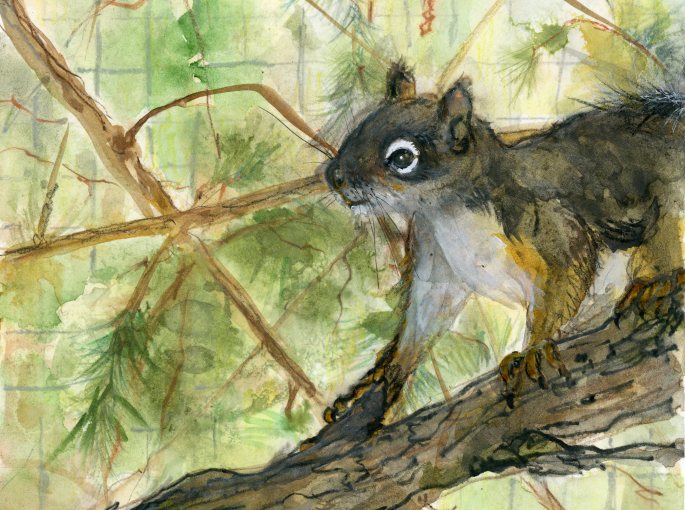

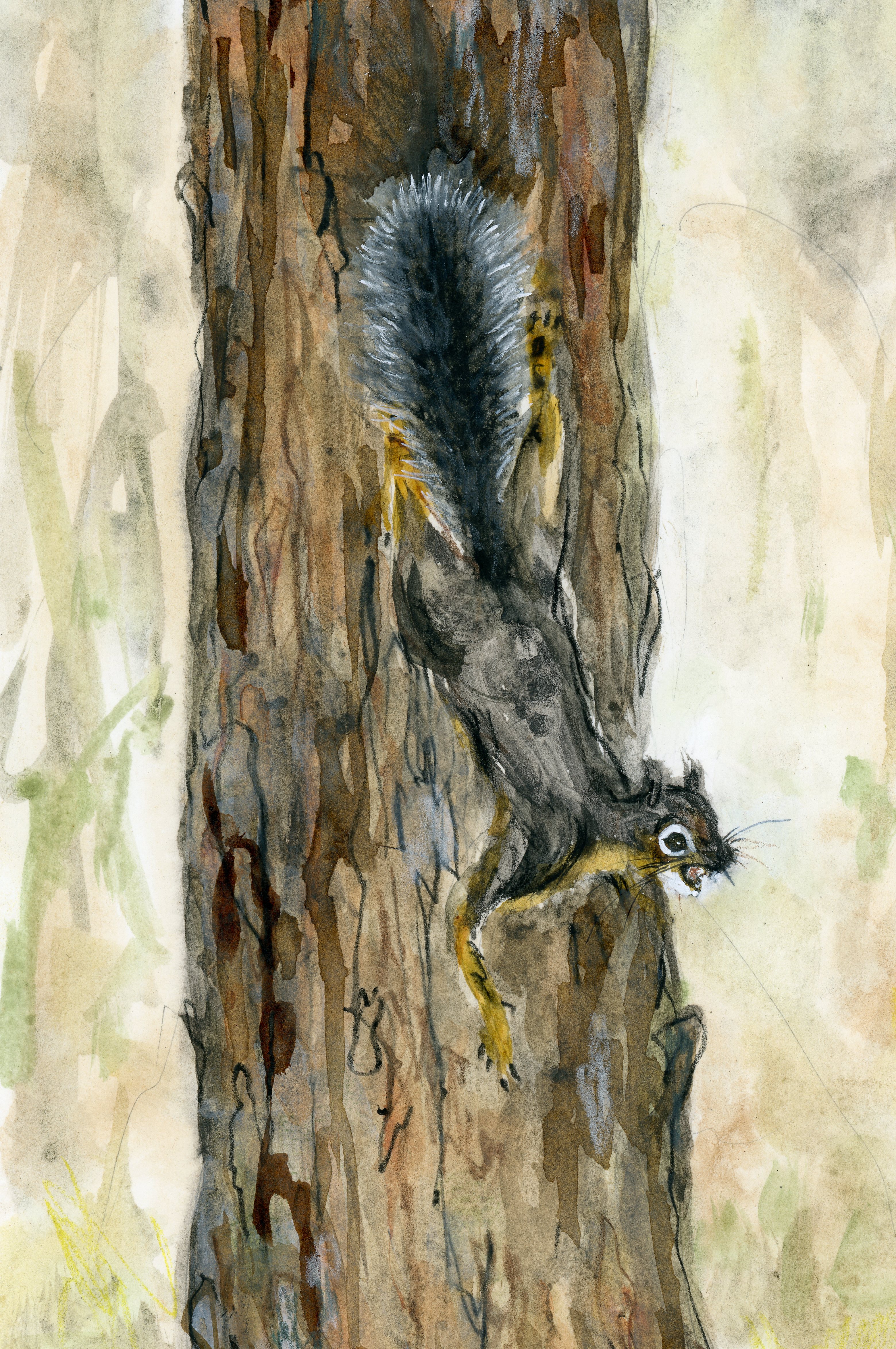

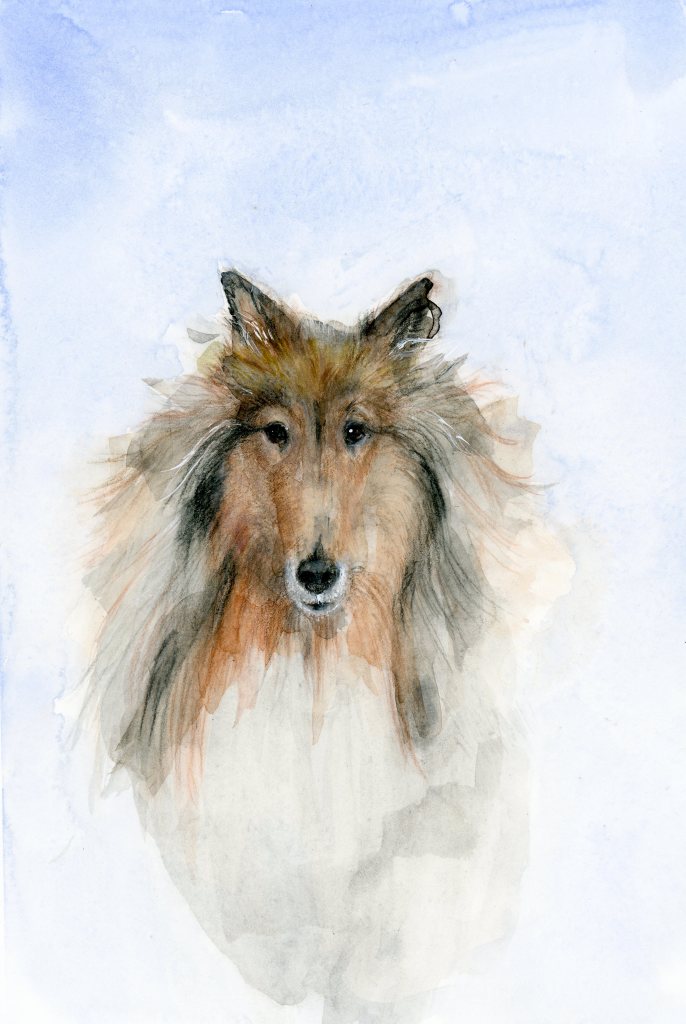


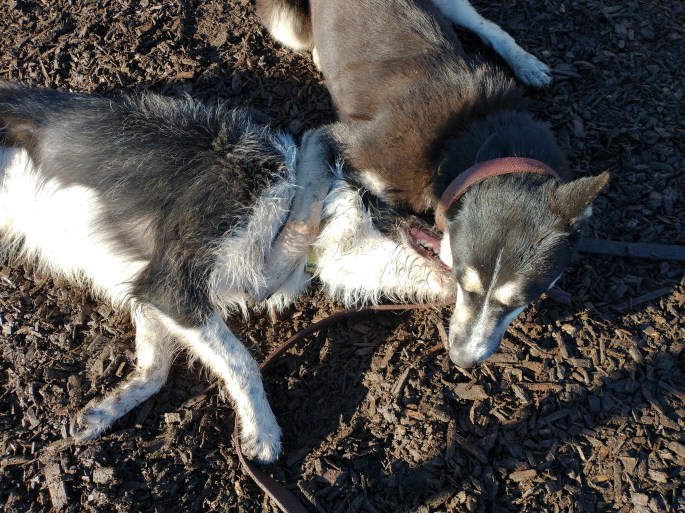
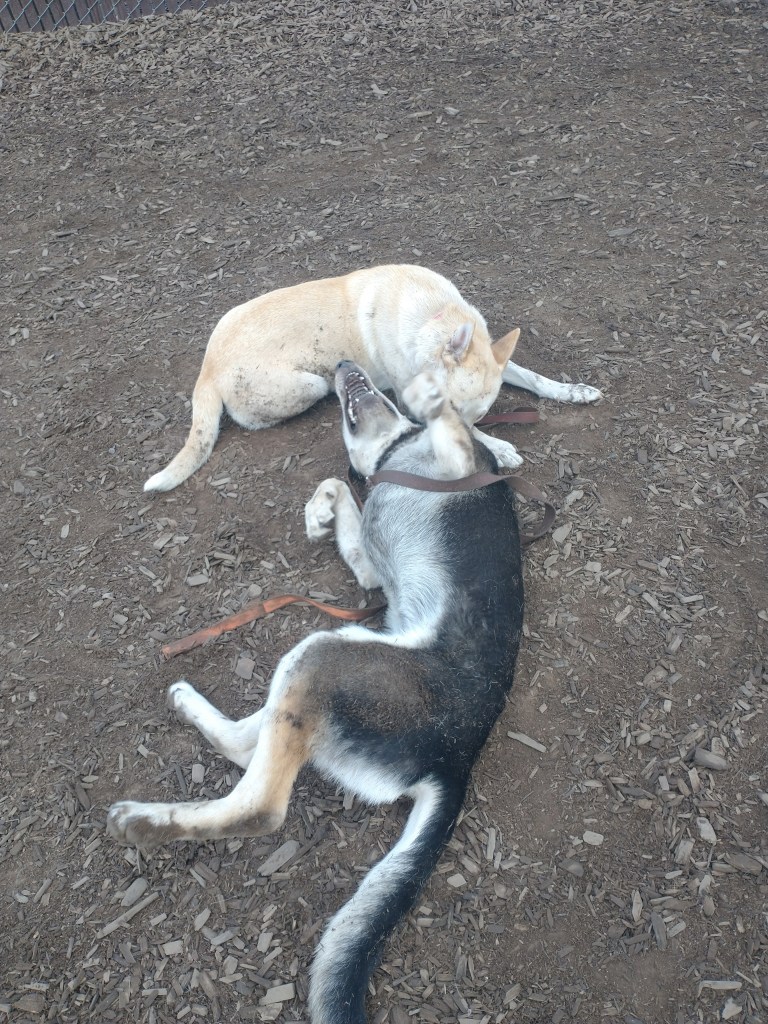


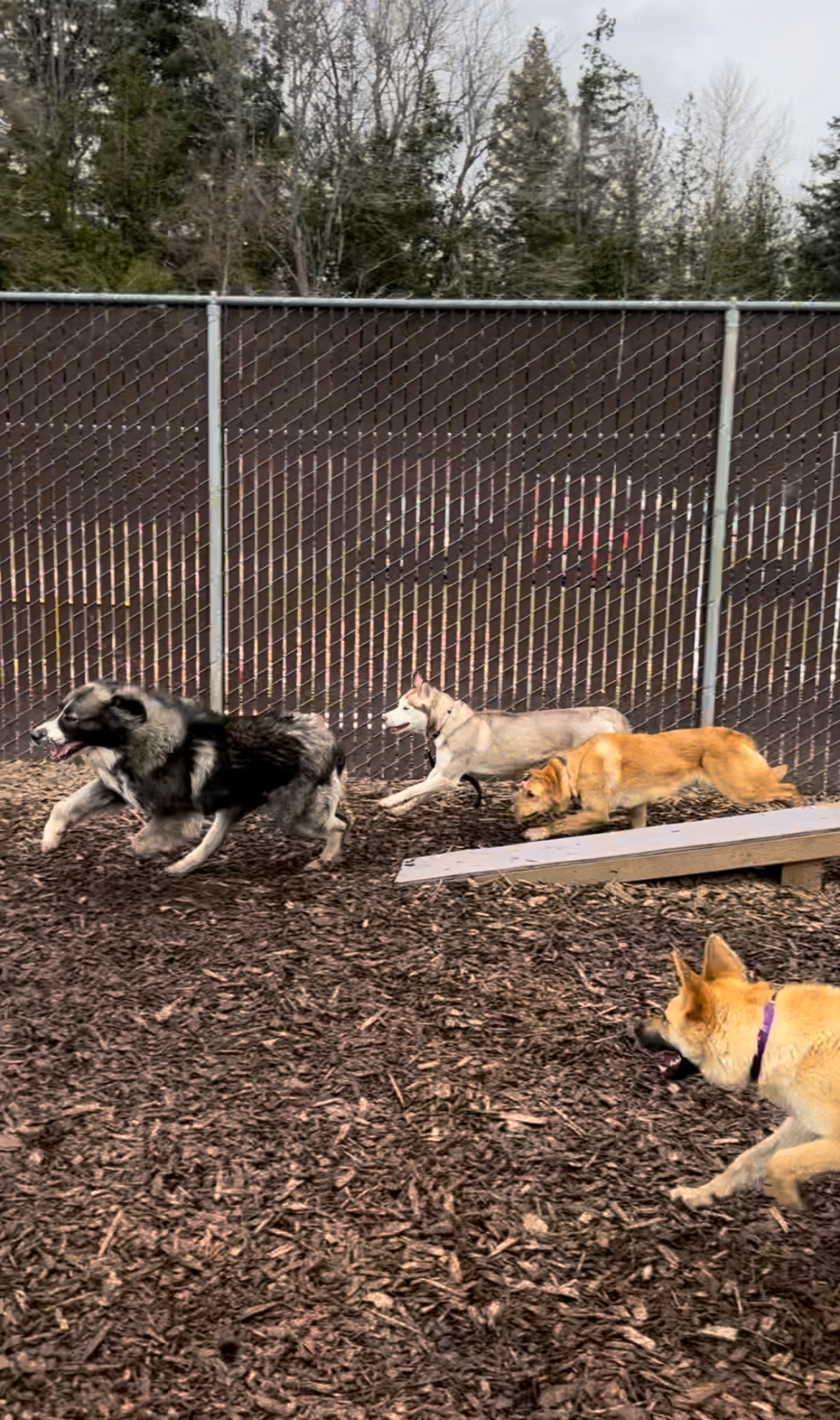
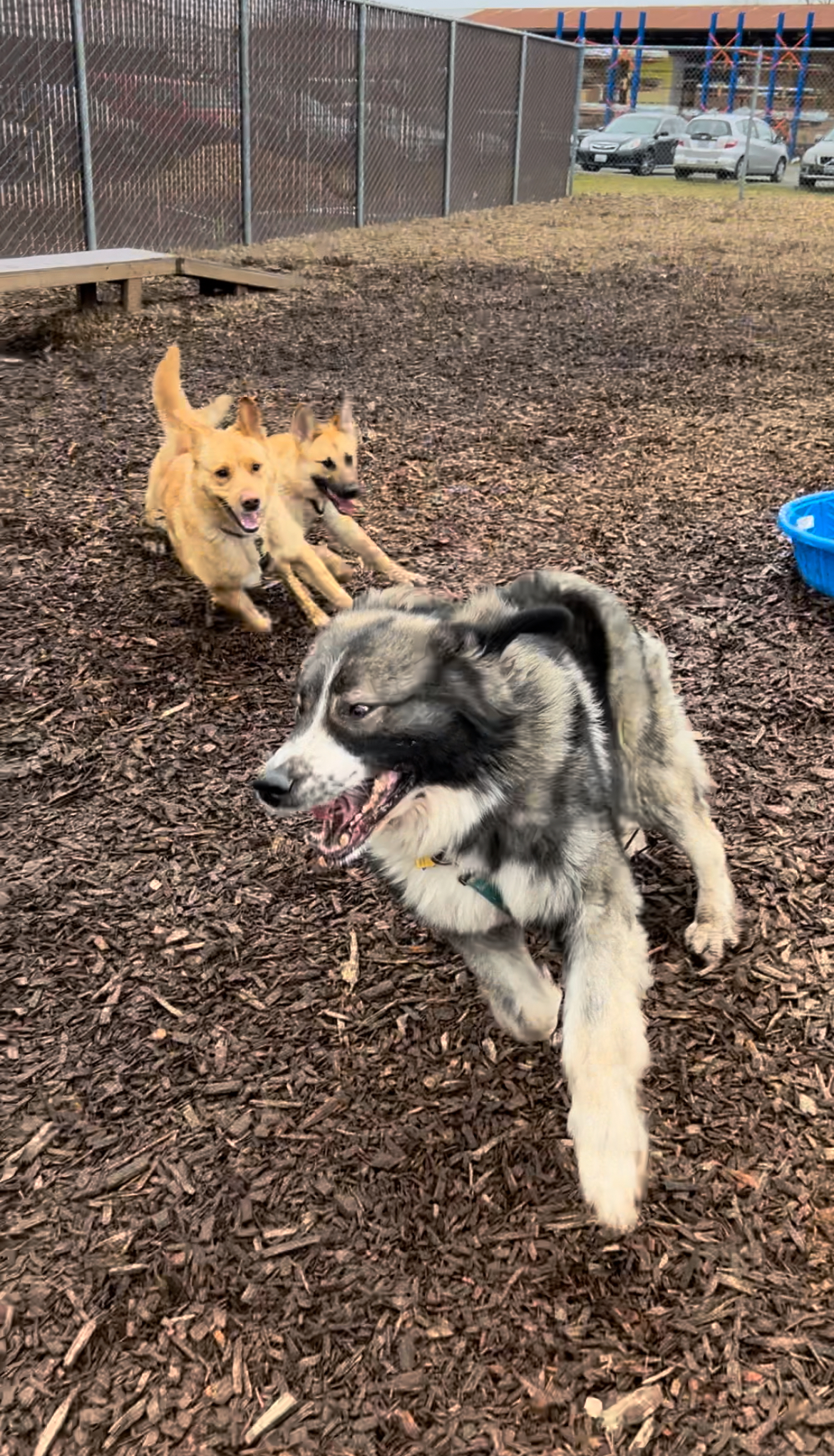
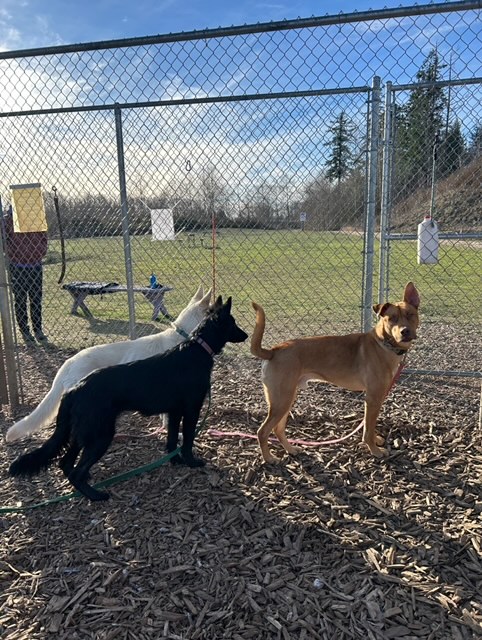
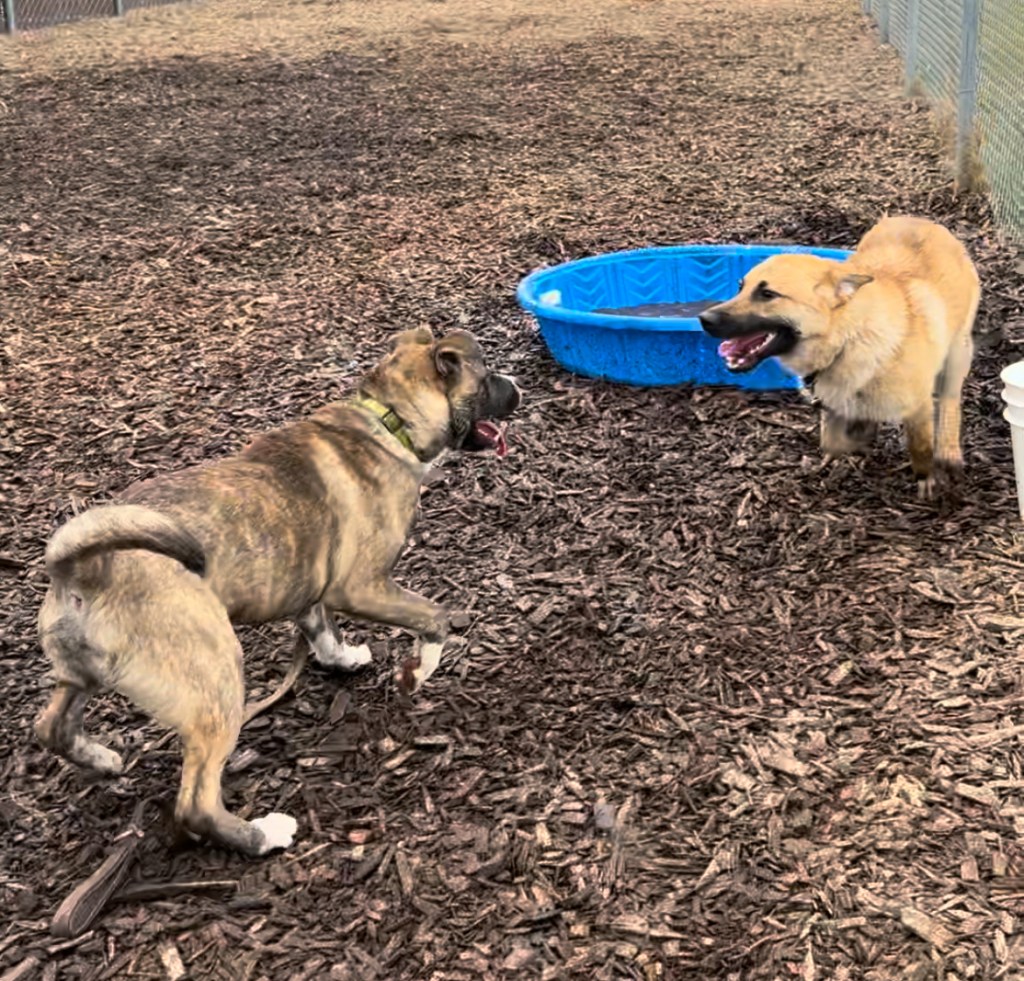
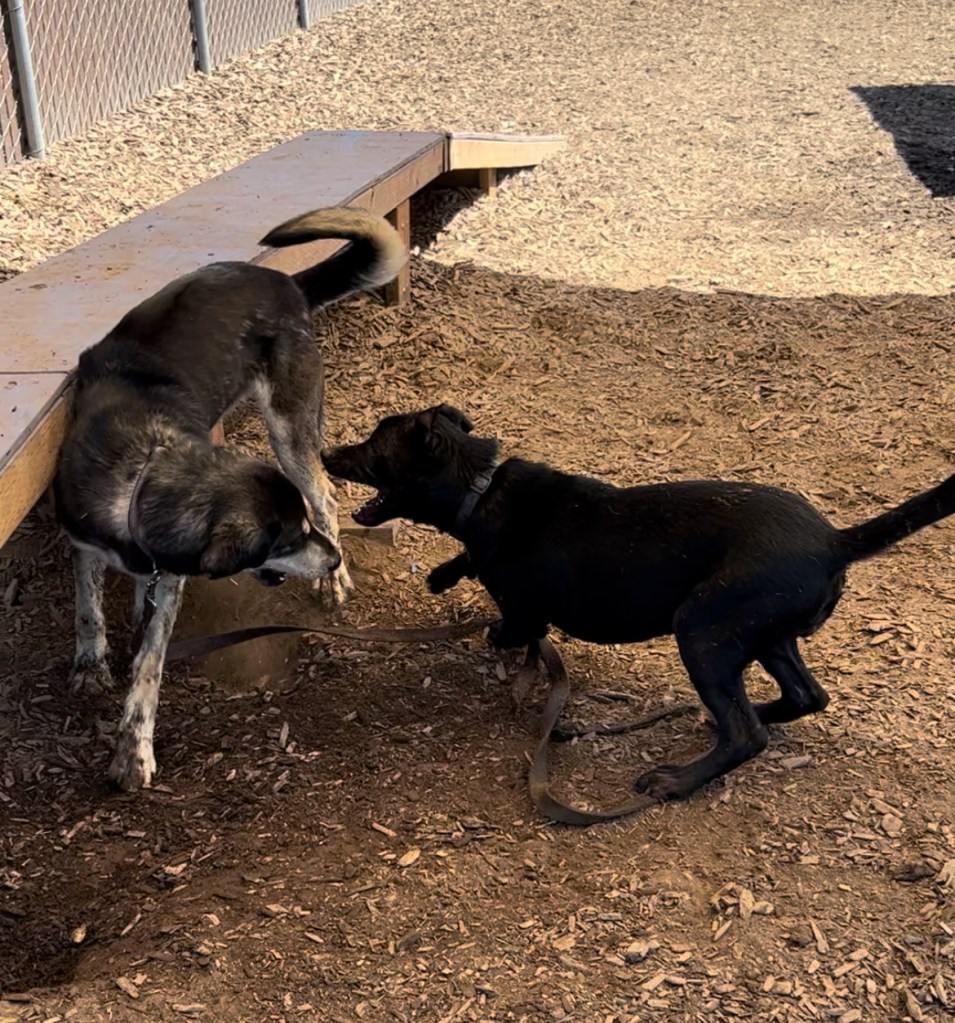

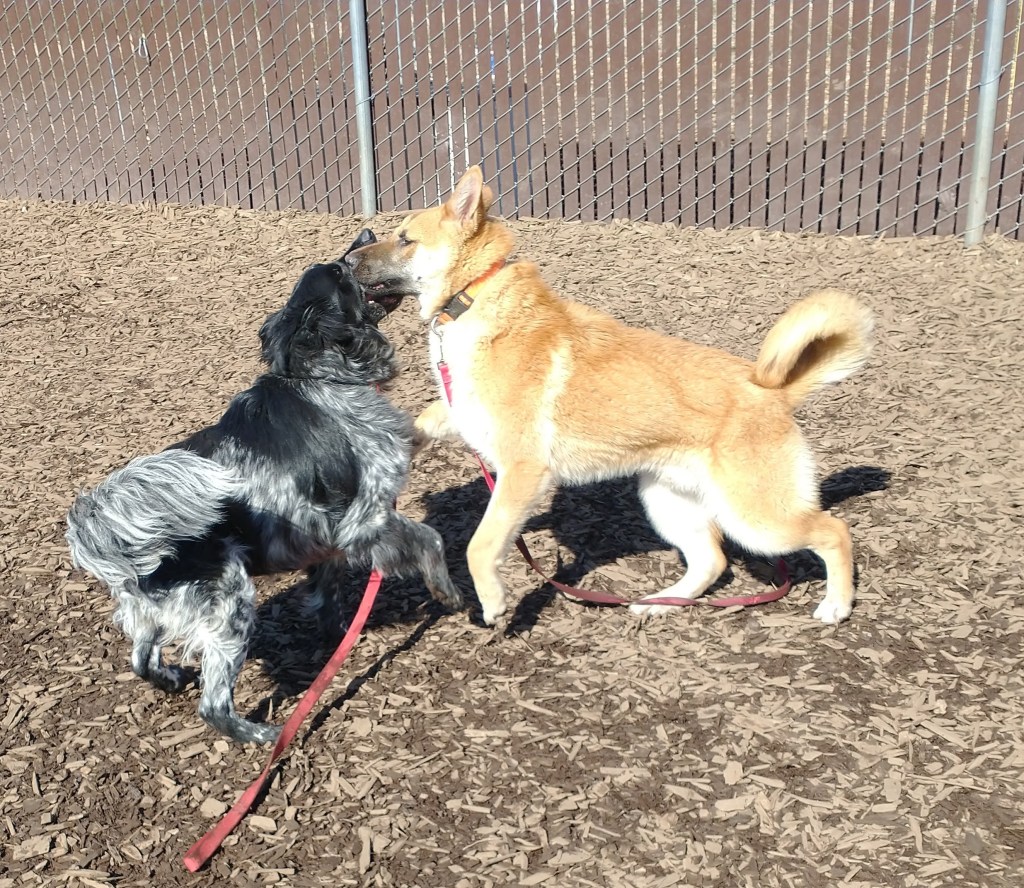
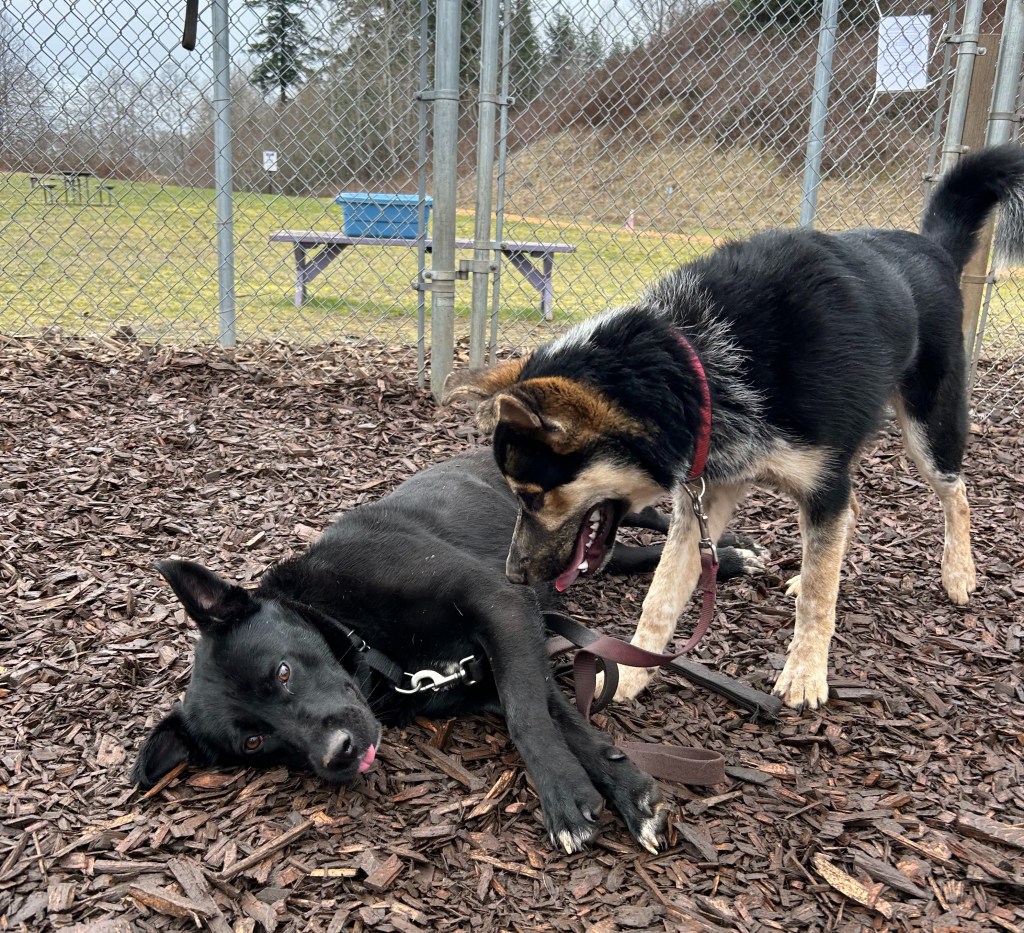




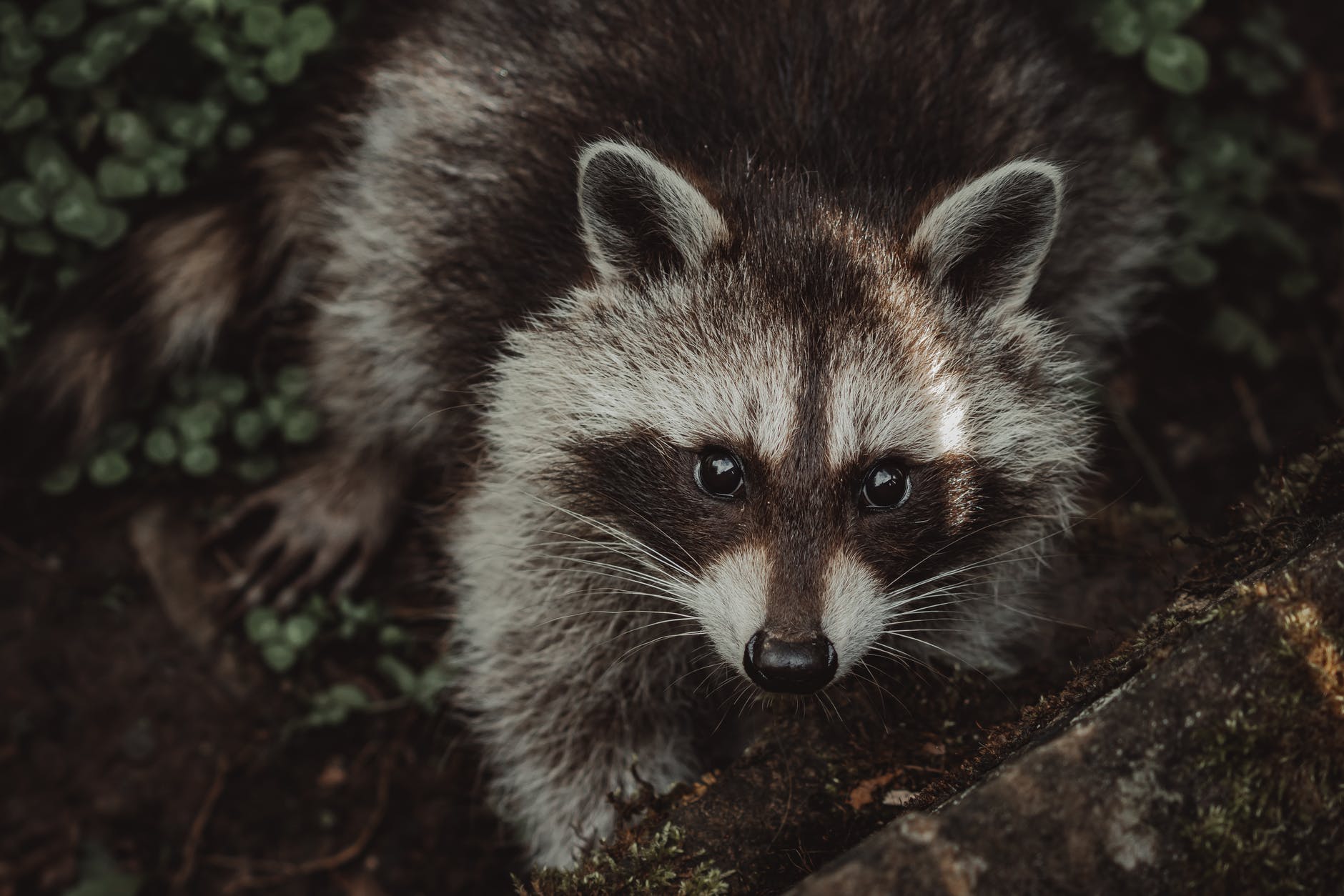


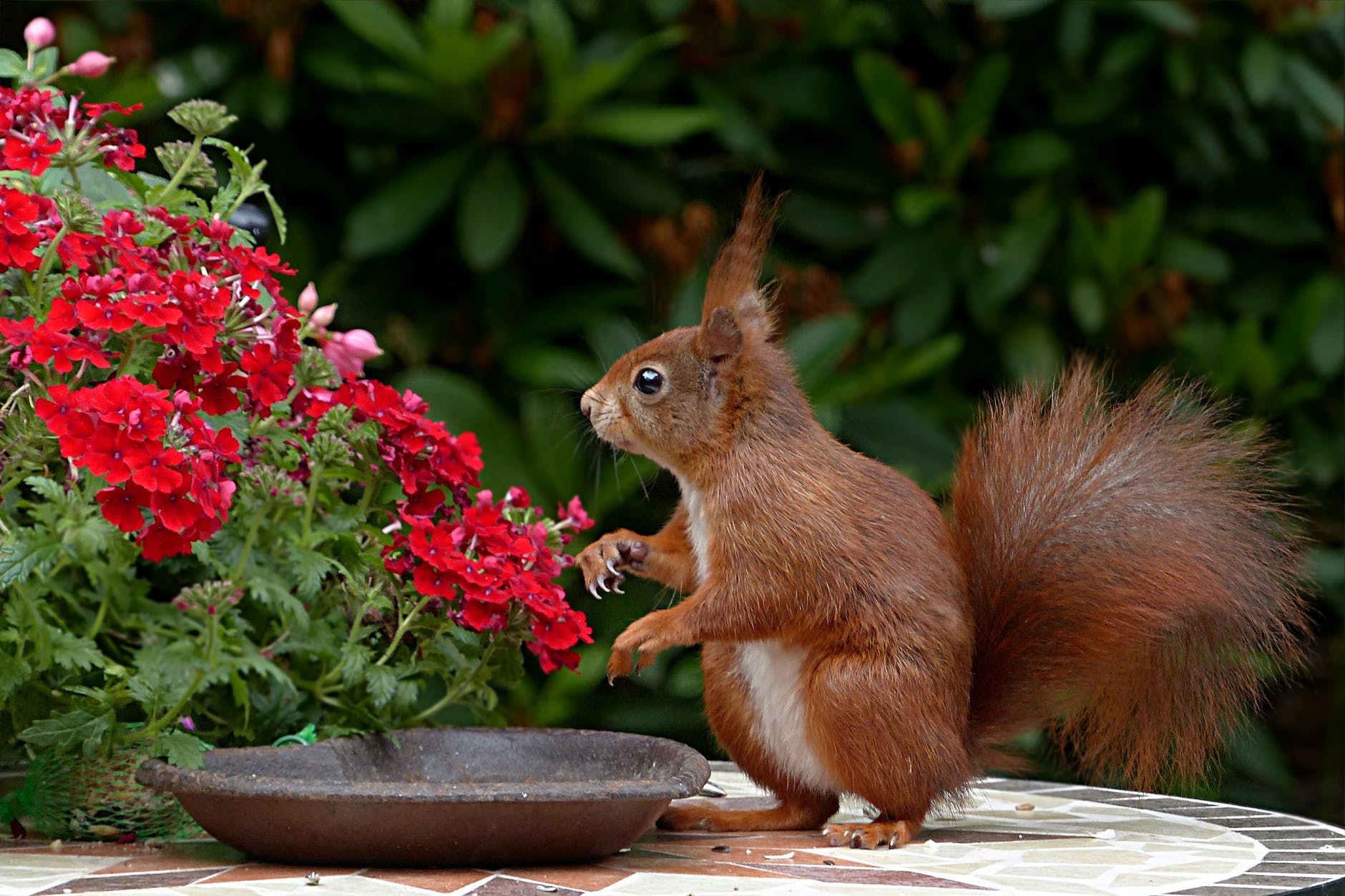
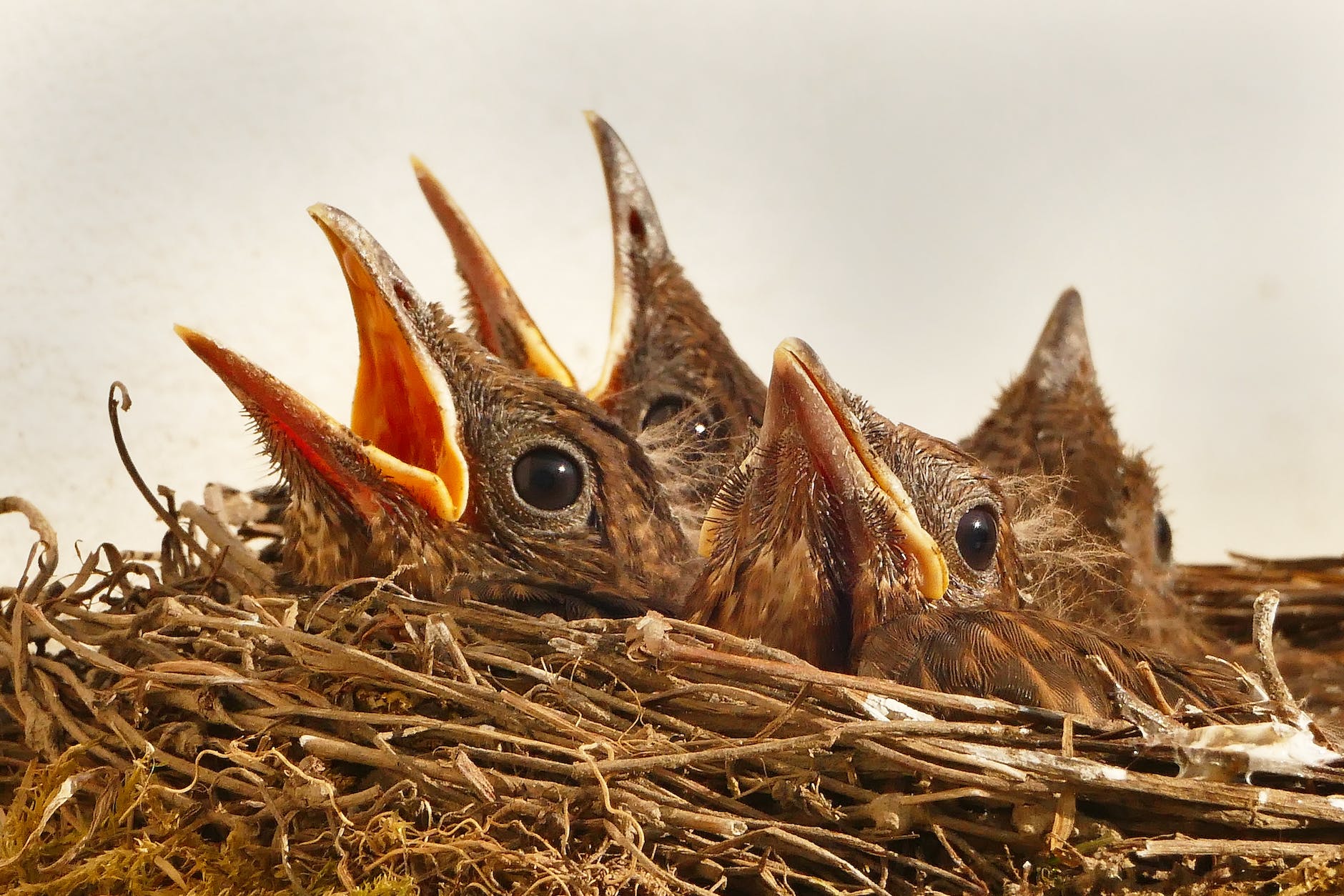


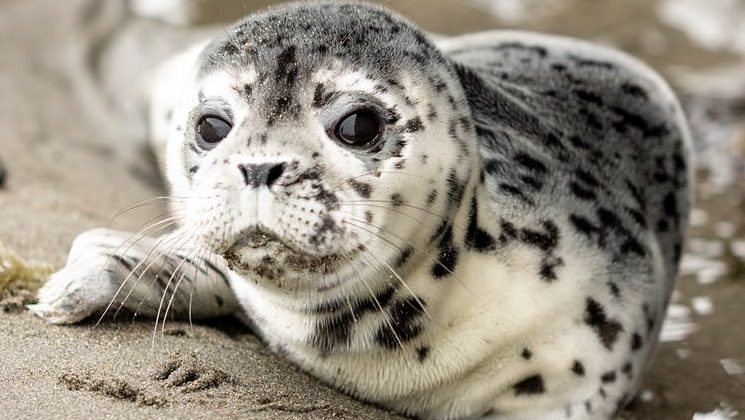

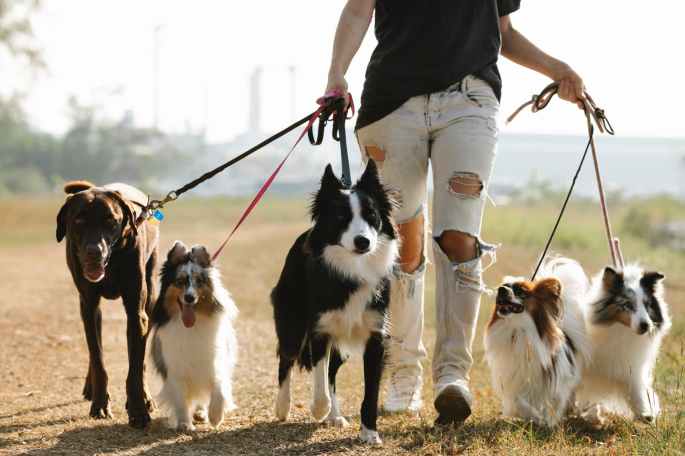


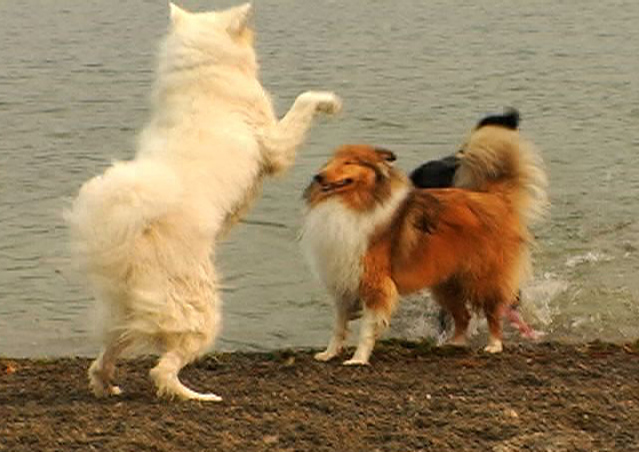
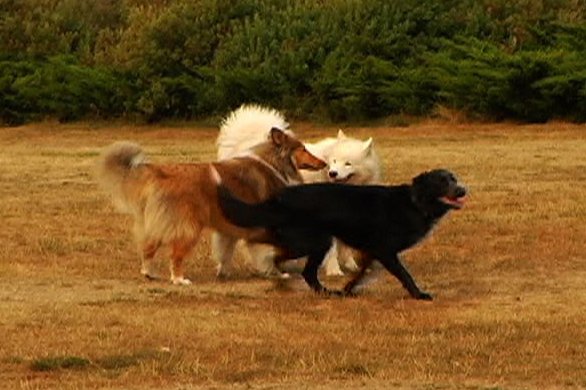


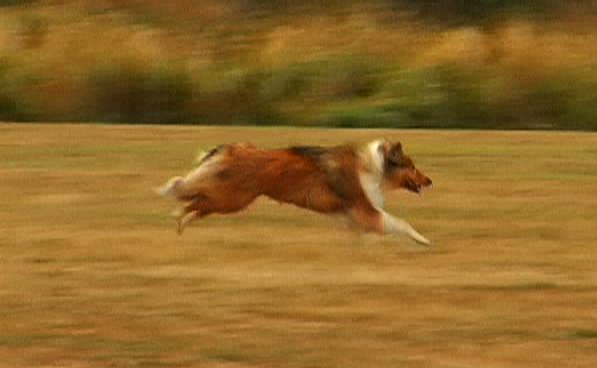
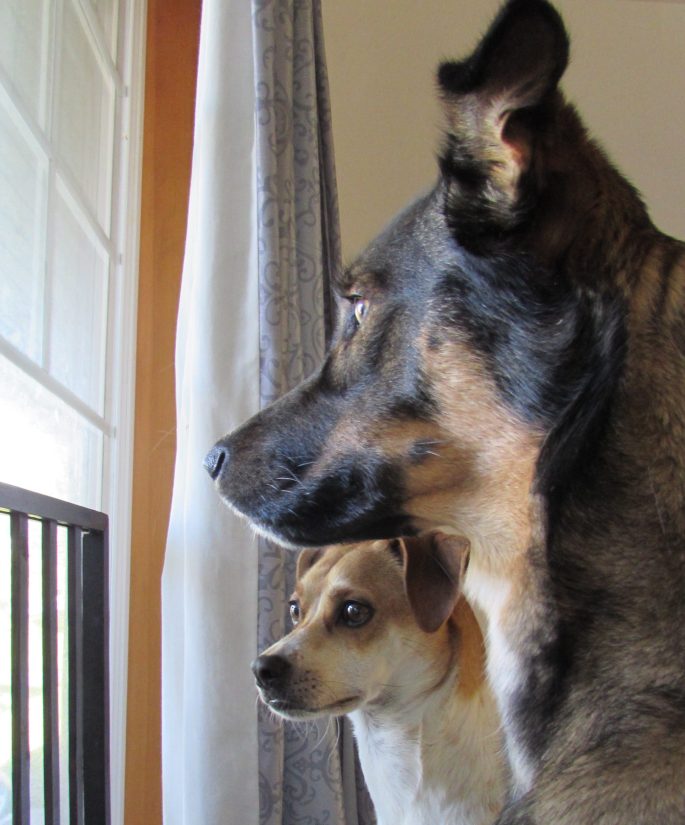


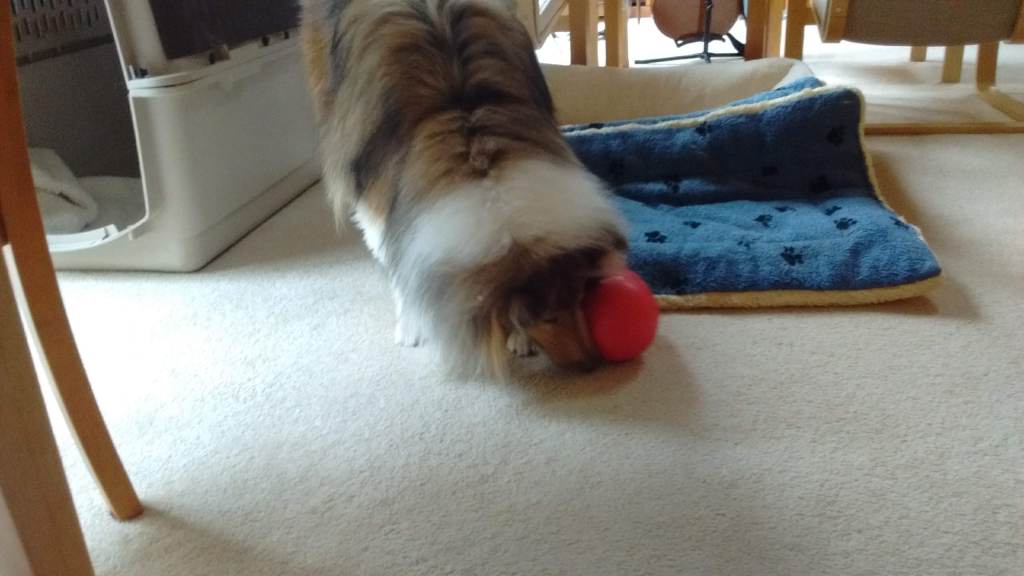


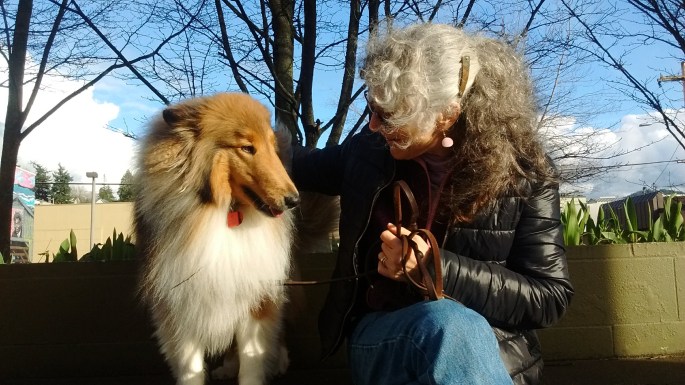


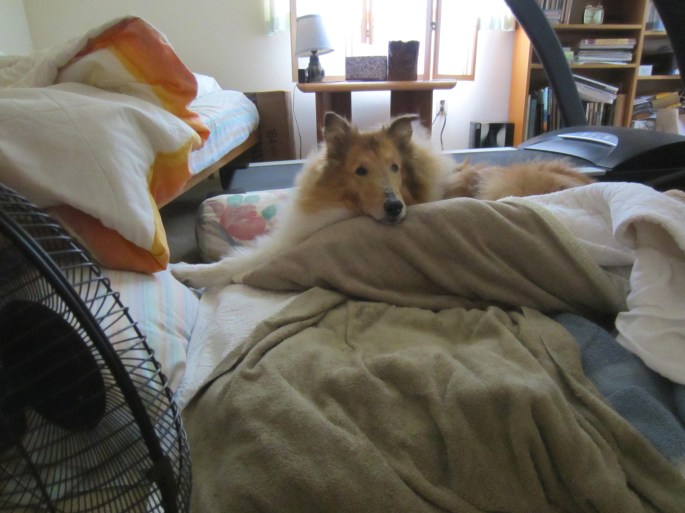


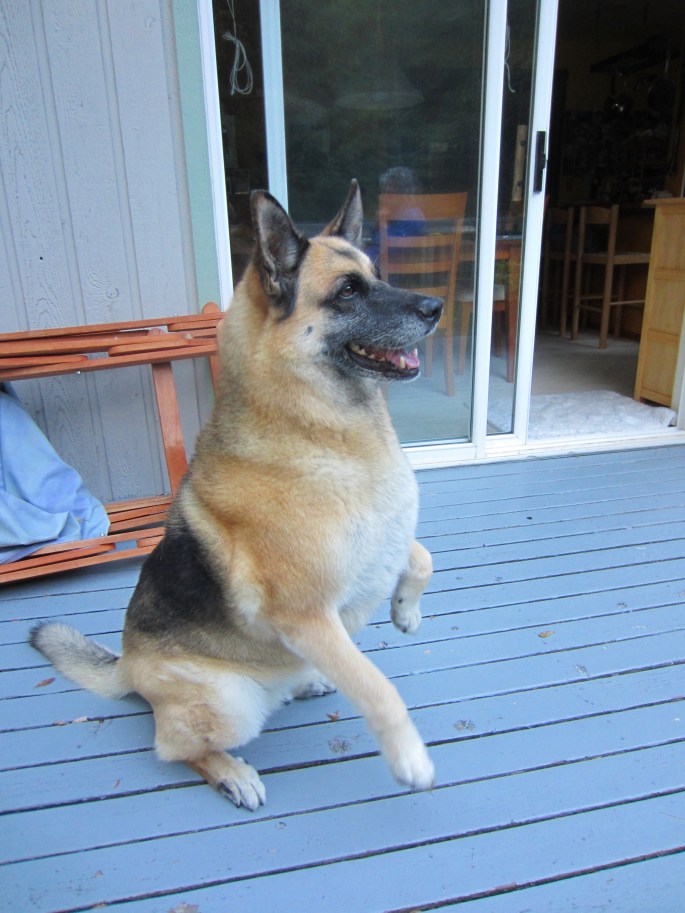
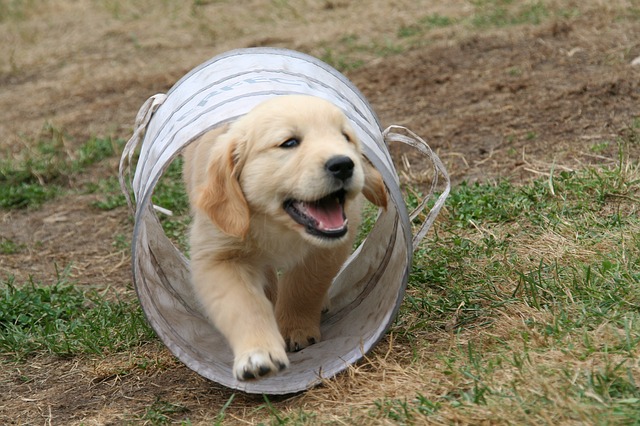
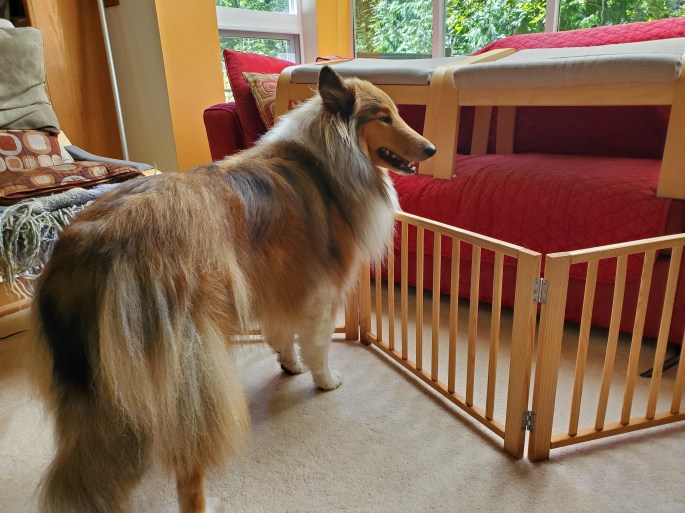
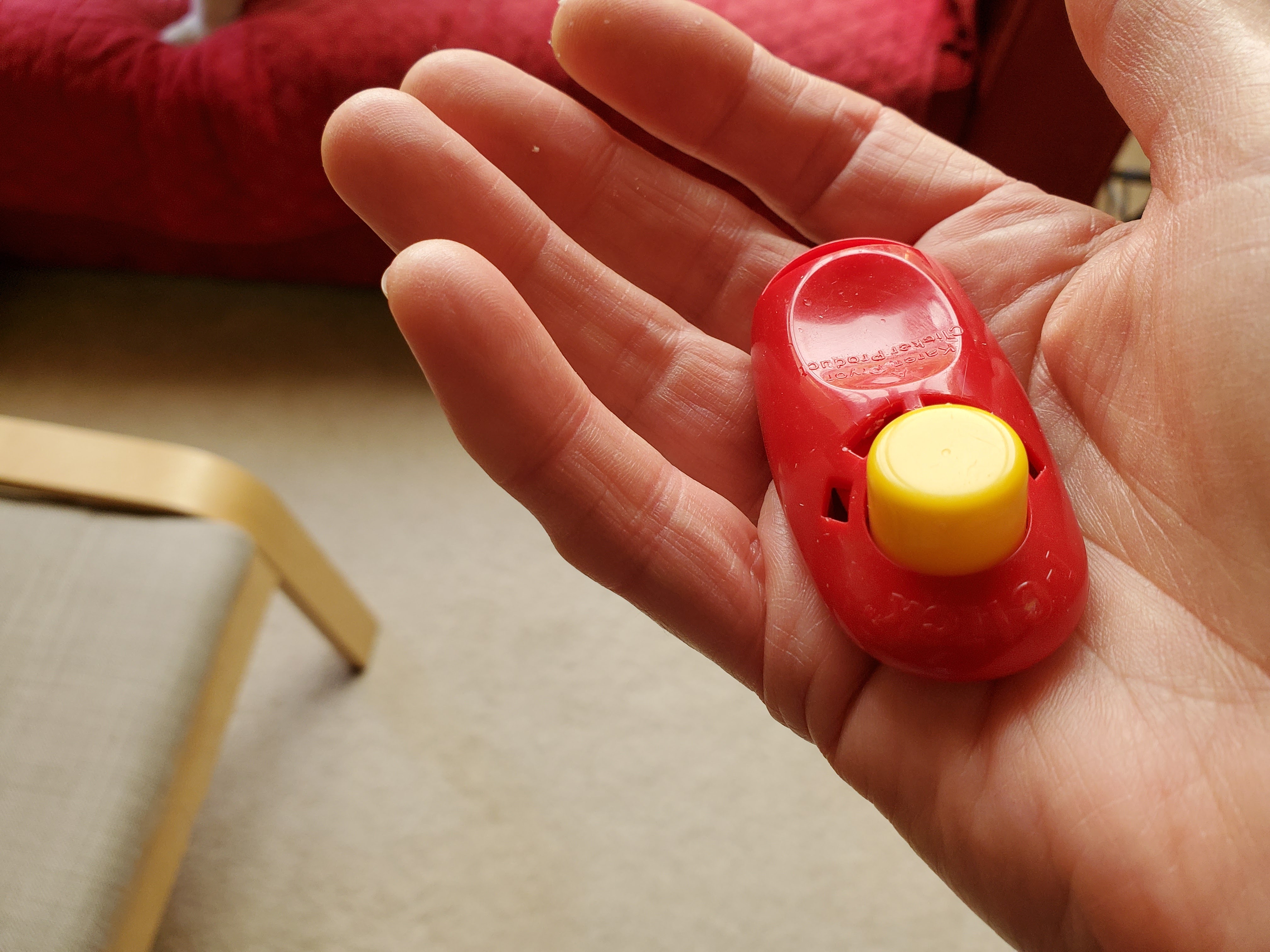
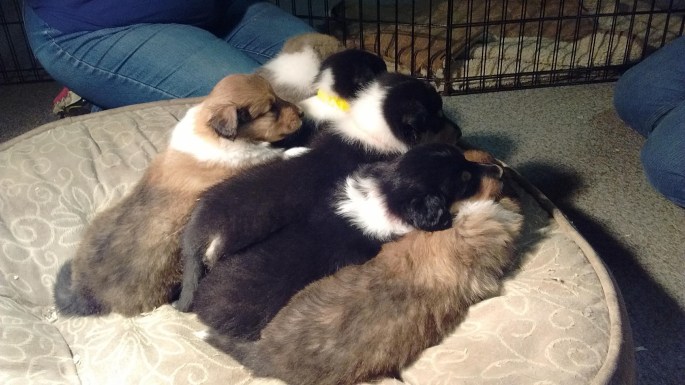
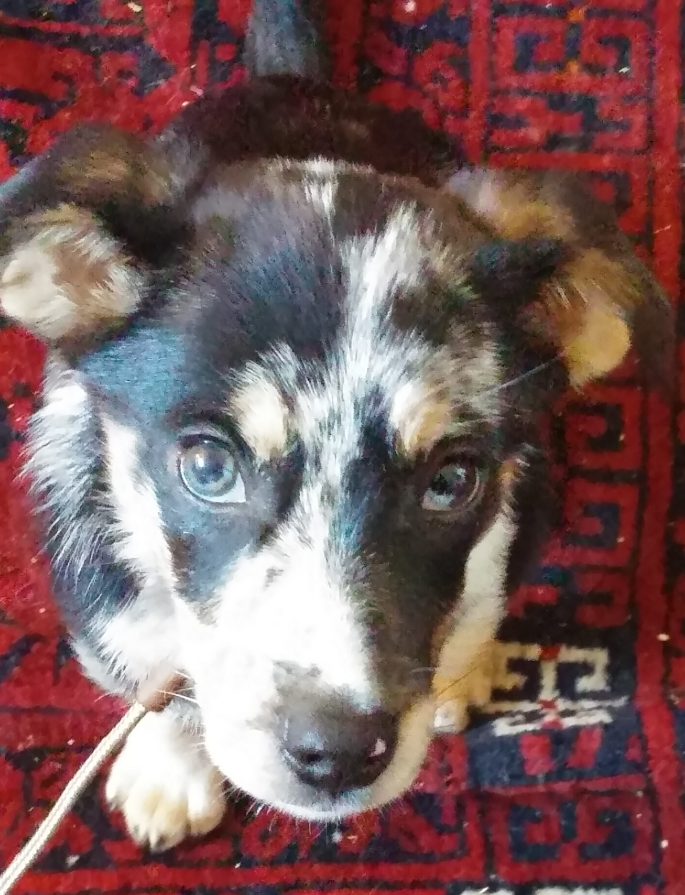
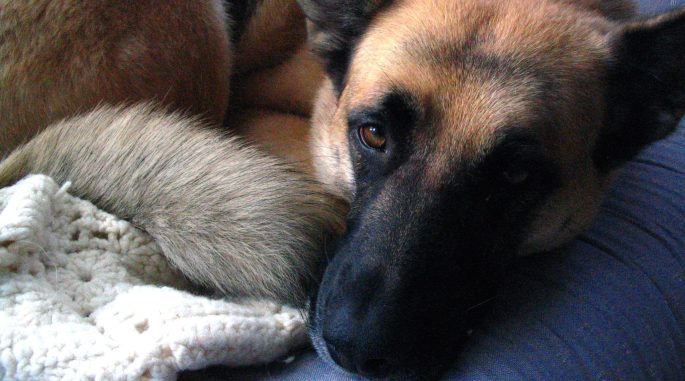


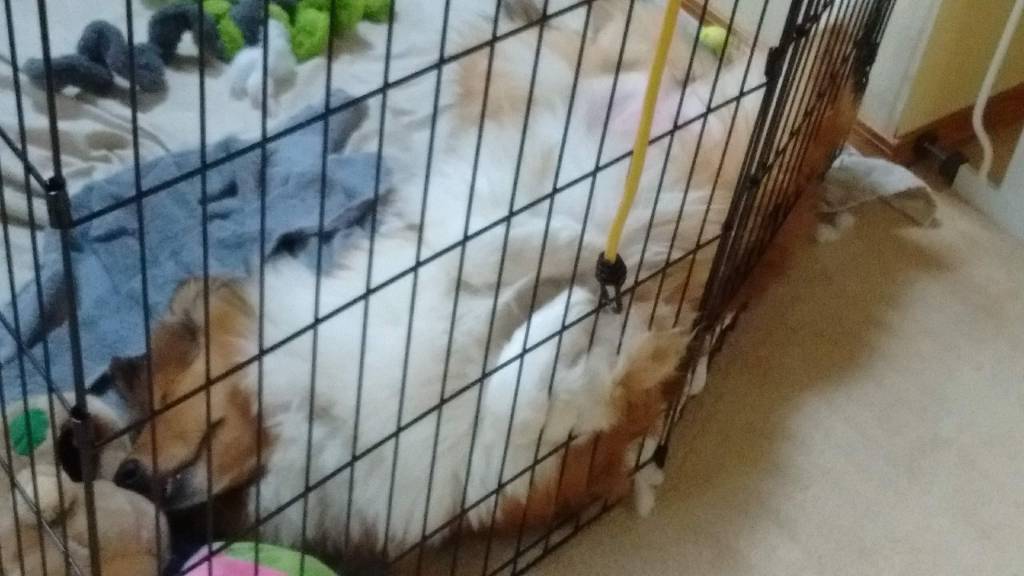
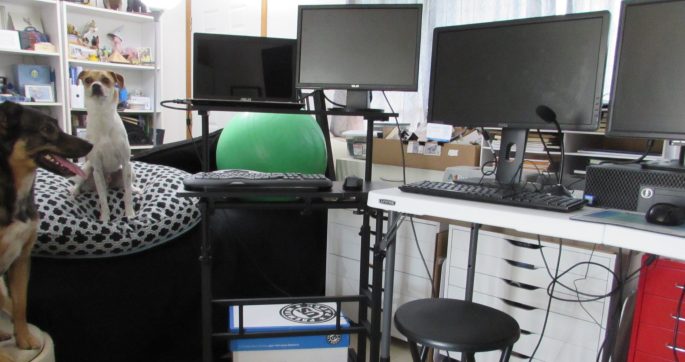


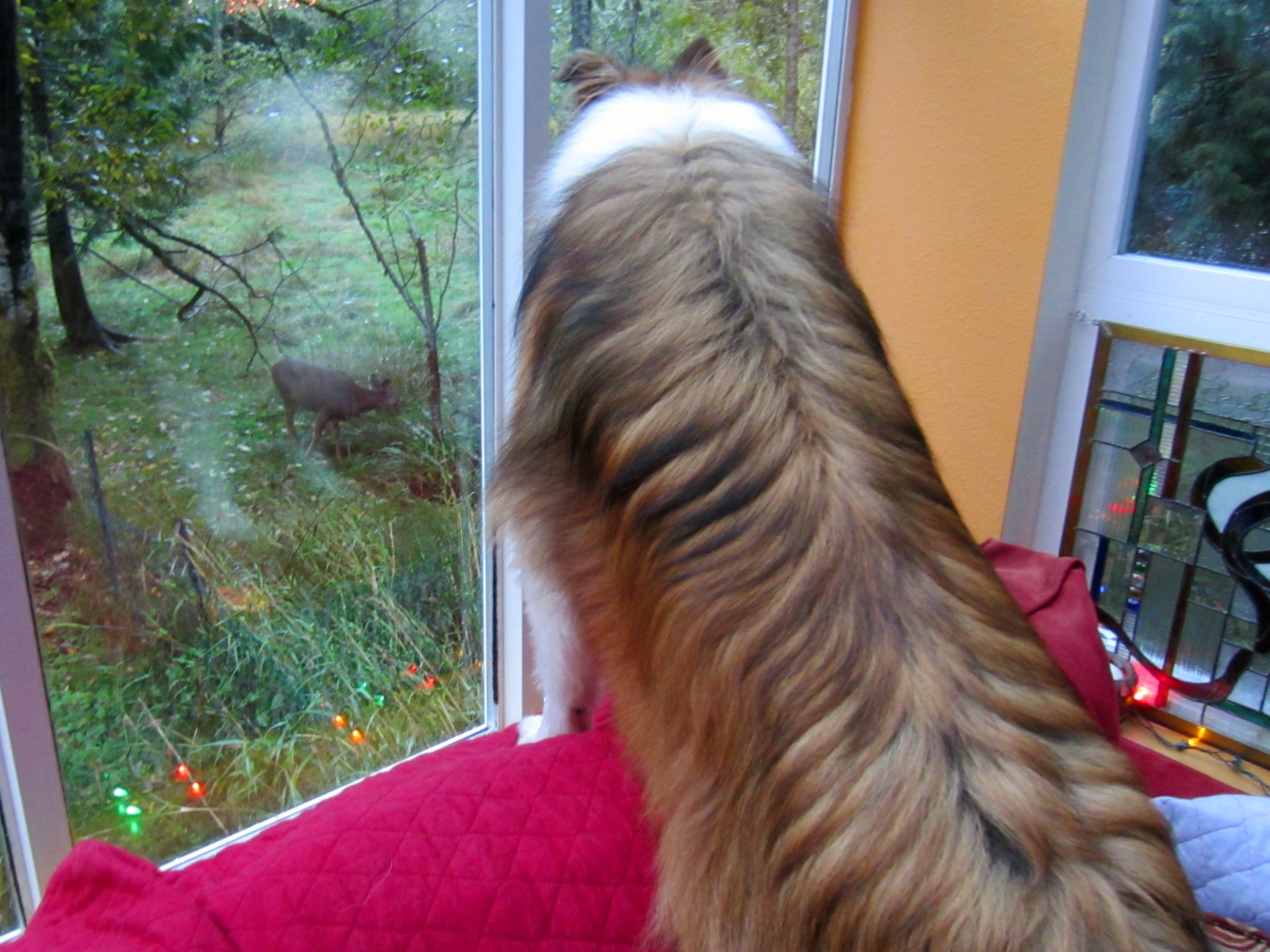


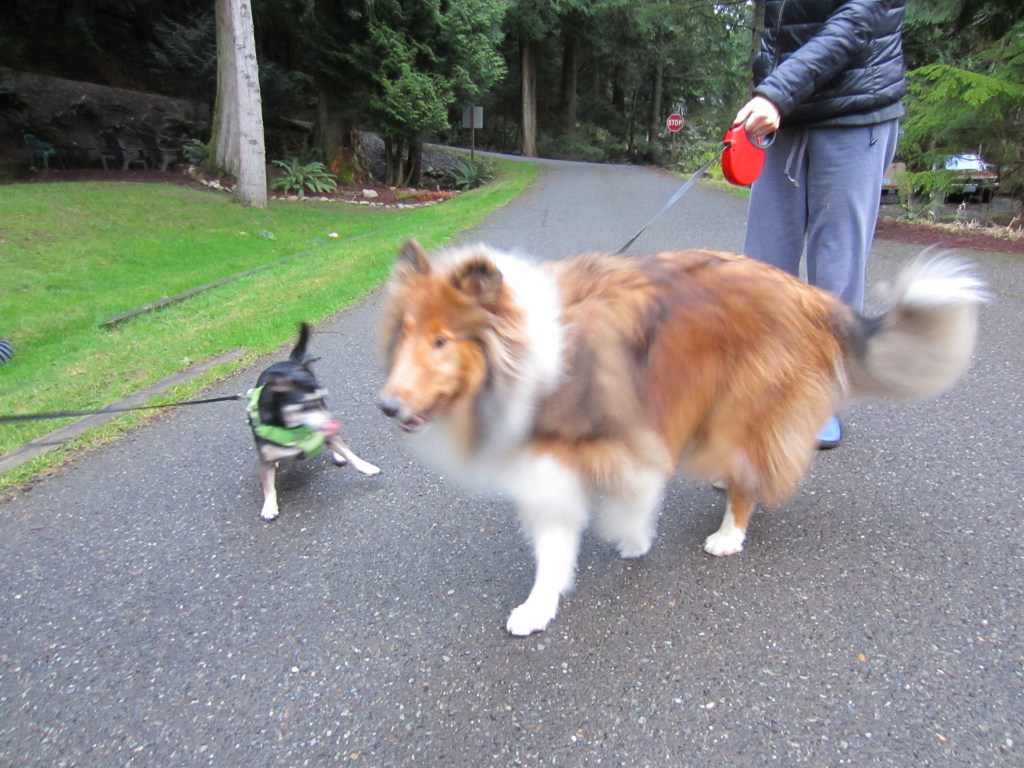


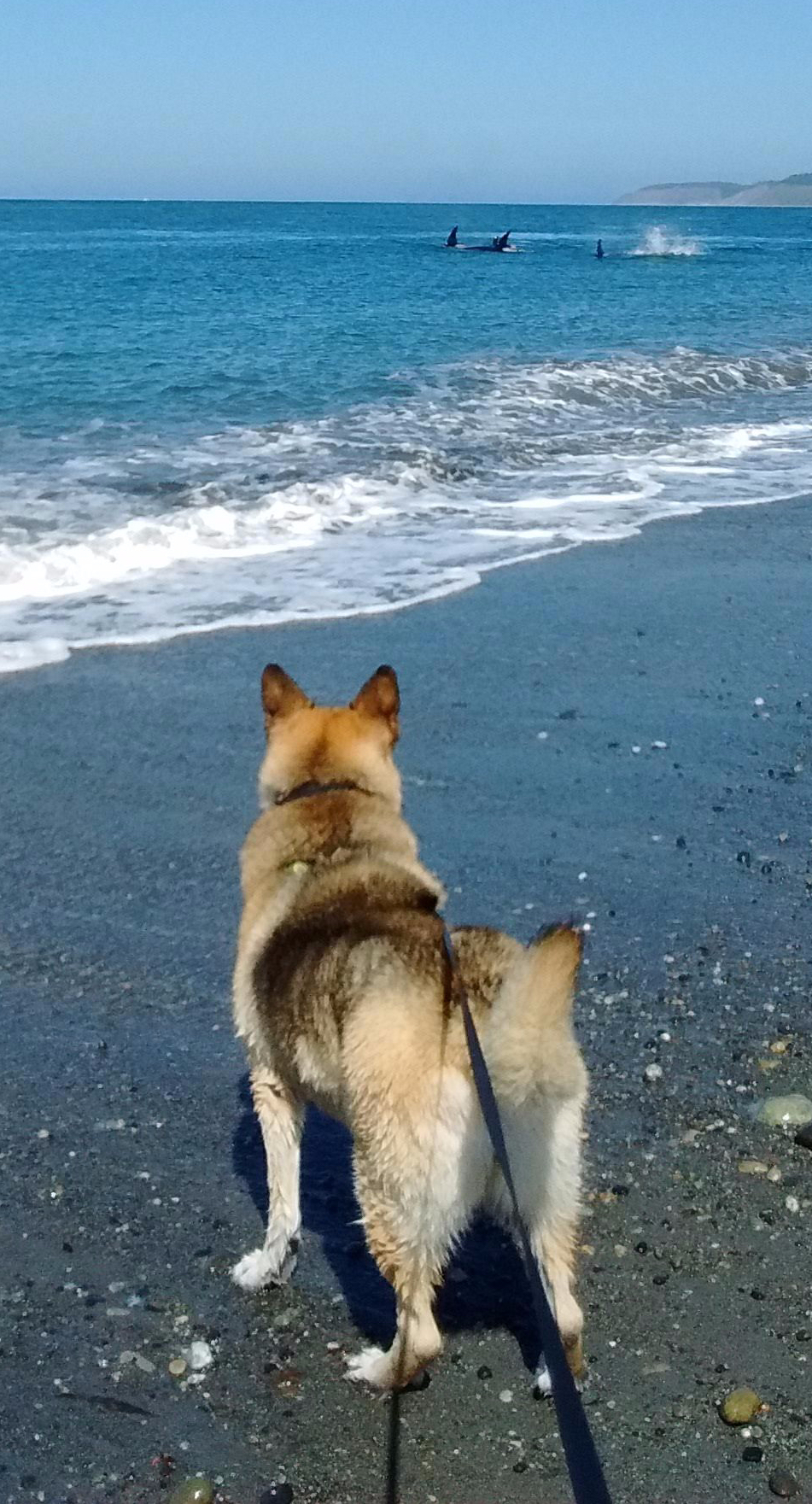
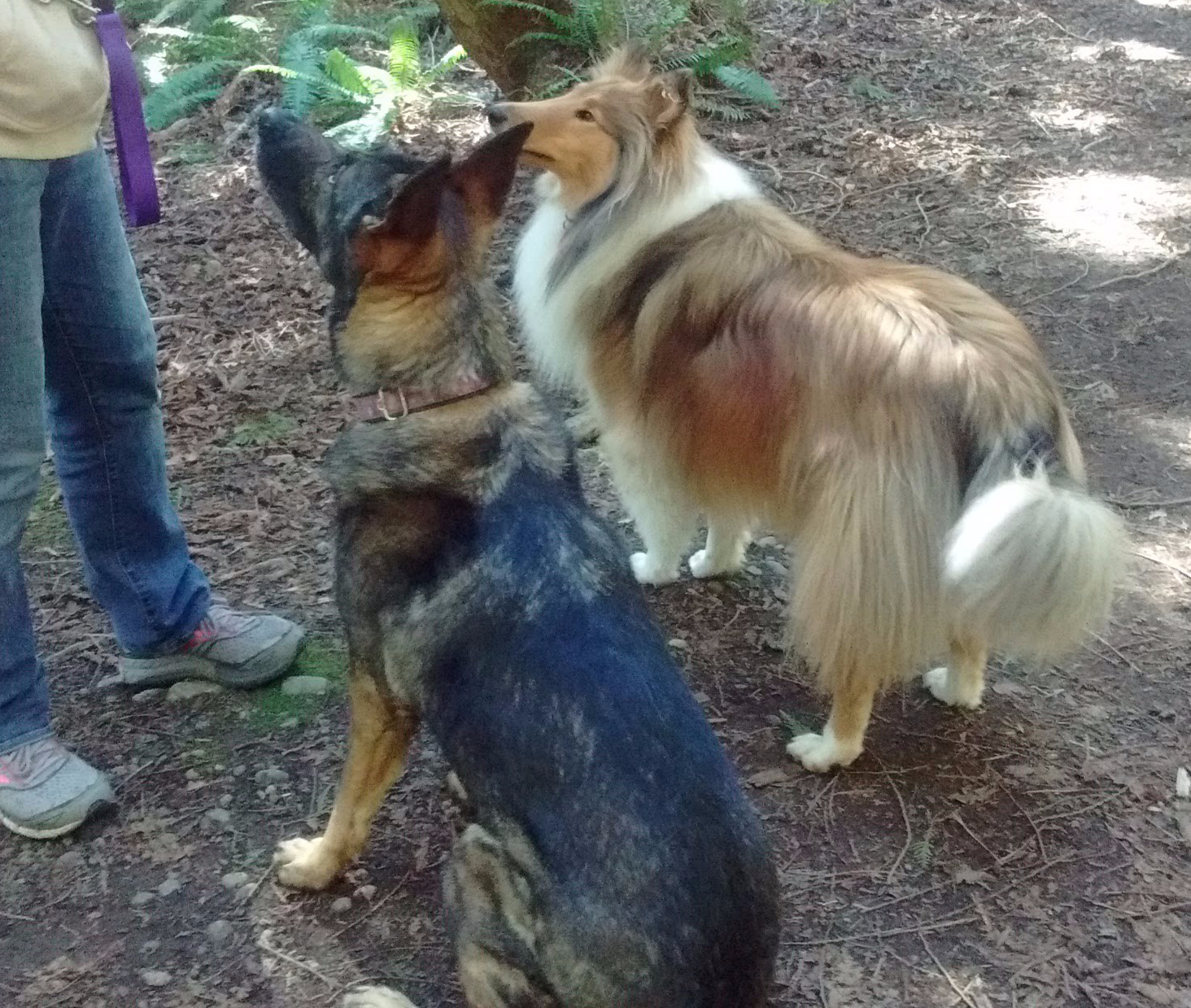

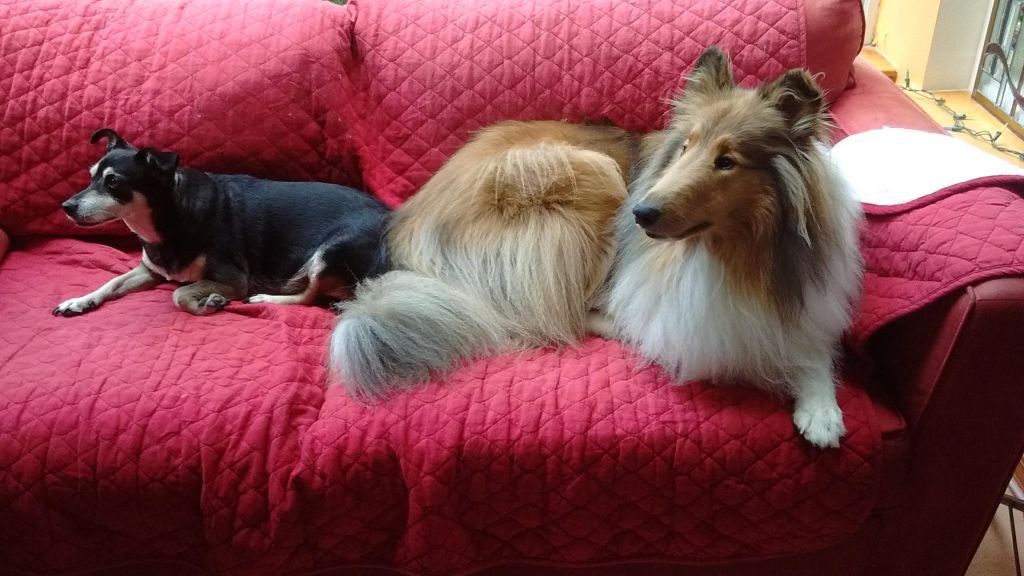




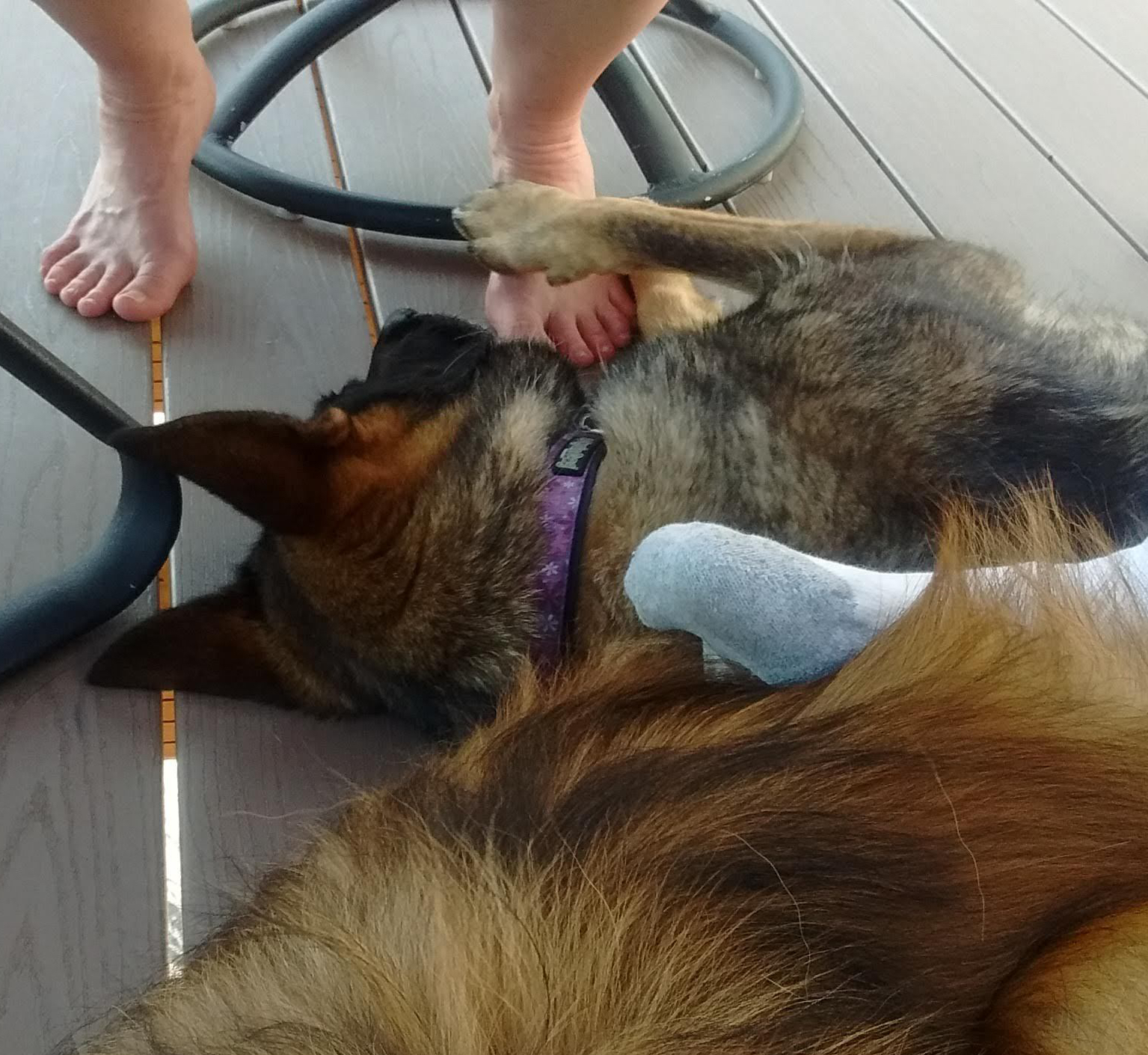
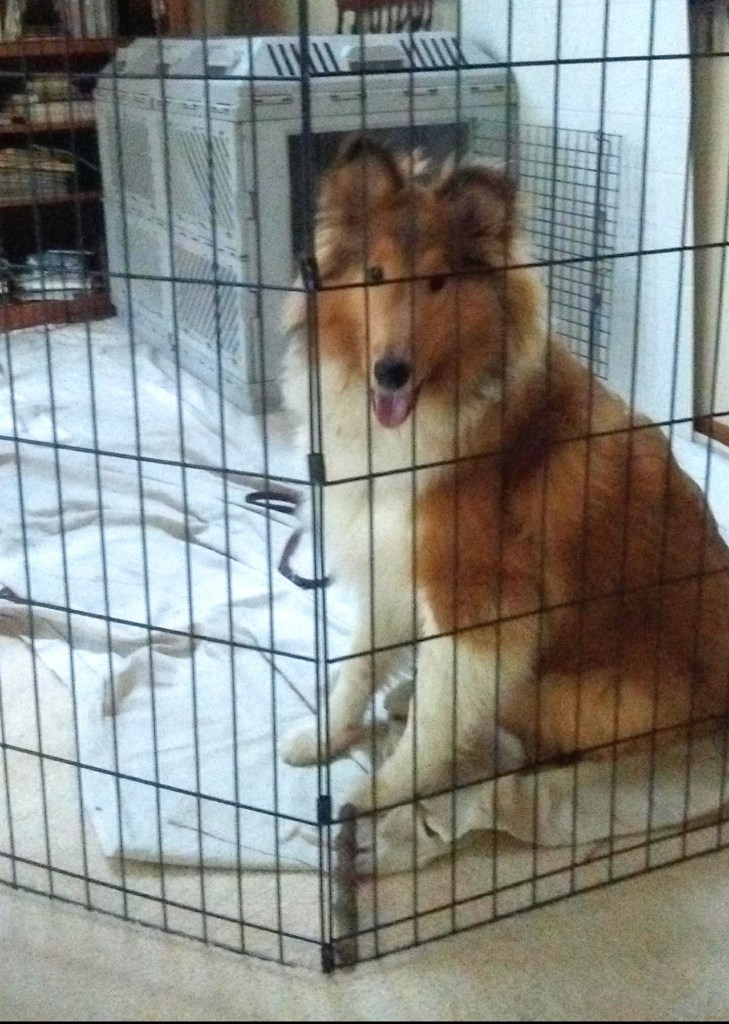




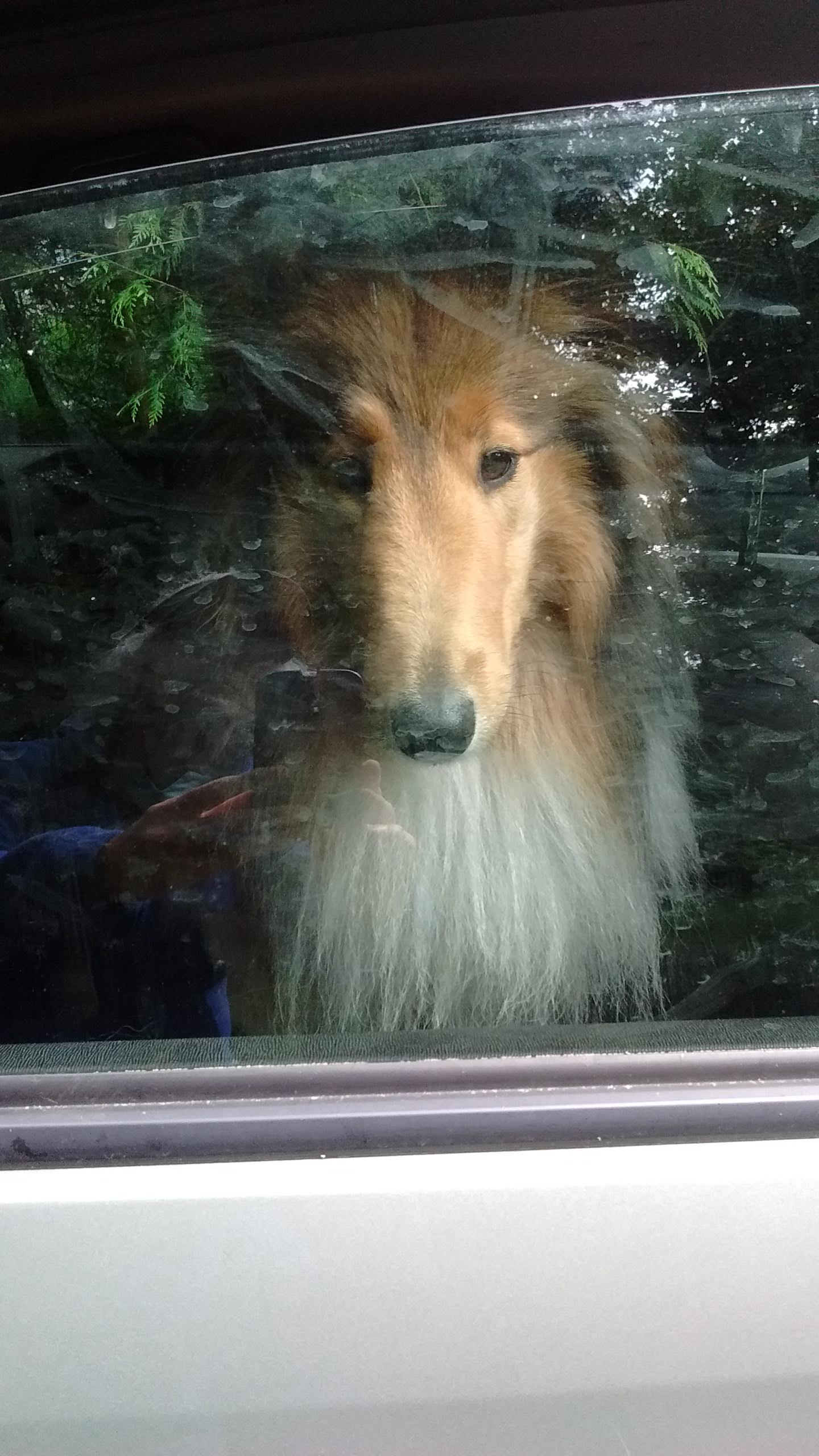
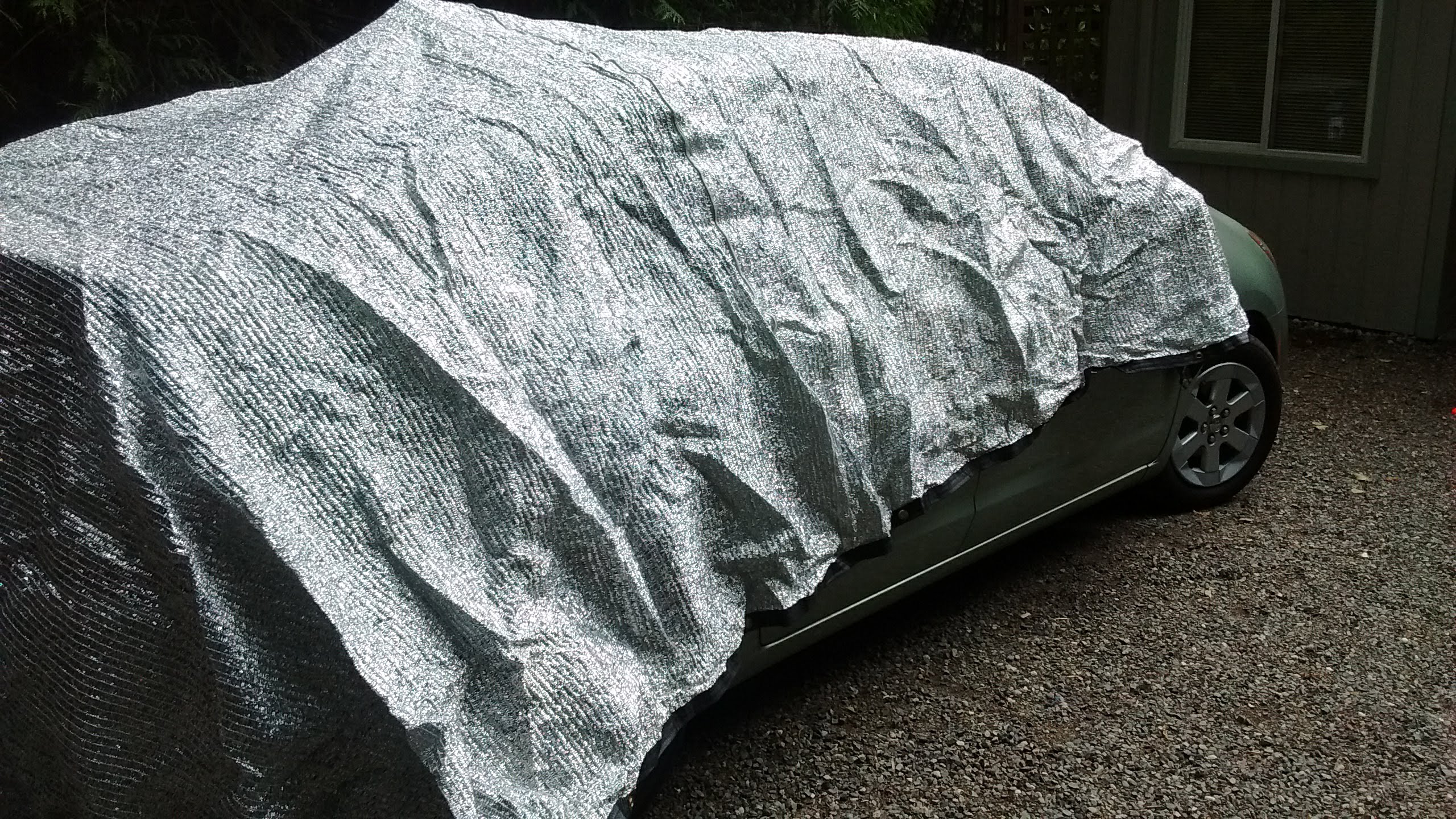




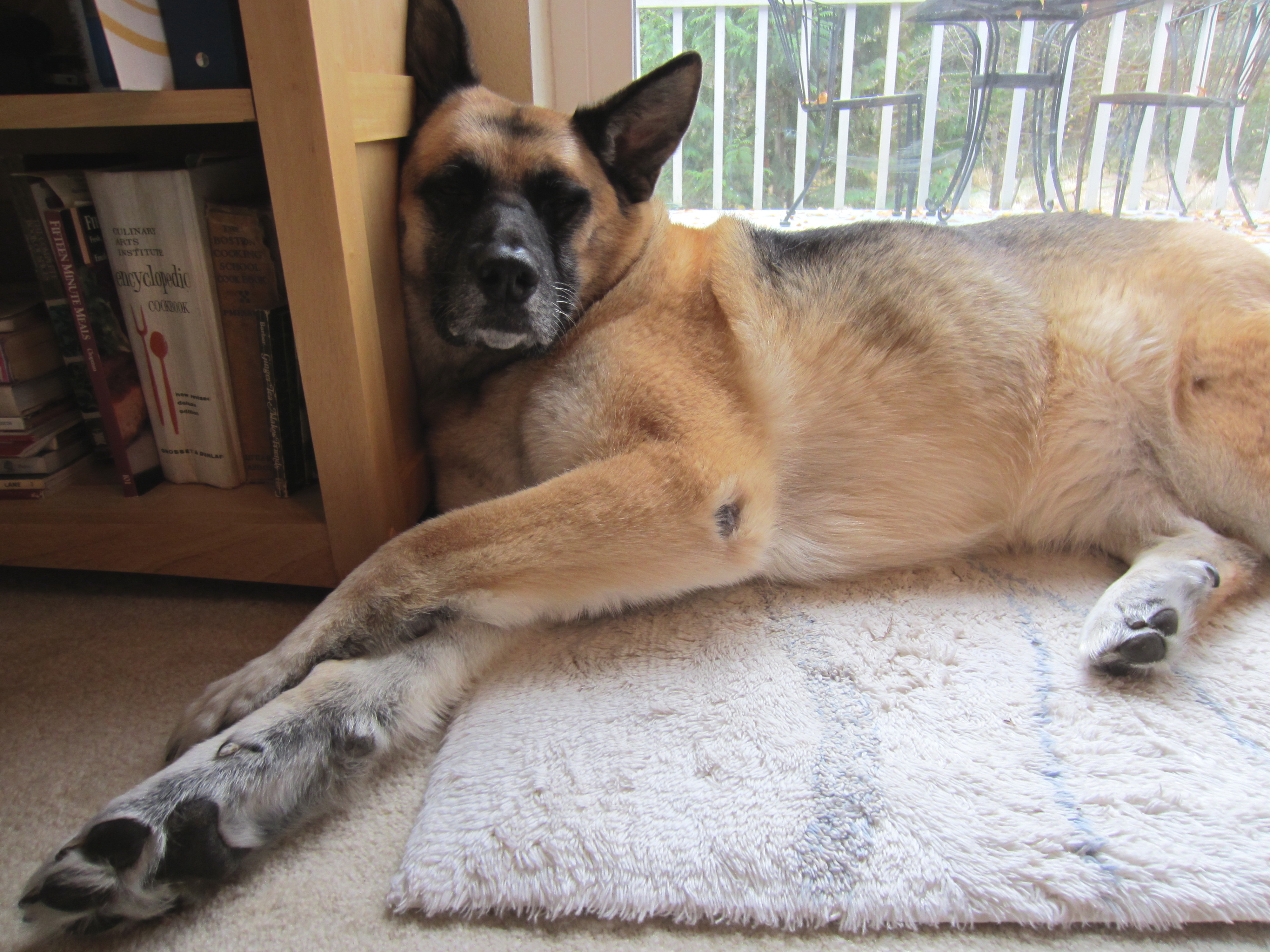


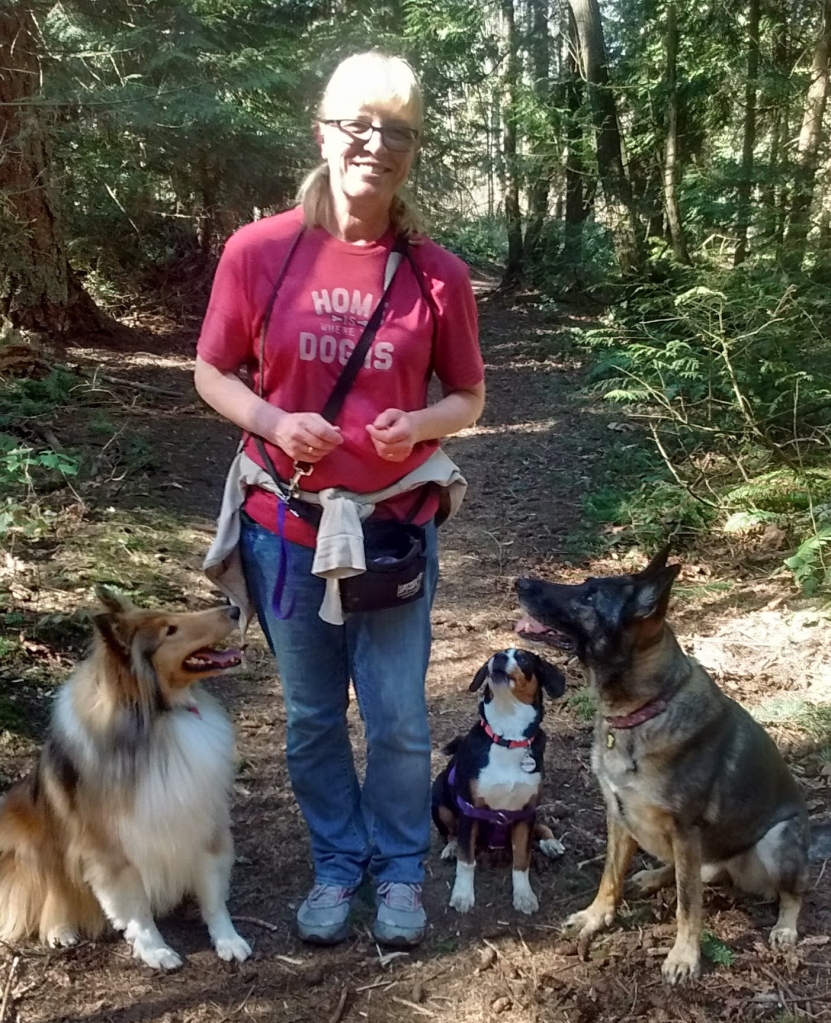
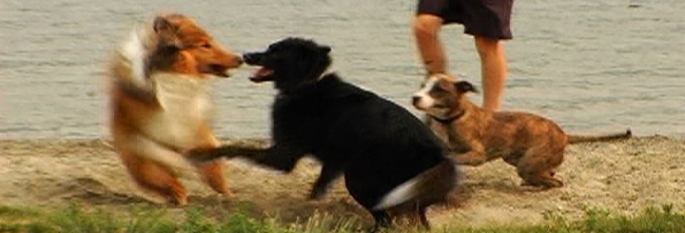
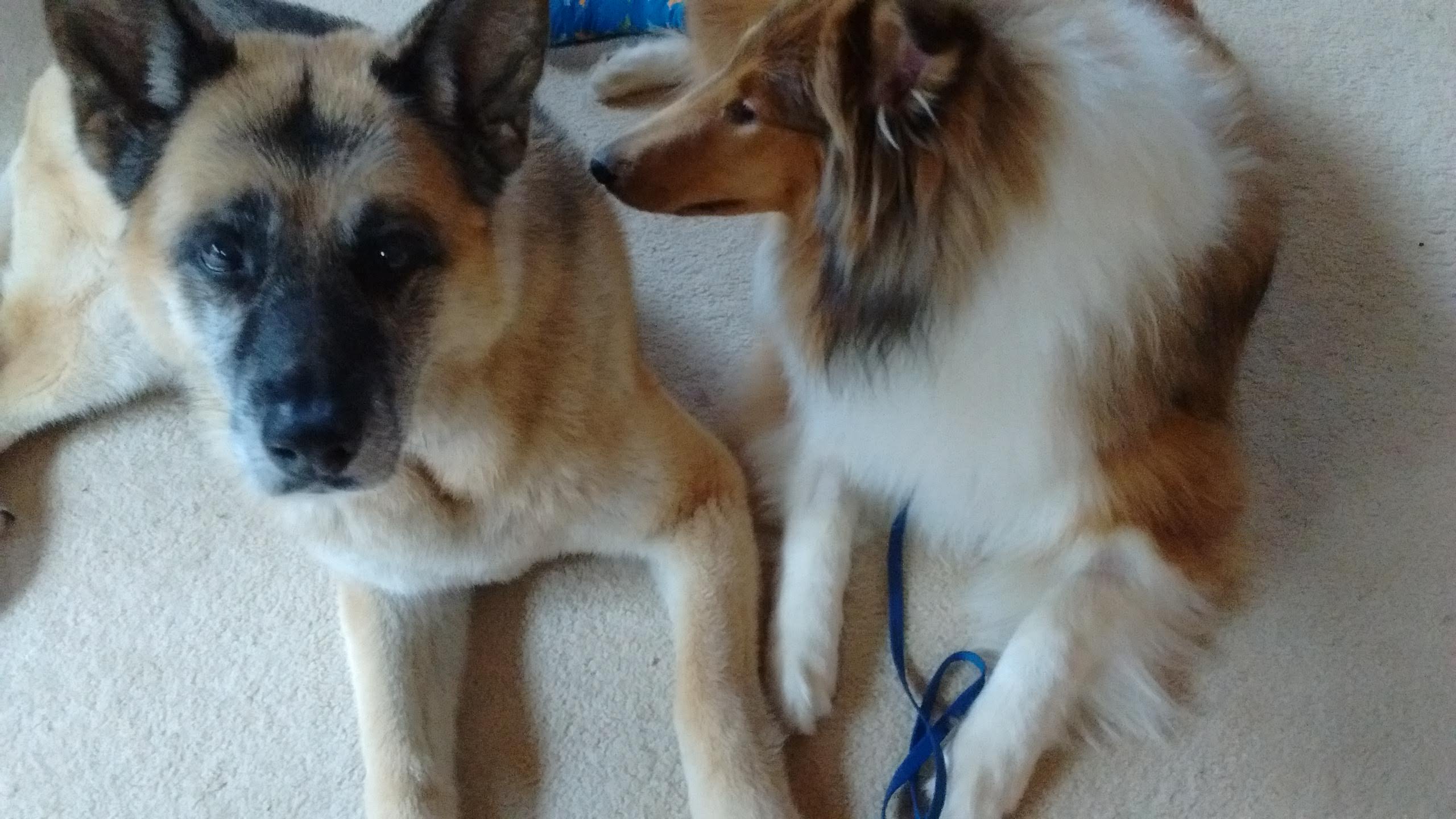


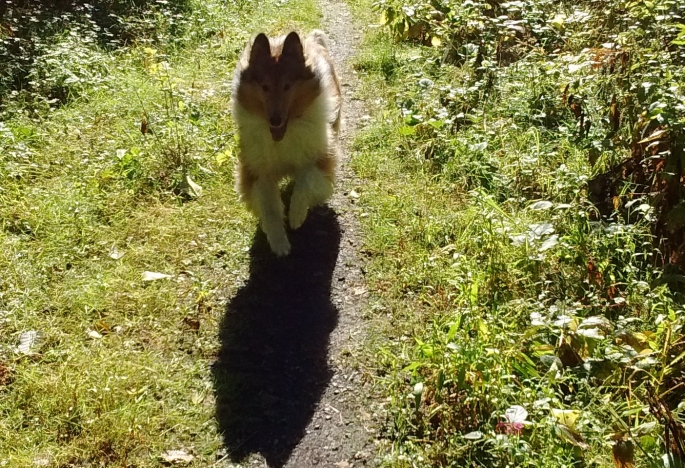


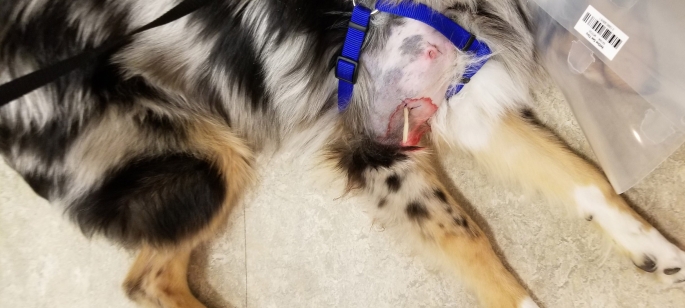


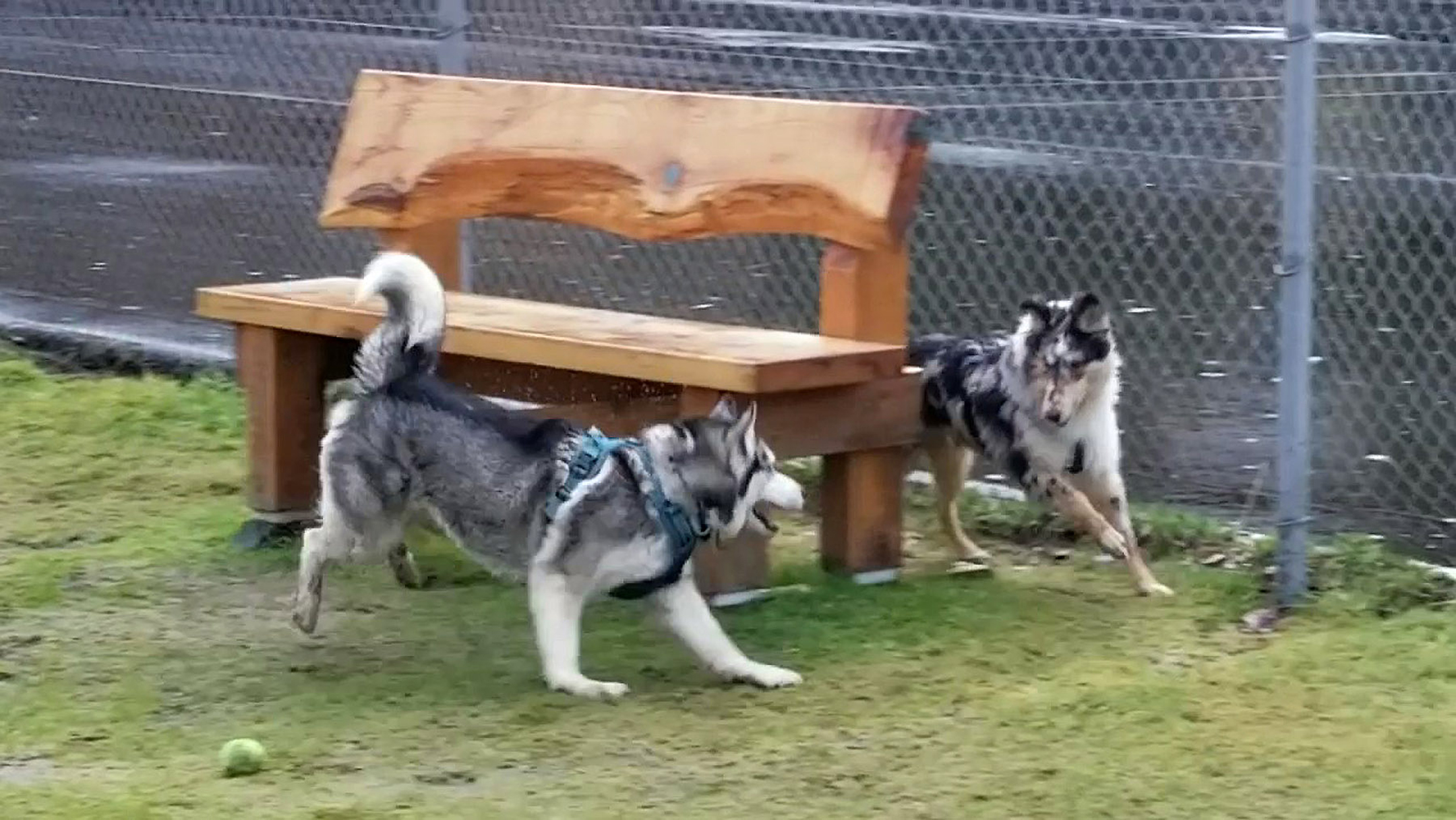


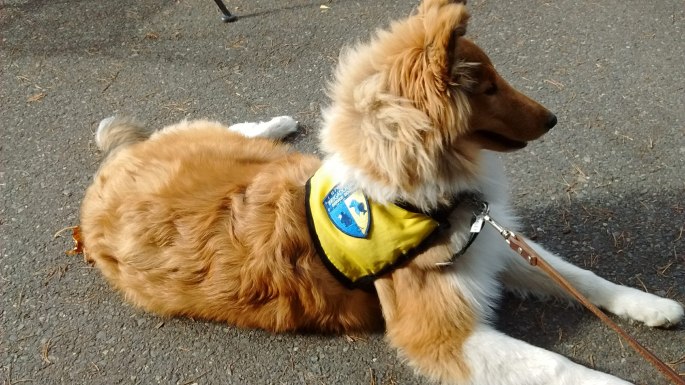


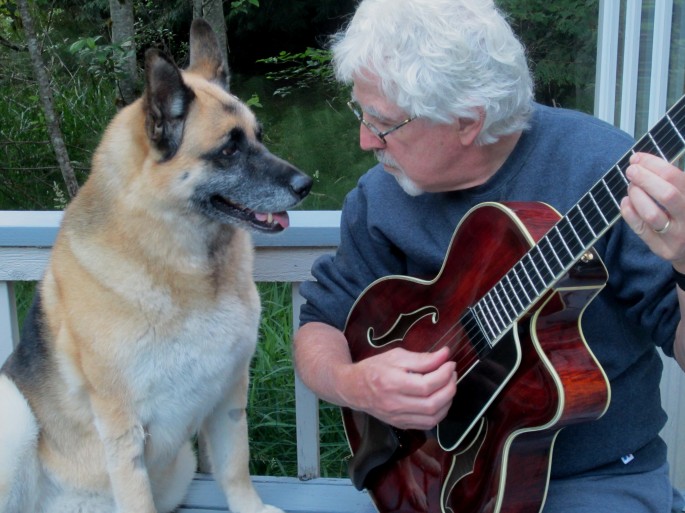
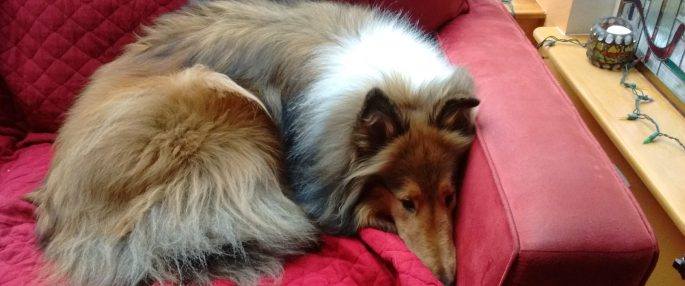
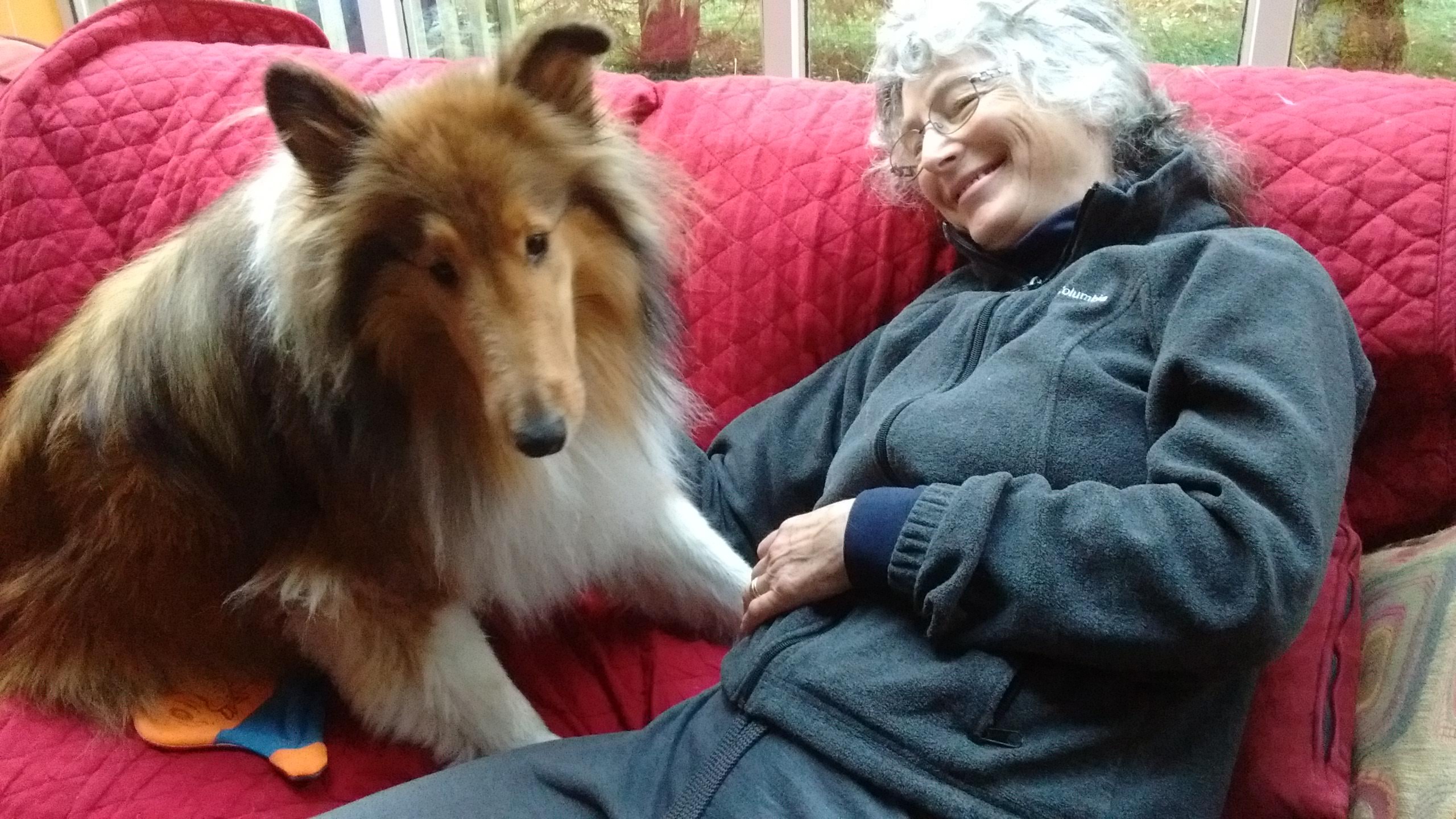
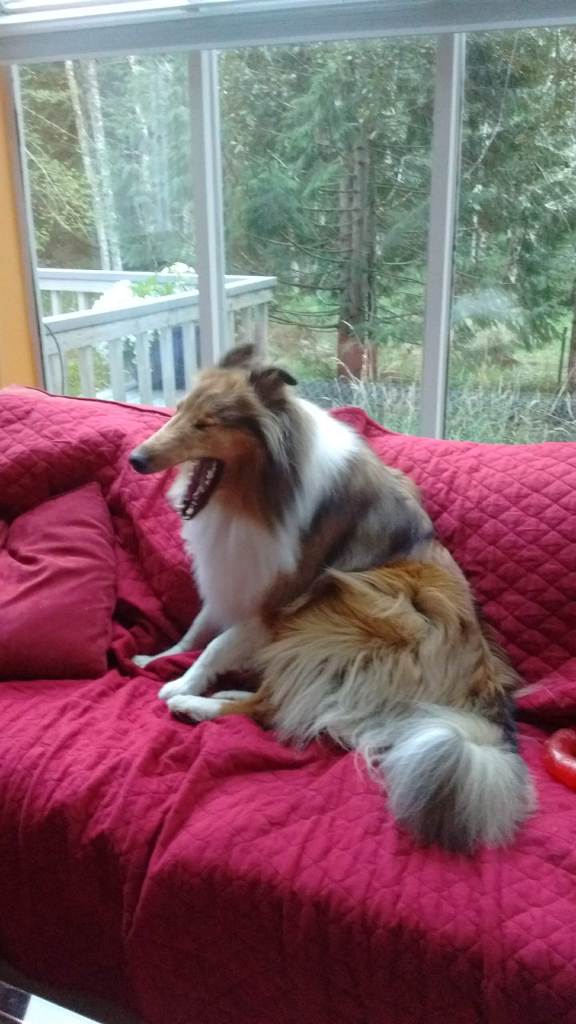
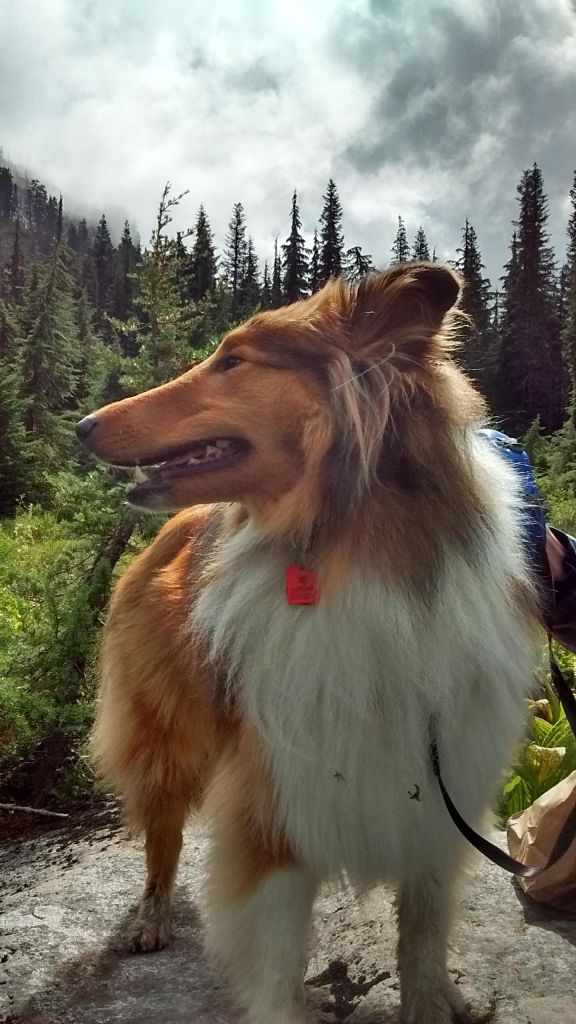
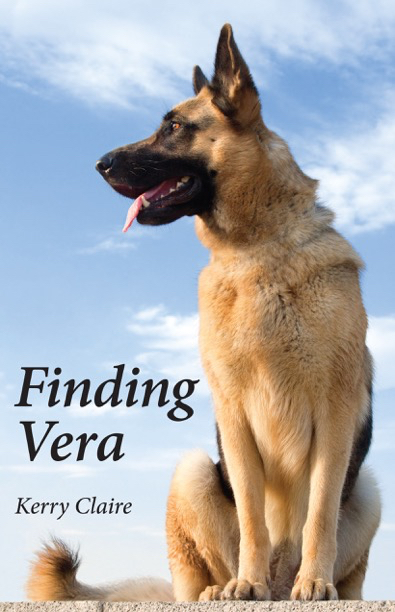


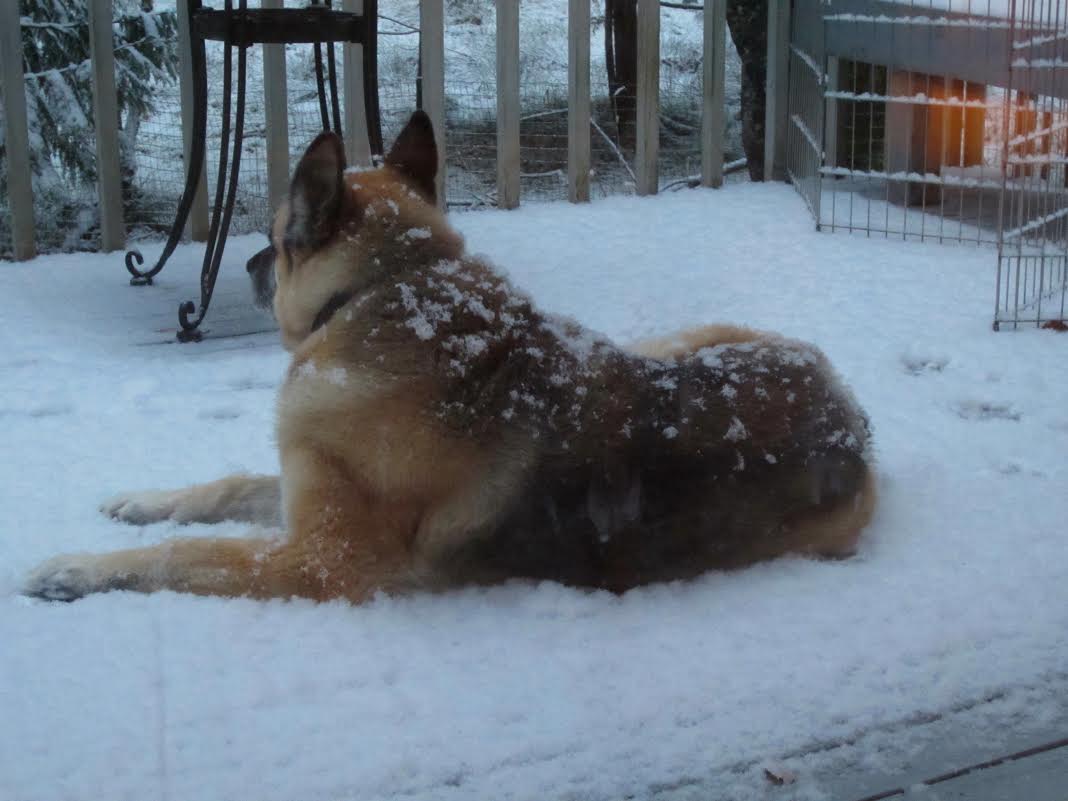

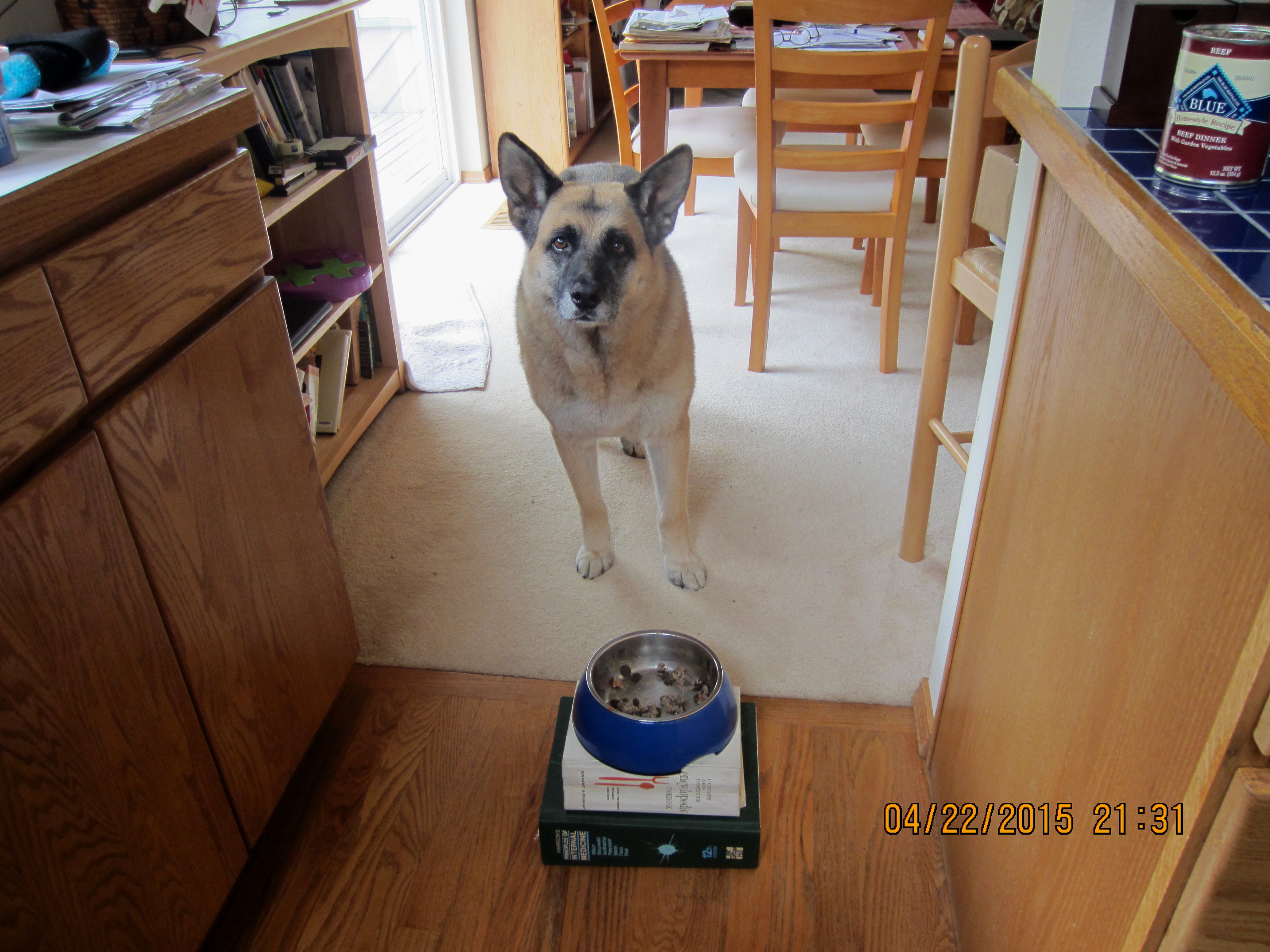

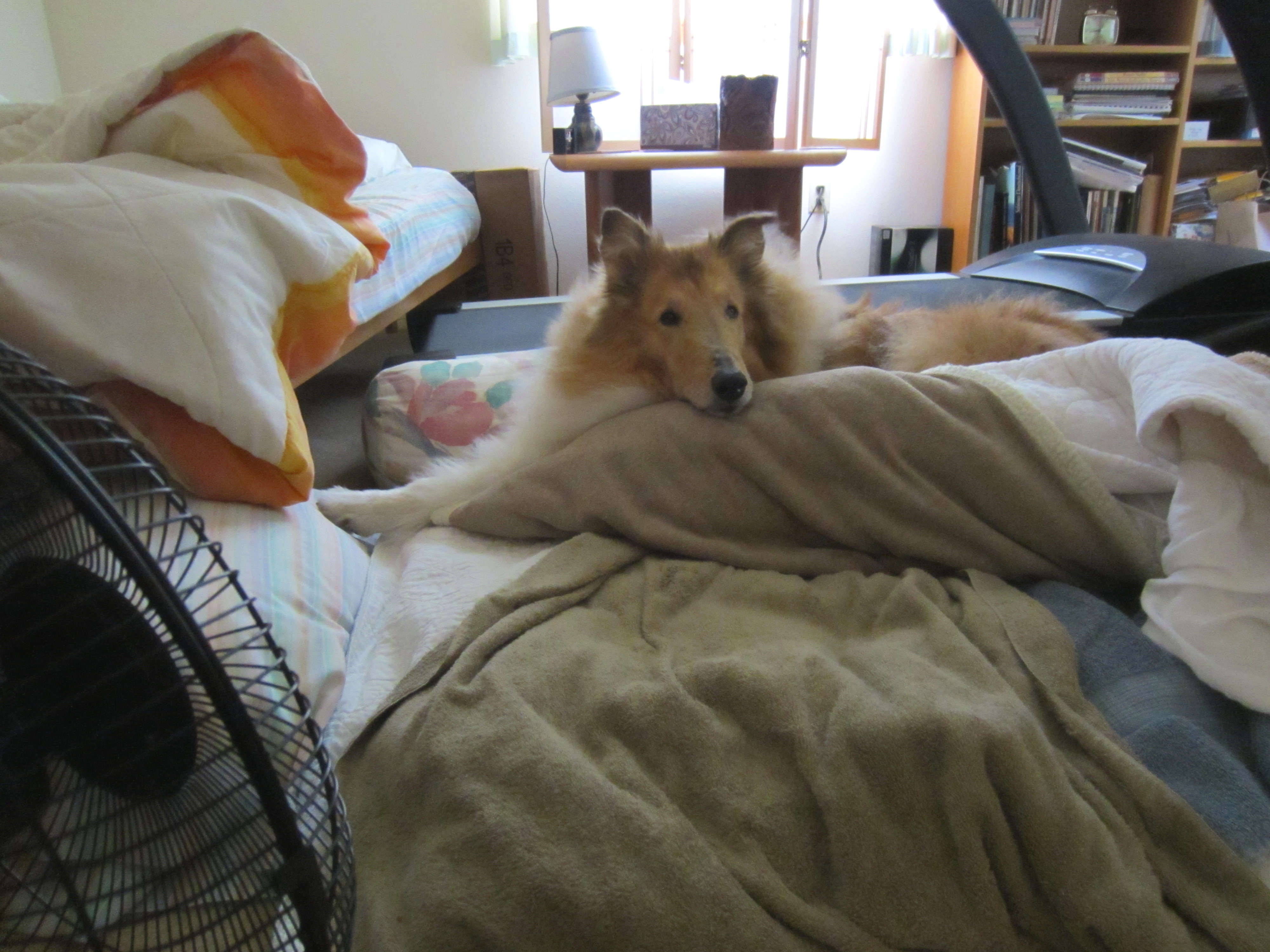


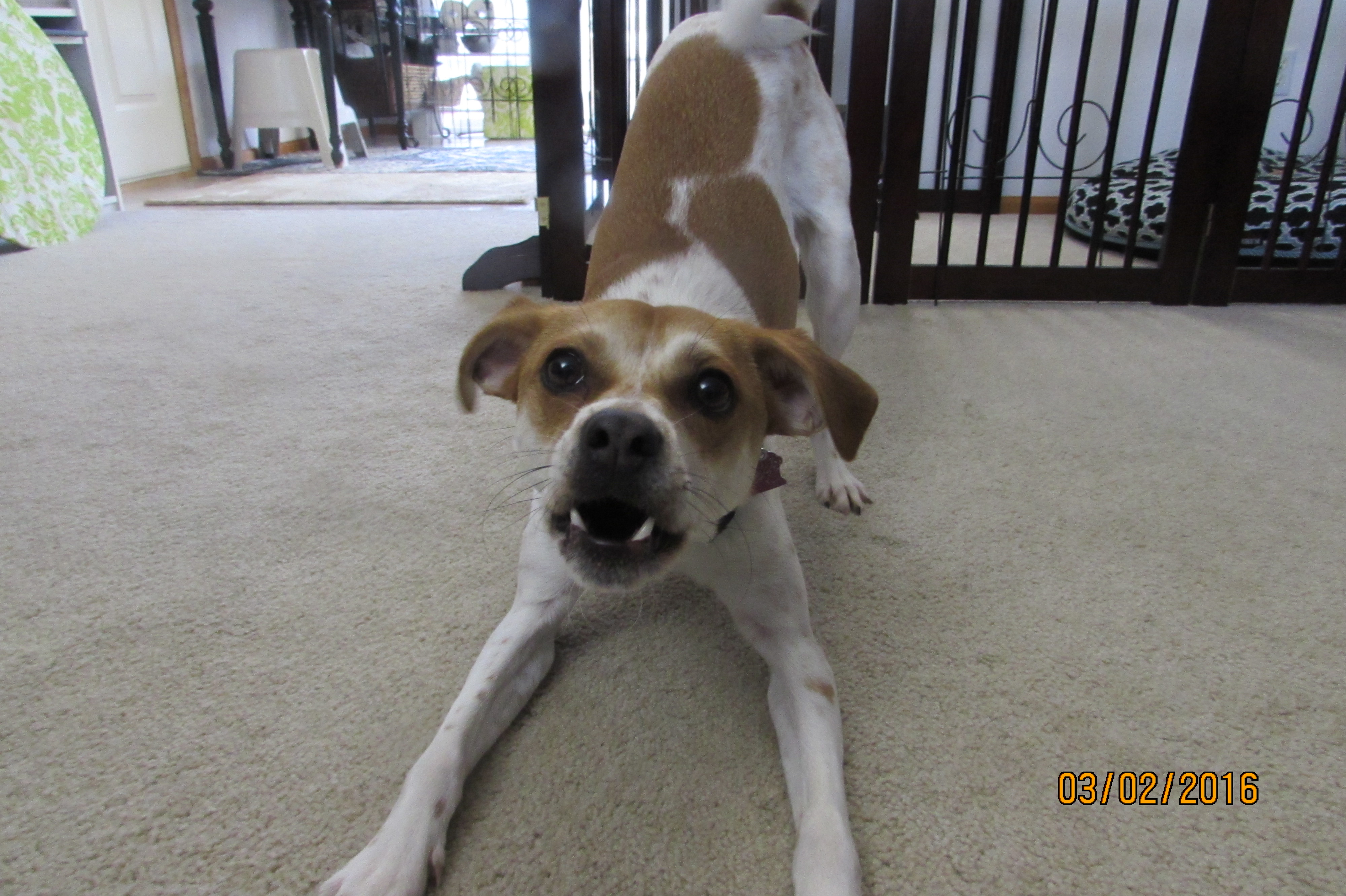








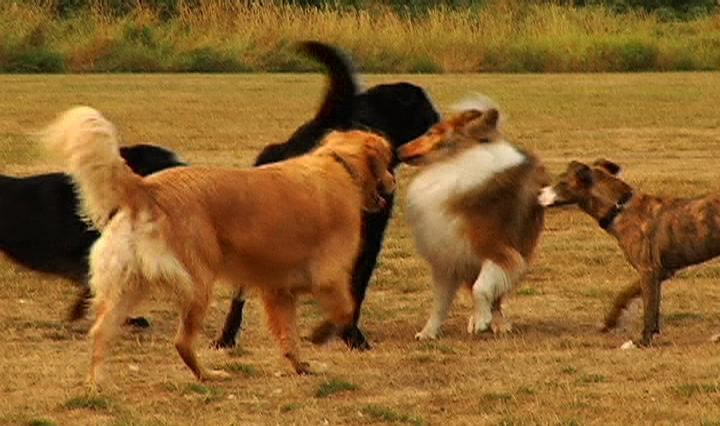
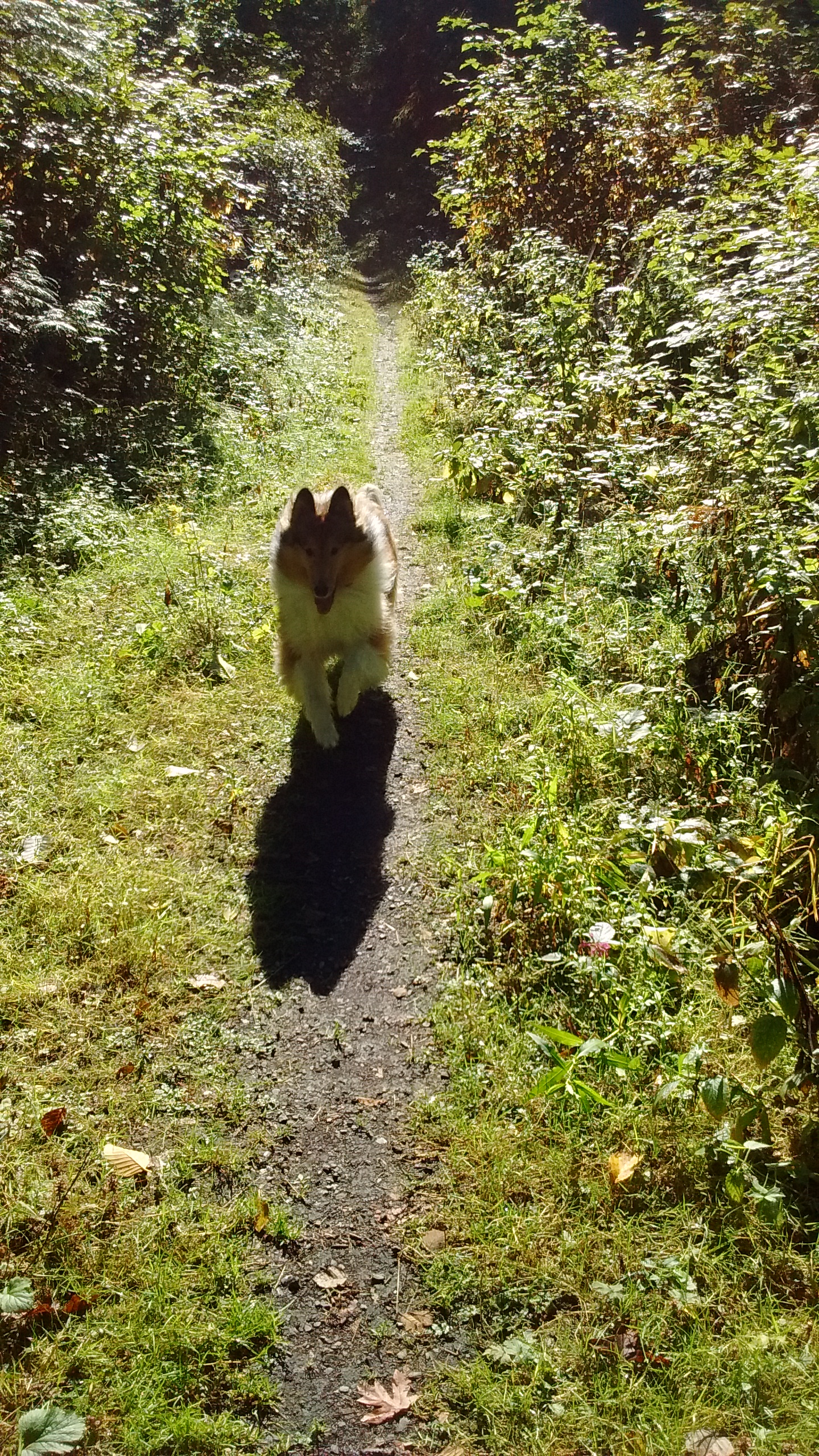


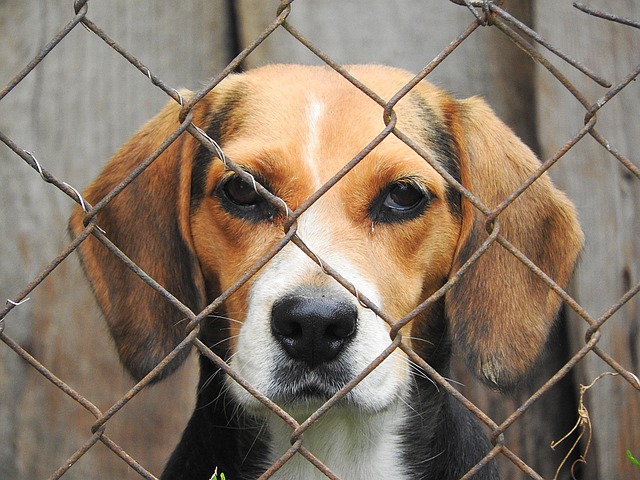
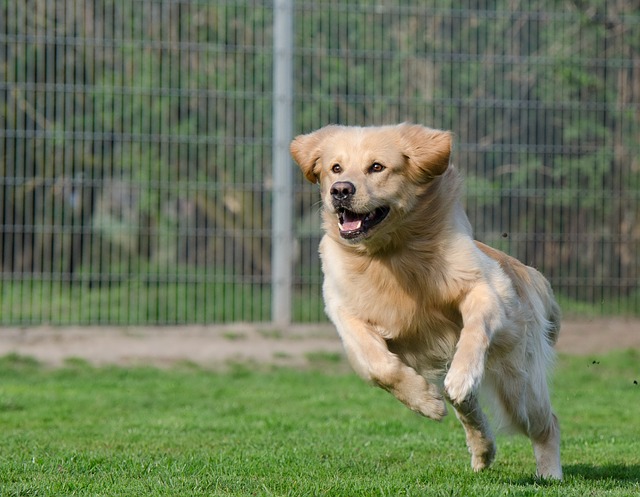


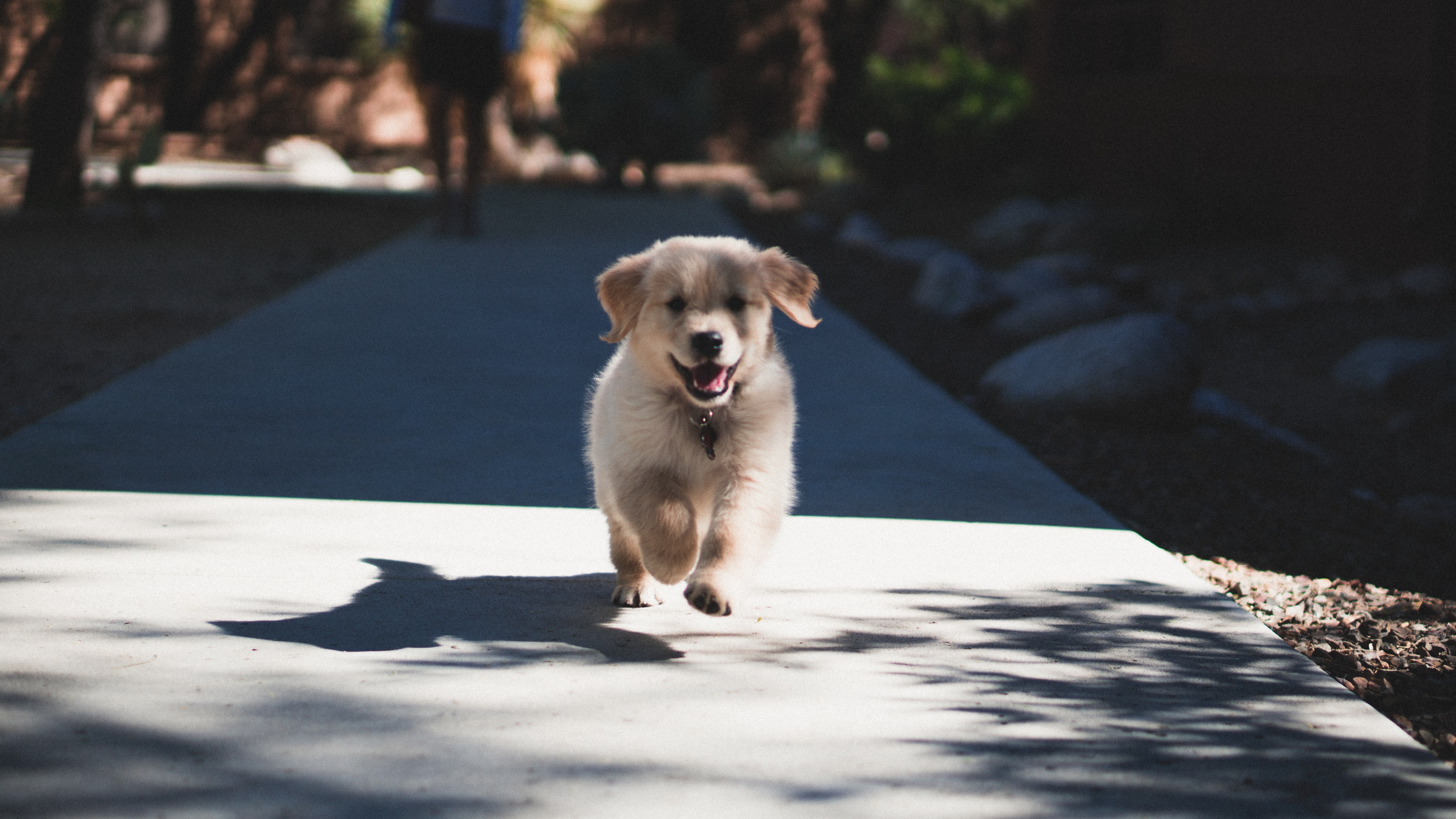
 Kerry Claire and dogs


