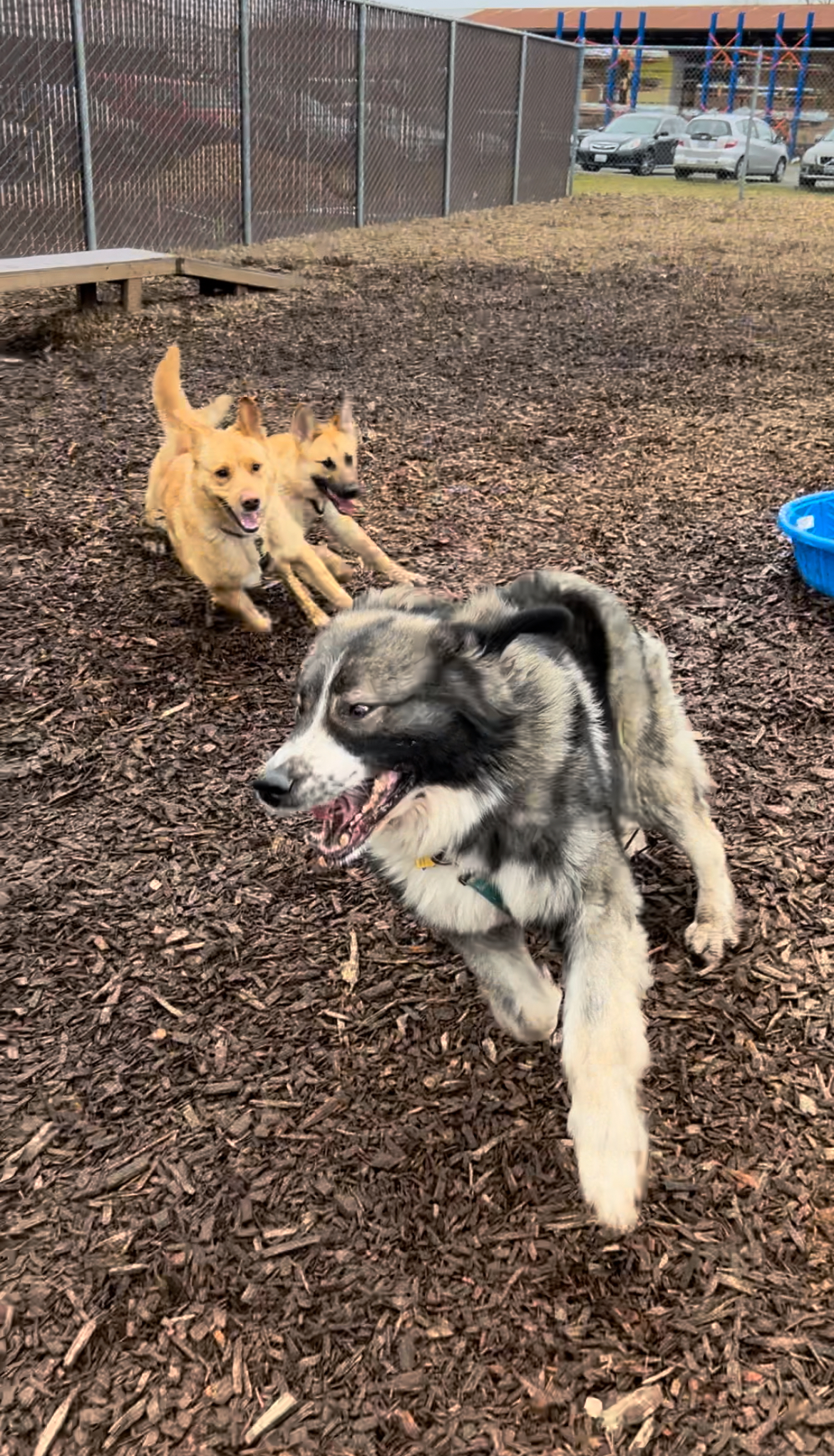
Dogs at play!

I have volunteered at Whatcom Humane Society for almost twenty years, and have always loved walking and training the dogs, but a year ago, Laura Clarke, executive director, brought Dogs Playing for Life to the shelter. That changed everything!

For me, dogs playing with dogs was a joy to watch–until we adopted Vera, our dog-reactive German shepherd. Experiencing her unpredictable lightning-swift attacks on her beloved sisters, and dealing with the physical and emotional fallout after these rare occurrences, kept us on edge for the duration of the dogs’ six years together, and it ruined my enjoyment of dogs playing with dogs–until Dogs Playing for Life came to WHS.

Dogs Playing for Life is a non-profit organization. Their trainers tour North America teaching shelters how to safely have dogs of any breed and any background play together. By understanding play styles, gender preferences, and canine relationships, serious conflict is kept to a minimum. They teach handlers how to use a few low impact “tools” (spray bottle, shaker bottle, and airhorn) when absolutely necessary to help guide the dogs into making good decisions. Handlers are also taught how to break up the rare fight should it occur.
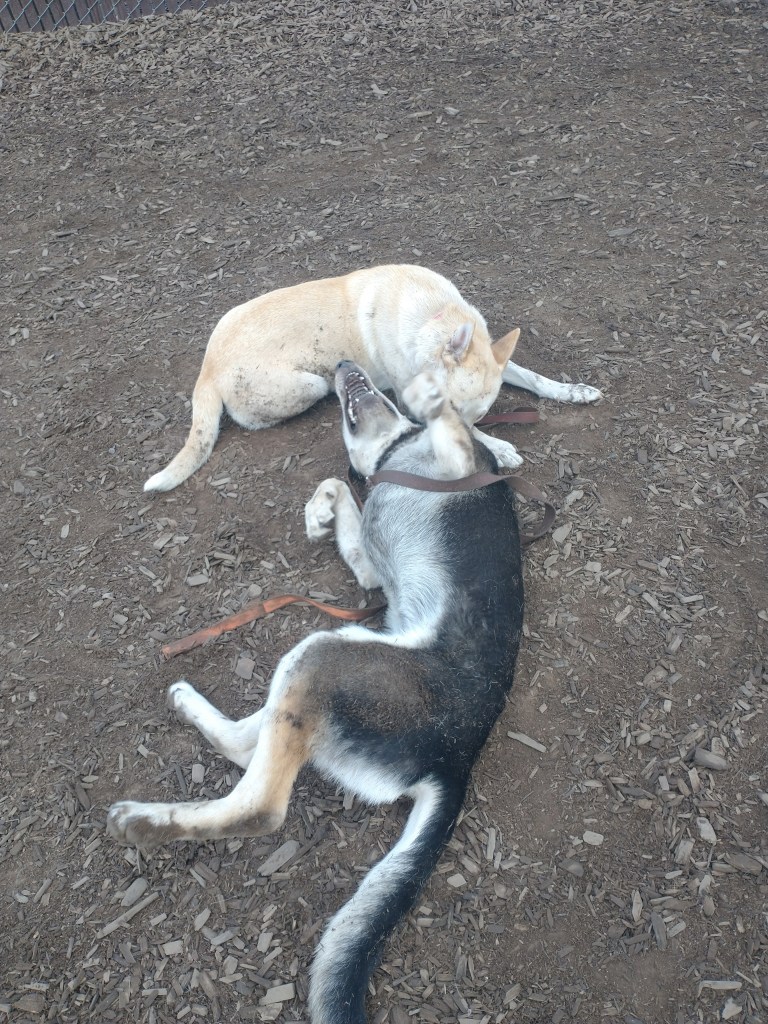
The dogs come to WHS from all different backgrounds. Often their histories are sketchy, so every dog is assessed individually before being allowed into the group. Twelve to sixteen dogs cycle through play group each day, and we have anywhere from two to eight dogs (sometimes more) in the play yard together at any one time. They tend to break into groups with friends, or other dogs who have similar play styles.

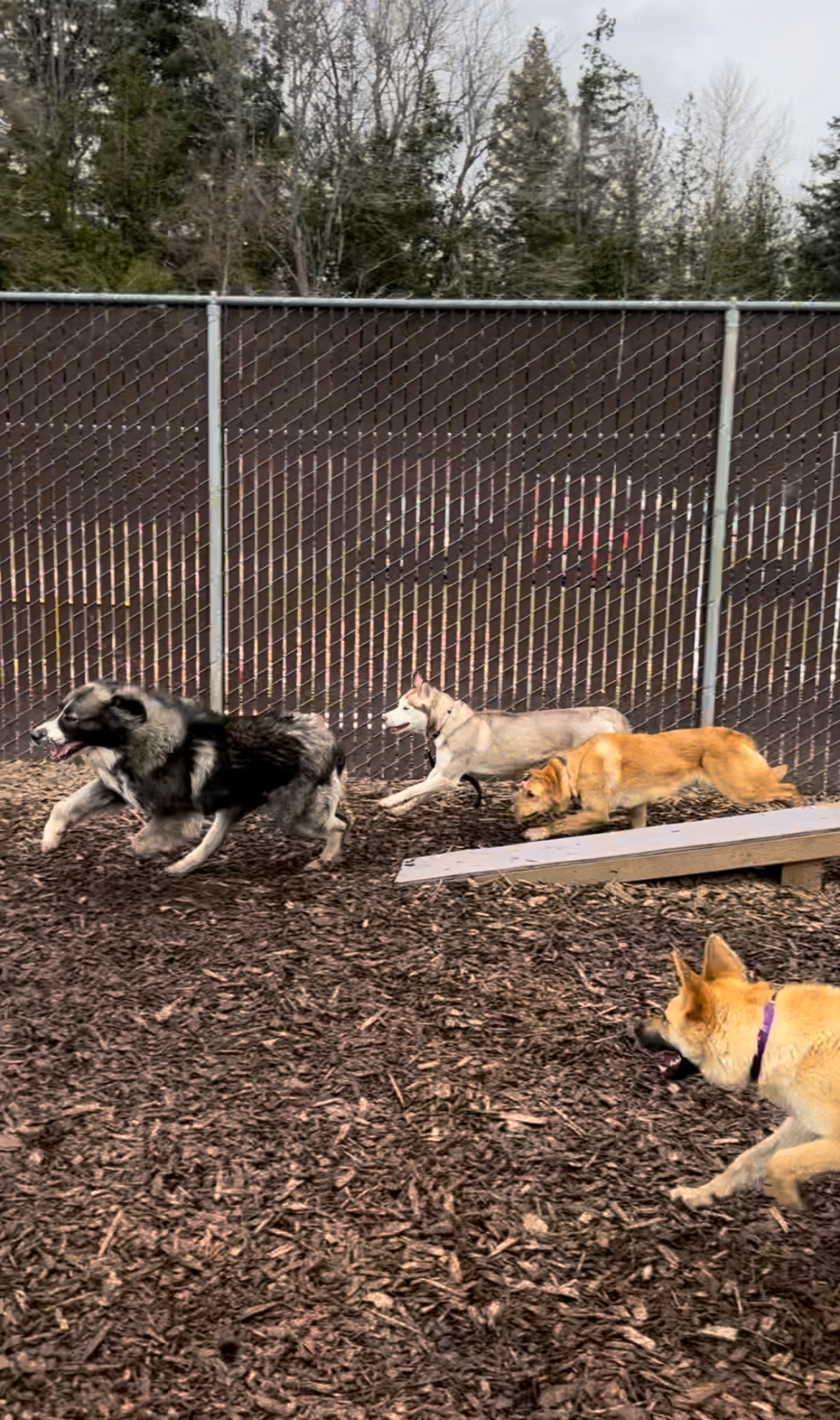
Photos courtesy of Valerie Reyes.

Below are a few things I’ve observed about dogs and their relationships. I knew many of these things in theory, but seeing them transpire on multiple occasions has given me a new appreciation for dogs, the complexity of their social structure, and their intelligence. Things that once puzzled me about Vera’s relationship with her sisters now make total sense!

  • Dogs have individual play styles that fall into categories. Dogs Playing for Life has named them Gentle and Dainty, Push and Pull (those who like to run and chase), Rough and Rowdy (dogs who like to mouth and wrestle), and Seek and Destroy (those who like to chase and take each other down.) Vera was a Seek and Destroy player, and Tessie, our collie, was a gentle and dainty girl who also liked a good game of chase. Gentle and dainty dogs never do well with dogs who engage in rough physical contact, even if they like to chase. No wonder Vera and Tessie never figured out how to play together!
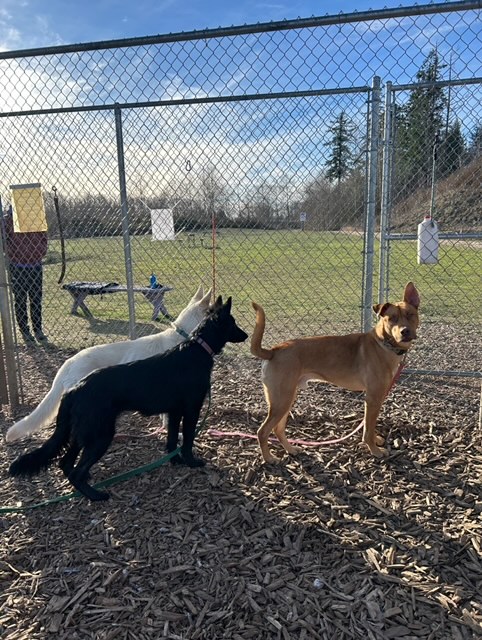
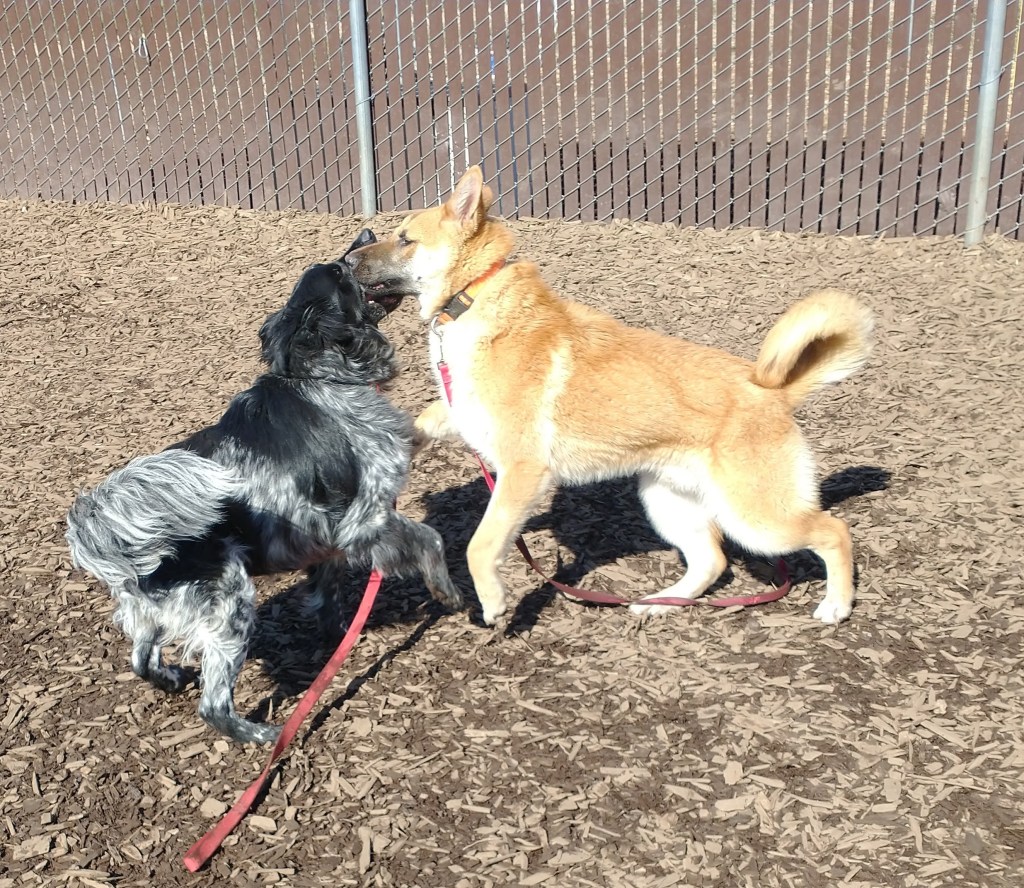
  • Most dogs are selective about who they like to play with. They might enjoy being around dogs, but only want to romp with very specific individuals.
  • Some dogs can play in any play style and adapt to playing with any dog. These dogs help the handlers in our playgroups integrate new dogs into the group and we call them “helper dogs.”
  • Some dogs love puppies, others tolerate them, and others are good teachers, giving appropriate corrections for rude behaviors.

Photo courtesy of Valerie Reyes

  • Most dogs love to play, and even those who are initially worried or cautious (tucked tail, seeking out corners, cringing) often gain confidence through exposure to calm dogs in a safe environment. Some of these shy dogs even become helper dogs (they play confidently and expertly with any dog in the group) and teach less-confident dogs how to enjoy and navigate the group.
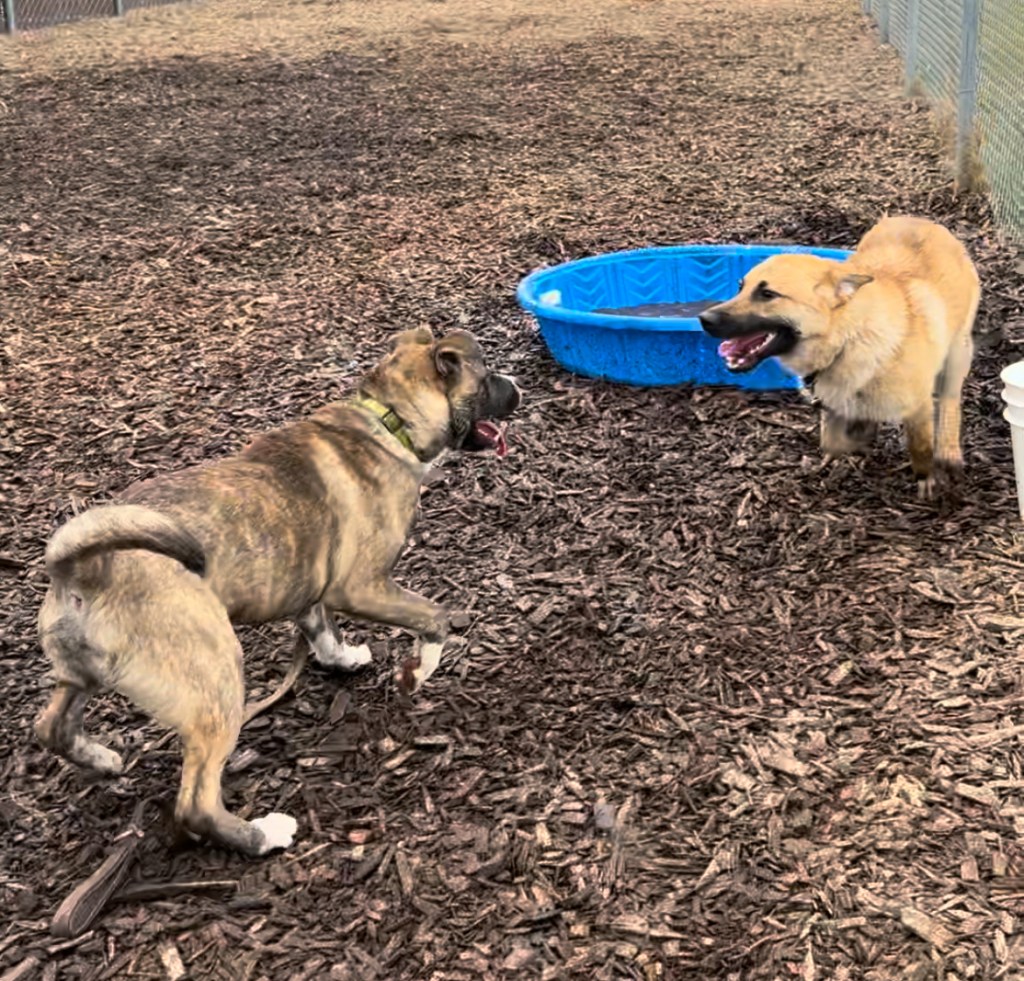
Photo courtesy of Valerie Reyes
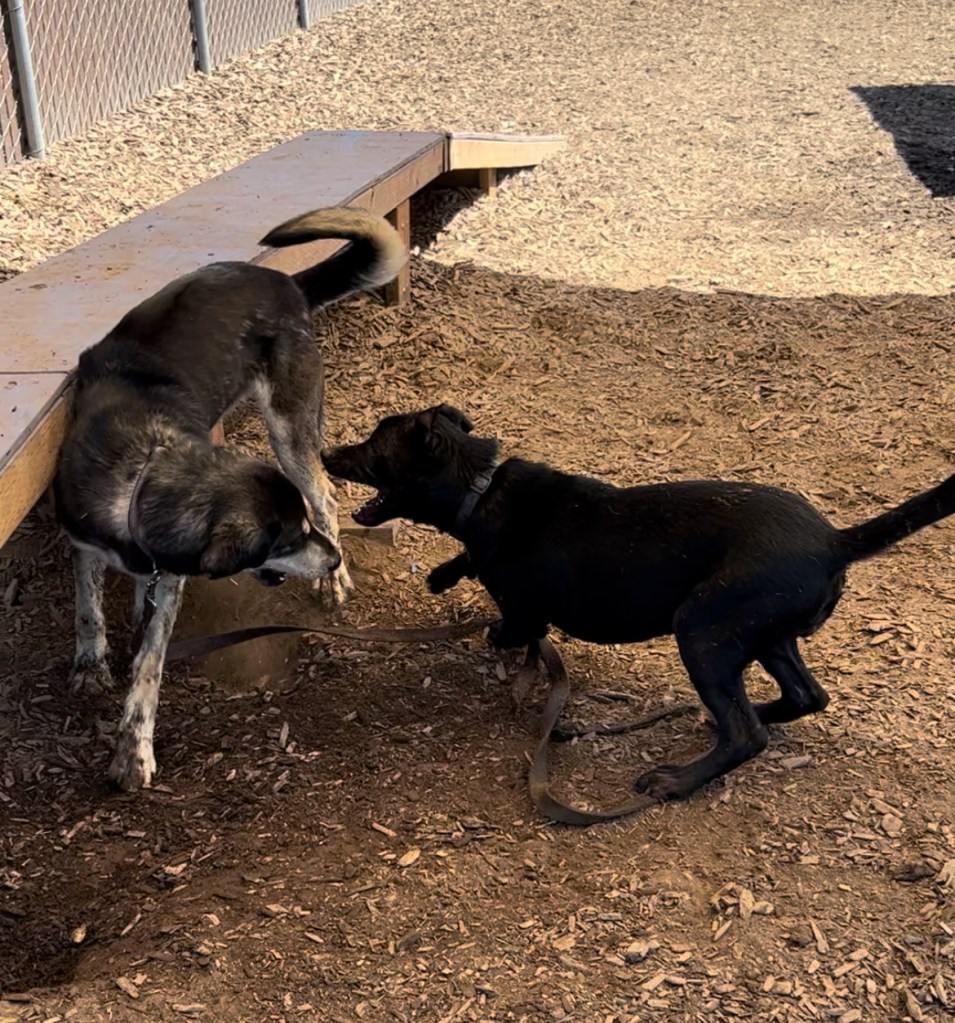
  • Barrier and leash reactivity, no matter how severe, doesn’t necessarily have any bearing on a dog’s ability to play safely. Some of our most reactive dogs (e.g Nina, the black lab in the photo) have become helper dogs, and because of their comfort around dogs off leash, we have been able to desensitize them to walking on leash among other leashed dogs.
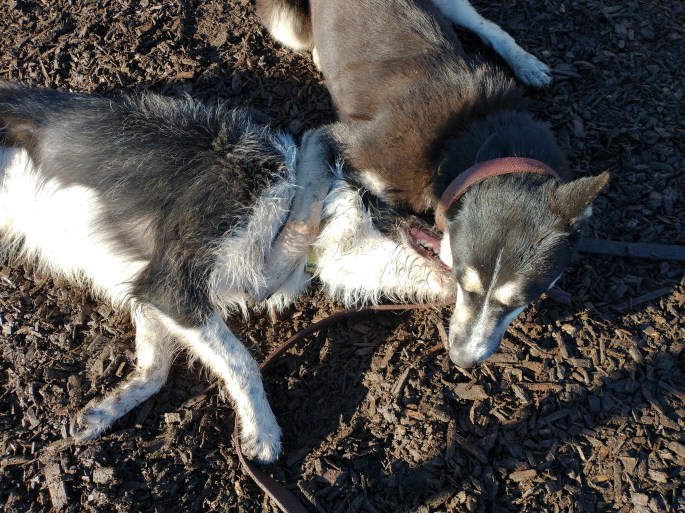
  • Dogs quickly form close and lasting bonds and pine for their friends when they can no longer see them. This has happened multiple times at the shelter when one of a pair who met in play group got adopted or was transferred to a foster home or to another facility. Sometimes the dog who stays behind finds another best buddy, sometimes not. Koda and Zeena (pictured in the featured photo at the top of this blogpost), loved each other and were transferred to the same facility at the same time so they could be together until they found their forever homes.
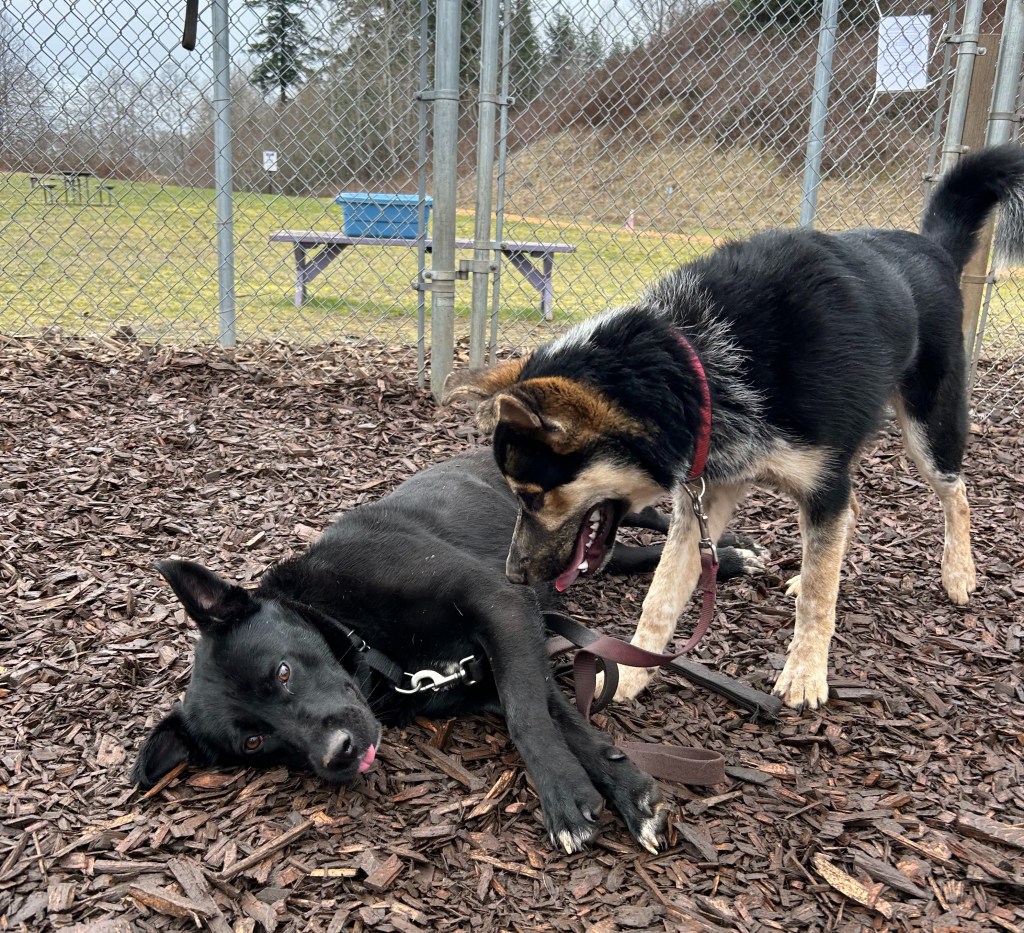
  • Some dogs get tired, grouchy, or overstimulated and make bad decisions if they play too long. Others just settle down and take a break!
  • Sometimes dogs play happily with a friend one day, and ignore each other the next–or even get into squabbles. They have good reasons, I’m sure, but it’s not always apparent to us humans.

Photo courtesy of Valerie Reyes

  • Some dogs are so intense that regardless of size, they overwhelm most dogs and send them running or cowering, or risk getting an overcorrection. However, find a dog with similar intensity, endurance, and play style, and hours of crazy, happy play can ensue.
  • Hackles up don’t mean much, just that the dog is uncertain. A stiff body, tight, flagging tail, and standing on tiptoes is much more concerning.
  • Some dogs just don’t like each other, even though they’re the opposite sex and have similar play styles. Sometimes dogs can take an instant, intense dislike to another dog, even though they’ve both had very happy, successful play times with many other dogs.
  • Some dogs are tense around dogs of the same gender but delight in the company of the opposite sex. Other dogs don’t mind either way .
  • Some dogs are afraid of humans, but great with dogs. Playgroups can build their confidence with people.
  • Some dogs are beloved by everyone, male and female, canines and humans!

There are also dogs who want no part of playing with other dogs and it’s important to honor their desire. However, for dogs who enjoy it, the social interaction, the mental challenge of negotiating so many different individuals and personalities, and the physical exercise during play is far beyond anything we humans can offer dogs in any environment. Playtime at WHS has helped our dogs to maintain their physical, emotional, and mental health through the duration of their stay at the shelter.

Photo courtesy of Valerie Reyes

As a handler for the past year, I am still on high alert during these playtimes. Occasionally, tension seems to rule the session and nothing seems to click. The dogs either don’t interact, or squabbles erupt with little warning and the dogs seem awkward and on guard. Sometimes the arousal level is so high that the pack gets overstimulated and on edge in spite of all we do as handlers to make it flow easily. This can happen for a number of reasons: the mix of dogs at the shelter; a day without playgroup; the day is windy; the shelter is extra noisy; one dog is making the group uncomfortable. But sometimes we just don’t know the reason.

Most days, playtime flows beautifully. The dogs we bring into the yard together click, and their antics have us laughing. We watch friendships unfold, observe how one dog entering or leaving the group completely alters the dynamic, or see a fearful dog be gently integrated into the group by polite, socially adept helper dogs.

With thoughtful handling (choosing play partners and groups based on friendships, play styles, and gender), conflicts are minimal. For the most part, dogs just want to have fun!

To learn more about Dog Parks and your dog, check out my blog post Dog Parks Revisited.

Fearful and reactive dogs

I’ve noticed that there seem to be more reactive dogs in our neighborhood than I’ve seen before–dogs who lunge and bark at everything, or dogs who are very timid and scared of the world at large. Anxious dogs have always been around, but during the pandemic, without the ability of owners to socialize their dogs to a variety of people, dogs, cats, vehicles etc. when they were puppies, the current wave of adolescent dogs are at a disadvantage. There has also been a huge increase in the number of adoptions during the past year, and with limited access to dog classes, and since many dogs were initially relinquished for their behavior issues, this has placed this group of dogs at an even greater disadvantage.

Dogs need to be socialized to a wide variety of stimuli when they are puppies (by 12-16 weeks) if they are going to feel comfortable as adults. That means that they must be gently and safely exposed to whatever they might need to cope with as adults before the age of sixteen weeks. If they’re isolated, limited in their exposure to dogs of different ages and sizes, humans (male and female) at a variety of ages, not to mention cats, horses, goats, traffic, etc. they will react with fear when they encounter these stimuli later in life. At best, the fearful dog will do what we would expect (shake, whine, tuck his tail, hide between our legs); at worst, he will “react” (bark and lunge) in an effort to keep the scary thing away. Both these behaviors (and everything in between) tend to be worse when the dog is on leash, as they are trapped and can’t increase the distance between the scary thing and themselves. Both behaviors are fear based.

Reactivity can be a devastating problem that requires a huge amount of training and desensitization to resolve–or at least, to improve. Our reactive German Shepherd, Vera, was chained up and abused as a pup, so although she was a sweet, affectionate dog in our home, taking her for a walk was almost as scary for us as it was for her because she was so powerful, and her barks were loud, angry, and terrifying for the person or dog at whom they were directed. Having visitors to our home was an ordeal too, because in order for Vera to feel safe, everyone’s behavior had to be predictable, and safe distances had to be maintained until she was ready to venture closer to them. Our lives changed significantly for twelve years.

If I have a fearful dog, What should I do?

  • Learn as much about fear, reactivity, and aggression as you can so that you understand them. Dogwise has several good books on these topics. Also, I wrote the novel, Finding Vera, and attempted to understand what was going on in her mind from her perspective to show what it might be like to be a reactive, fearful, and potentially aggressive dog. Many people with reactive dogs have found Finding Vera helpful in increasing their understanding of their companion.
  • Have your dog checked out by a vet. Pain and illness can cause irritability and a reduction in the ability to cope with stress thus increasing anxiety and reactivity.
  • Find a positive-rewards trainer who has experience with reactivity. Your dog will need to learn attention skills, impulse control, to walk beside you on a loose leash (a tight leash adds to a dog’s anxiety), and skills that will help you and your dog to escape tricky situations safely. A good trainer will also use desensitization exercises and Behavior Adjustment Training to help your dog become more comfortable with his trigger(s).
  • Be as calm and confident as possible when out with your dog. Take deep breaths, sing a silly song, keep the leash loose, praise your dog for good behaviors.
  • Don’t take your reactive or fearful dog off leash until you have had them assessed by an experienced trainer. A fearful dog who responds to scary things with “flight” may well run off and get injured or lost, while the dog who responds with “fight” could injure another dog or person, or get injured themselves.
  • Learn to understand canine body language. You can find many in-depth books on canine body language at Dogwise.com.
  • Don’t use corrective techniques with your dog e.g. shouting, hitting, kicking, intimidation, jerking on the leash or collar, wolf-rolling, shock collars etc.
    • Using corrective techniques will aggravate the fear that drives the behavior, making it worse. Think about it. How would you feel as a child if a bear approached you, and your parents hit and yelled at you, shocked your neck, and jerked you by a multi pronged metal collar when you screamed for help? (Keep in mind that a dog’s skin is actually thinner than ours.) As primates, we are hard-wired to yell and hit when we are frustrated or angry, so it’s very gratifying for us to respond to behavior we don’t like (lunging and barking) in this way. I cringe when I hear a dog who is already very frightened scream and run in response to the shock from a shock collar. Unfortunately, this is something I have witnessed many times in the past year.
  • Choose times to walk when there will likely be fewer encounters with the thing that triggers your dog. I used to run with Vera at 5:00 a.m. year-round, rain or shine. Ugh! But she got the exercise she needed, and the additional serotonin released in her brain from the exercise helped her to cope with the world. Midnight is also a good time to walk. Please wear a headlamp when you walk in the dark so a) other people can see you coming and b) so you can see potential threats and respond to them before your dog reacts.
  • Keep a safe distance from the thing that is making your dog react–make a U-turn and go the other way before your dog tenses or starts staring hard at the trigger.
  • If you must pass the dreaded trigger, place your body between your dog and the scary thing. If you can, go up a driveway, into the bushes or woods, or make a wide arc away from the trigger, herding your dog’s shoulder away from the scary thing with your leg.
  • Carry high-value treats such as cooked chicken or steak cut into small cubes, salmon treats, or something very special that your dog LOVES. The instant you see the trigger, start feeding your dog rapidly, one treat at a time and move away from it if you are too close. The treats help to have your dog make a positive association with the scary thing, and increasing distance will help him feel safe.
  • Some dogs have a strong prey drive and will lunge and bark at anything that moves, such as squirrels, runners, cars, deer, cats, bunnies etc. This reaction is not caused by fear necessarily, but is hardwired as part of the chase-bite-kill sequence of hunting. Having your dog sit, “leave it” (you need to teach your dog what “leave it” means) and watch you, and then feed high value treats for leaving the prey alone, will help to dampen this drive for that particular object or animal. It is a very difficult compulsion to modify and finding a trainer to help with this will be worth your while.
  • Make your dog’s life as routine as possible. When his world is predictable, he will feel less fearful. If there is construction going on within earshot, if you mix up your routine, if you move your household, etc., your dog’s anxious behaviors and reactive displays will most likely worsen.
  • If you get a puppy, be sure to socialize him carefully and consistently for the first two years of his life. Although the first sixteen weeks are the most critical, maintaining his socialization is essential.
  • Be aware that fear is the most genetically transmitted emotion, so if a puppy’s parents are very anxious and fearful, the puppies stand a good chance of being fearful too.

Featured photo courtesy of Motoko Lewis and Cedric Meerkat Lewis